
A&M Newsroom
Jewellery production, explained.
Manufacturing guides and practical workshop knowledge for jewellery retailers, designers and brands.
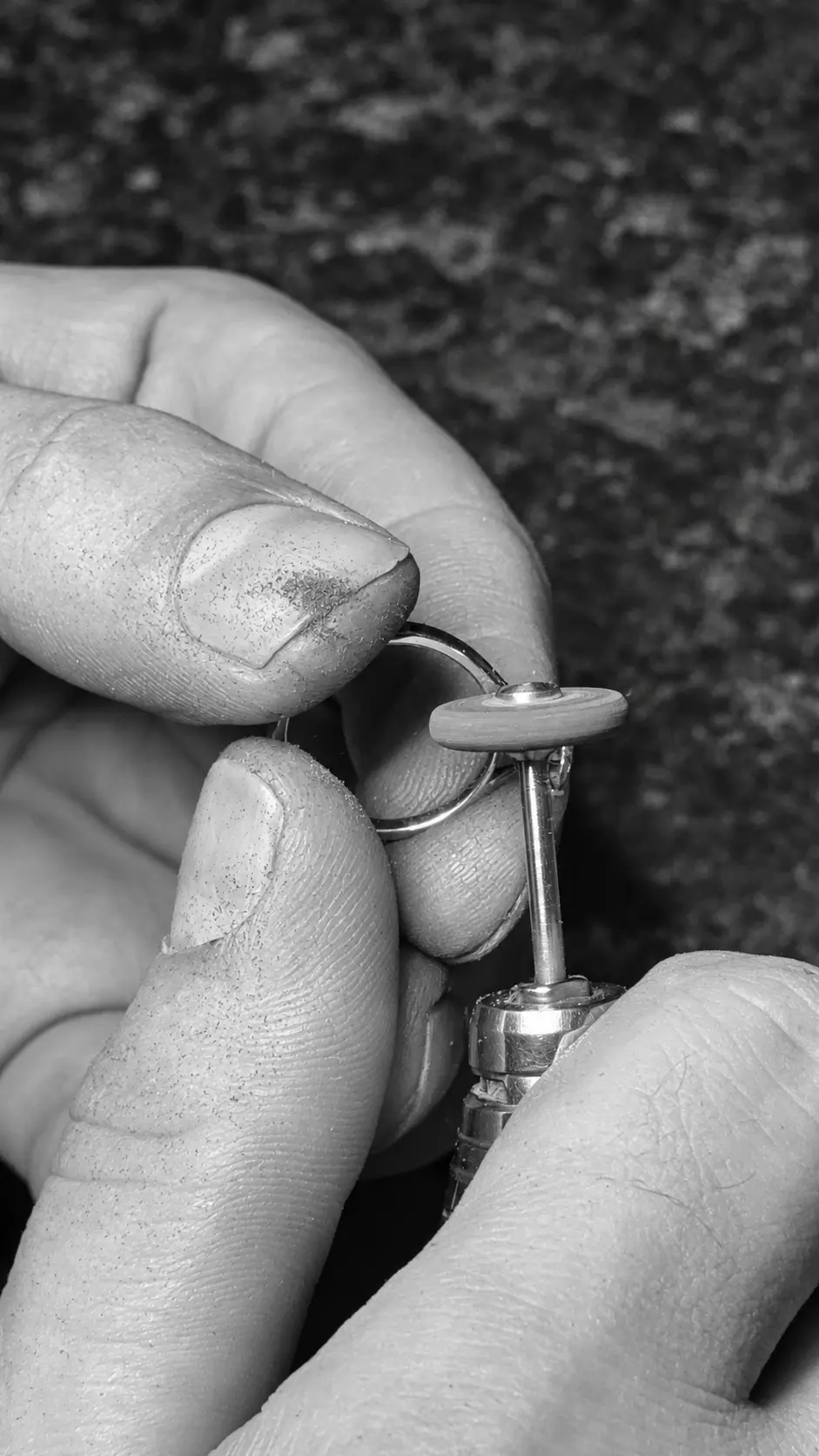
Informed briefs lead to better workshop decisions.
Explore design development, manufacturing, setting, finishing and production planning with A&M Jewellery Workshop.
Latest guidance
Explore the latest workshop guides.
Jewellery Quality Control: A Checklist for Finished Pieces
A jewellery quality-control checklist helps ensure that final inspection considers the agreed product, not just its overall appearance. The checklist should reflect the actual design and scope. A pendant, a pair of earrings and a bracelet can share some checks while needing different functional assessments.
When Should Engraving Happen During Jewellery Production?
The right point for engraving during jewellery production depends on access, construction and the intended finished surface. Engraving is not automatically the last operation, and it should not be added to a production plan without considering the stages around it. The workshop needs the final artwork and a clear location before it can assess the route.
Specifying Contrasting Finishes on the Same Jewellery Piece
Contrasting finishes can define the shape of a jewellery piece without changing its material. A polished edge beside a satin field, for example, depends on the position and character of the boundary as much as on either finish alone. The manufacturing brief needs to explain that relationship clearly.
Jewellery Production Defects: When to Rework or Remake a Piece
Deciding whether to rework or remake a jewellery piece requires an assessment of the actual defect and the result that must be achieved. Rework is not automatically the economical choice, and remaking is not automatically necessary whenever a piece differs from the sample. The decision should be based on evidence and an agreed outcome.
In-Process Inspection vs Final Inspection in Jewellery Manufacturing
In-process inspection and final inspection answer different questions in jewellery manufacturing. An intermediate check asks whether a stage is suitable to continue. Final inspection asks whether the completed item meets the agreed handover requirement. Using both can make the production record more informative than relying on one last visual review.
Producing Multiple Jewellery Designs in One Order: How to Separate Specifications
Producing multiple jewellery designs in one order can simplify commercial coordination, but the workshop still needs separate production instructions for each distinct item. A shared delivery date or purchase order number does not mean the pieces share the same material, setting or finish requirement.
Moving from a Jewellery Prototype to Repeat Production
Moving from a jewellery prototype to repeat production requires more than instructing the workshop to make more of the sample. Development pieces can contain one-off adjustments, substitute materials or decisions that were never transferred into the final specification. Those details need to be resolved before a wider run begins.
Planning UK Hallmarking for a New Jewellery Production Run
UK hallmarking should be considered while a jewellery production run is being planned, rather than treated as an unexplained final task. The responsible business needs to establish the applicable requirement, who will submit the goods and how that stage fits with assembly and finishing.
How Batch Size Affects Jewellery Production Costs
Batch size can affect jewellery production costs because some work is shared across a run while other work is repeated for each item. Increasing the quantity may spread certain preparation costs, but it does not remove the setting, handling or inspection each piece requires. The effect depends on how consistent the run actually is.
Reordering a Jewellery Design: What Needs to Be Reconfirmed?
Reordering a jewellery design should be simpler than developing it for the first time, but it still needs a current instruction. The phrase same as last time can conceal a different size mix, replacement stones or a component source that has changed. A short reconfirmation prevents the earlier order from becoming an inaccurate template.
Workshop consultation
Discuss a piece with the workshop.
Provide the item type, current condition and intended result for an informed initial conversation.