
Finishing & Quality Control
Jewellery Production Defects: When to Rework or Remake a Piece
Deciding whether to rework or remake a jewellery piece requires an assessment of the actual defect and the result that must be achieved. Rework is not automatically the economical choice, and remaking is not automatically necessary whenever a piece differs from the sample. The decision should be based on evidence and an agreed outcome.
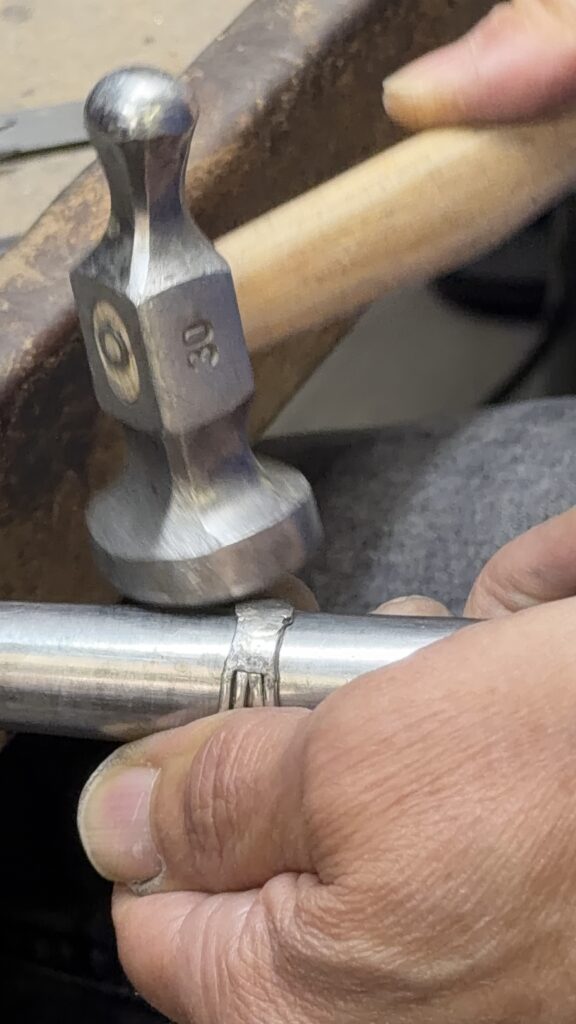
Deciding whether to rework or remake a jewellery piece requires an assessment of the actual defect and the result that must be achieved. Rework is not automatically the economical choice, and remaking is not automatically necessary whenever a piece differs from the sample. The decision should be based on evidence and an agreed outcome.
Begin by identifying the nonconforming feature. A clear observation gives the workshop a better basis for assessing options than a general instruction to improve the quality.
Discuss jewellery rework or remake
Document the defect and the accepted result before discussing corrective work.
Describe the issue against the reference
Record the affected item, location and requirement. State what was observed and how it differs from the approved specification. Photographs, measurements and the physical piece may each provide useful evidence.
Separate cause from observation. A mark at a joint does not by itself establish why it occurred, and a surface defect should not be assigned to a supplier without the relevant assessment. Keep the report factual while the cause is investigated.
Assess whether correction preserves the design
Ask whether the proposed work can achieve the required result without compromising important dimensions, details or construction. The amount of work already completed does not make an unsuitable correction appropriate.
Where stones are present, their material and condition also need consideration. GIA’s gemstone durability guidance provides background on why repair and related procedures must be assessed for the stones involved.
Compare the complete options
Review the proposed rework alongside replacement, including any component sourcing, repeated setting, finishing and inspection. A comparison limited to the immediate bench operation can miss other work needed to return the piece to the agreed state.
Discuss delivery implications and any additional sample approval. If the proposed outcome differs from the original design, it needs an explicit client decision rather than being treated as a technically equivalent repair by default.
Before the next production step
Compare feasible correction and replacement routes before authorising more work.
Establish authority before work continues
Identify who can approve the technical route, additional cost and any concession from the specification. These decisions may involve different people. Keep the final instruction together so the workshop knows what has been authorised.
A&M’s manufacturing support includes recording exceptions, while repairs and alterations provides related service context. The appropriate scope must still be assessed for the particular production piece.
Verify the corrected or replacement item
Inspect the affected feature again and consider any adjacent areas altered by the work. A completed corrective operation does not automatically establish that the final item now meets every relevant requirement.
Keep the original finding and its resolution linked. If a replacement is made, distinguish it from the rejected component and reconcile any stones or parts transferred between them. This matters for both production traceability and handover counts.
Choose the route that can meet the requirement
The right decision produces an accepted piece with a clear record of how the issue was resolved. Compare feasible options against the design and construction, then approve the route before more work is committed.
Plan the work with A&M
A&M can assess your trade enquiry in the context of the actual piece and requested workshop stages. Bring the references discussed in this guide so the next decision can be made on clear information.
Frequently asked questions
Is rework always less expensive than a remake?
No. Compare the complete route, including any repeated setting, finishing, sourcing and inspection. The actual defect and stage of production determine the options.
Can an appearance difference be accepted without correction?
A specific concession may be considered, but it should be knowingly approved and recorded. It must not conceal a technical issue or silently alter the standard for other goods.
Should replacement pieces be inspected again?
Yes, assess them against the agreed requirements. A remake is a new physical result and should not be accepted solely because it replaces a previously rejected item.