
Finishing & Quality Control
Jewellery Quality Control: A Checklist for Finished Pieces
A jewellery quality-control checklist helps ensure that final inspection considers the agreed product, not just its overall appearance. The checklist should reflect the actual design and scope. A pendant, a pair of earrings and a bracelet can share some checks while needing different functional assessments.
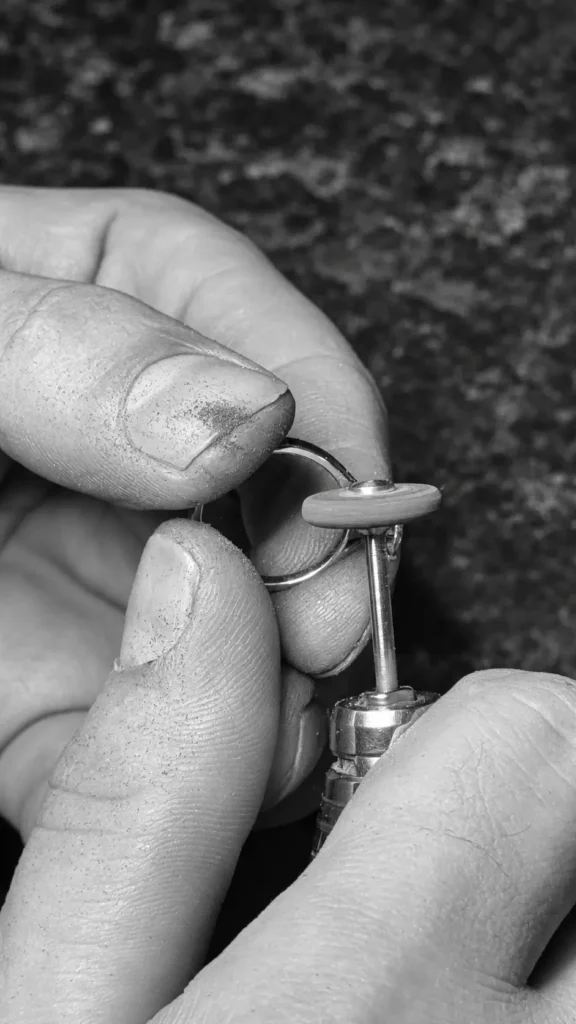
A jewellery quality-control checklist helps ensure that final inspection considers the agreed product, not just its overall appearance. The checklist should reflect the actual design and scope. A pendant, a pair of earrings and a bracelet can share some checks while needing different functional assessments.
Use the approved specification and sample as the reference. If the inspection criteria are invented only after the goods are complete, the client and workshop may be judging different expectations.
Discuss jewellery quality control checklist
Define the product requirements that final inspection needs to confirm.
Confirm identity before appearance
Match the piece with the order, product revision, material specification and intended variant. Check quantity and any individual allocation, such as a stone reference or personalised inscription.
For paired or matched goods, inspect the relationship as well as each item. Two individually acceptable earrings may still require review when compared as the intended pair.
Check the measurable requirements
Use the agreed method for important dimensions and record results where they are needed. Include fit features, ring size or finished length as appropriate. A measurement should refer to a defined location and production stage.
Do not infer material identity from colour alone. Keep the supplied documentation and required marking checks connected to the finished piece. Where a specialist assessment is required, make its scope explicit.
Review construction, setting and function
Examine the relevant joints, alignment and component relationships. Confirm the operation of moving parts and closures using the checks agreed for the design. Avoid substituting an arbitrary force test for a suitable assessment.
Stone setting should receive appropriate specialist attention. GIA’s setting benchmarks provide reference examples for evaluating defined workmanship features; using a checklist does not itself certify a piece to an independent standard.
Before the next production step
Identify the checks that require specialist assessment before signing off the piece.
Inspect the finish and protected details
Assess clean surfaces under suitable viewing conditions. Compare the intended polish or texture, finish boundaries and details that must remain. Include less visible areas where they are part of the agreed requirement.
Use these prompts as a starting checklist, adapted to the item: – Correct product, revision, material record and quantity. – Agreed dimensions and fit requirements checked. – Construction, alignment and component relationships assessed. – Stones and settings reviewed against the job requirement. – Finish, engraving and protected details compared with the reference. – Relevant function, markings and accompanying records confirmed.
Record the acceptance decision
Separate accepted pieces from those needing correction or further assessment. State the observed issue and the next responsible person. A held piece should not appear within the completed quantity simply because it is physically present.
A&M’s production process includes inspection and recording exceptions before handover. Agree how those findings will be communicated for the particular job and which decisions require client approval.
Finish with a traceable handover
The checklist is useful when it leads to a clear acceptance record. Confirm what is complete, what remains outstanding and which references accompany the goods, so the next person understands the status without reconstructing the whole order.
Plan the work with A&M
A&M can assess your trade enquiry in the context of the actual piece and requested workshop stages. Bring the references discussed in this guide so the next decision can be made on clear information.
Frequently asked questions
Should every jewellery product use the same checklist?
Use a common structure where helpful, then add the features relevant to the actual design. A clasp, a paired product and a plain band need different functional or matching checks.
Is a visual check enough for final quality control?
Not for every requirement. Dimensions, material records and function may need other agreed checks. Match the inspection method to the feature being accepted.
Can a piece pass with an approved exception?
A specific exception should be assessed and recorded by the authorised parties. Identify its scope and do not treat it as an automatic change to the standard for other pieces.