
A&M Newsroom
Jewellery production, explained.
Manufacturing guides and practical workshop knowledge for jewellery retailers, designers and brands.
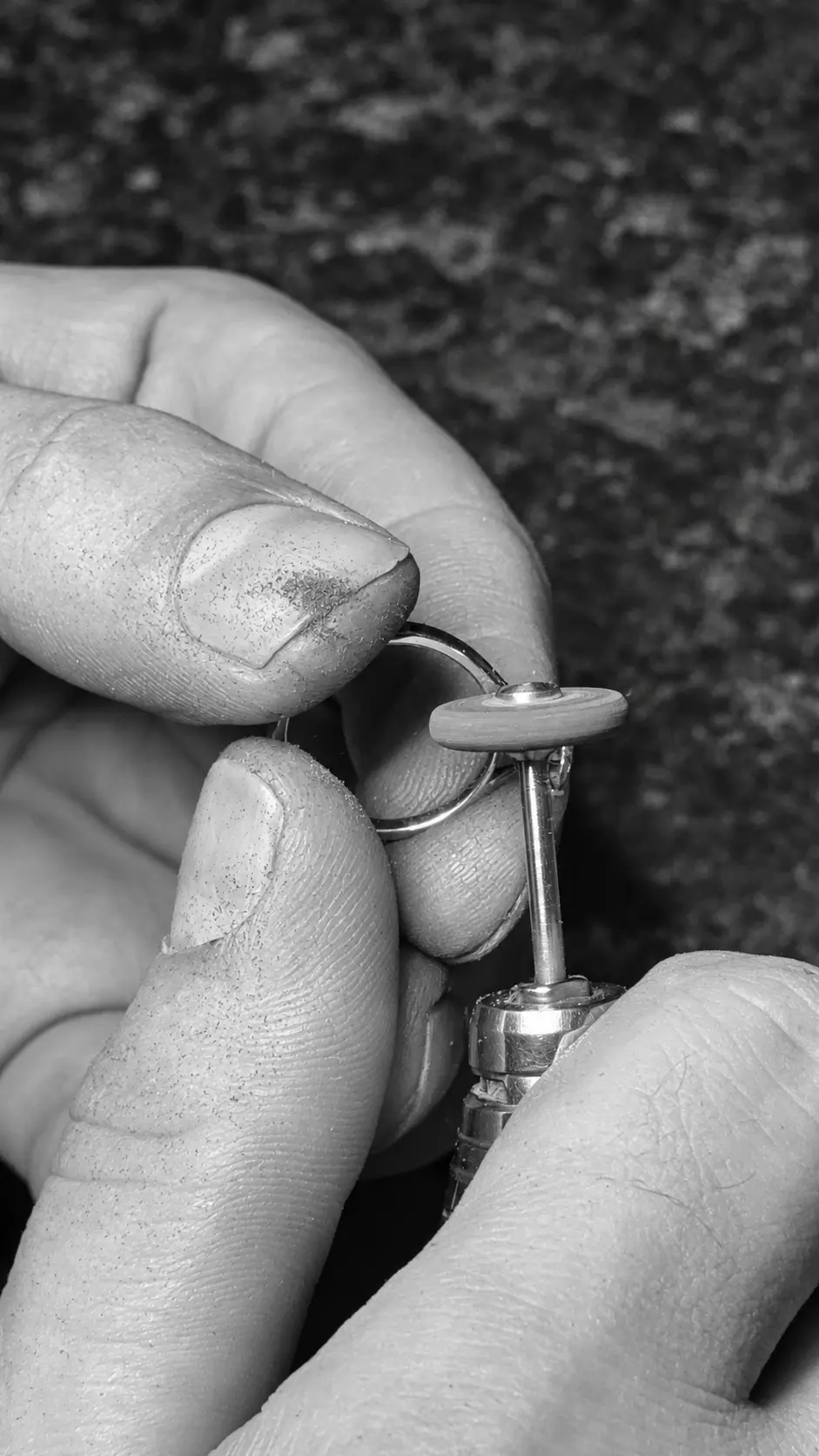
Informed briefs lead to better workshop decisions.
Explore design development, manufacturing, setting, finishing and production planning with A&M Jewellery Workshop.
Latest guidance
Explore the latest workshop guides.
Jewellery Hinges and Safety Catches: Assess the Whole Mechanism
A hinge or safety catch should be assessed in motion and in relation to the rest of the jewellery. A closure that appears to meet when pressed together may still have an alignment or wear problem. Equally, the part the customer notices may not be the only component that needs attention.
An Out-of-Round Ring: Reshaping, Resizing or Further Repair?
A ring that has become oval or distorted can feel different even when no deliberate sizing work has taken place. The first question is therefore whether the customer needs a different size or whether the original shape has changed. Treating those as the same problem can lead to an instruction that misses the underlying condition.
Remaking a Lost Earring: Matching an Existing Piece
Remaking a lost earring begins with the piece that remains. It may provide the best reference for the design, but it is also a worn object with its own condition, stone characteristics and fittings. A replacement brief should account for those details before anyone promises an exact match.
Turning a Ring Head into a Pendant: A Jewellery Conversion Brief
A ring head can suggest the starting point for a pendant, but a successful conversion needs more than removing the band and adding an attachment. The retained setting must be suitable for its new role, and the finished piece needs an agreed orientation, balance and relationship to the intended chain.
How Long Does Rhodium Plating Last? Set a Useful Maintenance Expectation
There is no useful single lifespan to promise for every rhodium-plated item. A ring worn frequently, an occasional pendant and an earring pair do not present the same maintenance discussion. The owner’s preference for a particular appearance also affects when they choose to seek refinishing.
Tension-Style Ring Repairs: Confirm the Construction Before Altering It
An open-looking ring should not be classified by its top view alone. Some designs use a true tension setting, while others achieve a similar appearance with supporting metal that is less obvious from above. That distinction matters before anyone proposes resizing, repairing the band or changing the stone.
Earring Post Repairs: Alignment, Matching and Fitting the Back
A broken or bent earring post can affect how the earring sits, how its back fits and how closely it matches its partner. The repair brief should therefore include the complete pair wherever possible. An attachment that is sound in isolation may still give the wrong result if its position or dimensions differ from the intended arrangement.
When Does a Worn Ring Need a Replacement Shank?
A worn ring band may need more than another local repair. Where the underside has become thin or a damaged section no longer provides a suitable basis for alteration, the workshop may discuss replacing part of the shank. The decision depends on the whole ring, including the shoulders and setting that the new section must meet.
Jewellery Repair Collection Checklist for Retailers
A jewellery repair collection is the point at which the customer sees how the completed work relates to the original request. A clear handover should cover the correct item, the agreed repair and any instructions or unresolved conditions that matter after return.
Open-Back and Closed-Back Gemstone Settings: What Changes in the Brief?
The back of a gemstone setting can affect access for inspection, cleaning and future work, as well as the construction itself. Yet it is often absent from the reference image used to commission a piece. An open or closed appearance should therefore be part of the design brief rather than an assumption left until the item is finished.
Workshop consultation
Discuss a piece with the workshop.
Provide the item type, current condition and intended result for an informed initial conversation.