
Retail Workshop Practice
Jewellery Repair Collection Checklist for Retailers
A jewellery repair collection is the point at which the customer sees how the completed work relates to the original request. A clear handover should cover the correct item, the agreed repair and any instructions or unresolved conditions that matter after return.
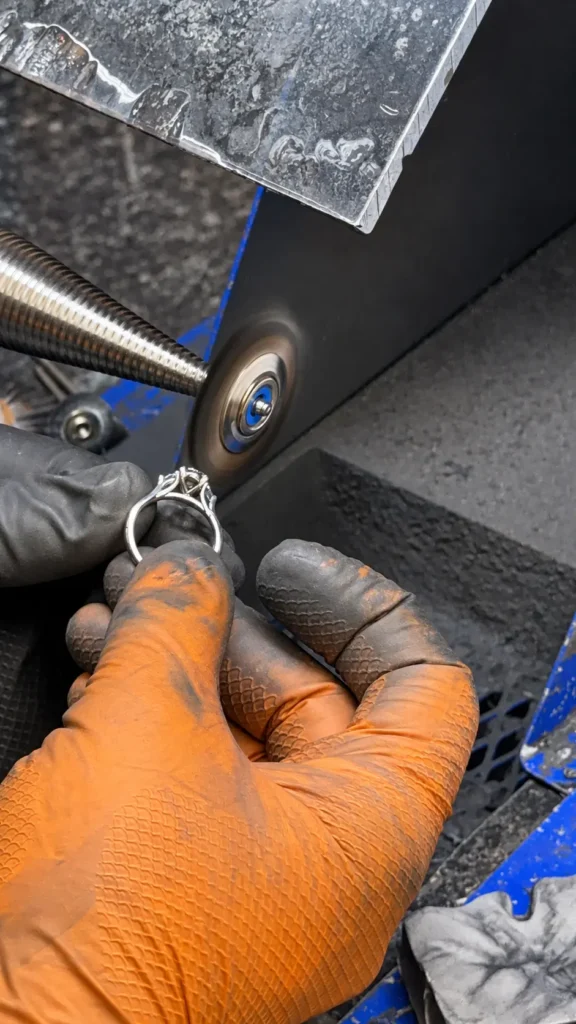
A jewellery repair collection is the point at which the customer sees how the completed work relates to the original request. A clear handover should cover the correct item, the agreed repair and any instructions or unresolved conditions that matter after return.
Prepare that conversation before the collection appointment. The retailer should understand the workshop’s completed scope and compare it with the customer approval, rather than rely on a general impression that the piece looks cleaner or brighter.
Discuss jewellery repair collection checklist
Specify the return condition and any collection checks when the repair scope is agreed.
Reconcile the item and completed scope
Check the job reference, item description and any separately supplied components. Compare the workshop return record with the authorised operations. Identify any approved change made after the original estimate so the customer receives a coherent explanation.
The production handover guide covers related record-keeping principles. For an individual repair, concentrate on this customer’s item and the specific work completed. A component returned separately should have a clear description and an agreed destination.
Review the agreed result
Assess the finish and visible repair area against the accepted scope. A local repair does not necessarily imply a complete restoration, and a deliberately retained patina should not be treated as unfinished polishing. Use the original condition record and approval to explain the result.
The quality control guide explains why a final check needs defined requirements. Keep specialist assessments distinct from the retailer’s presentation checks. Do not infer that all stones or mechanisms have received work merely because another part of the piece was repaired.
Prepare relevant fit and function checks
Where the repair concerns fit, arrange the collection so the agreed result can be discussed with the customer. For a mechanism, understand the intended operation and any instructions provided by the workshop. Avoid forcing or repeatedly manipulating a feature simply to demonstrate it.
Record any concern that differs from the accepted result and seek clarification before making a new promise. A&M’s working process includes final checking and return, while the retailer remains responsible for connecting the workshop’s information to its own customer handover.
Before you approve the work
Resolve a discrepancy between the completed work and the approved scope before the customer collects the piece.
Explain the work and the next care step
Use plain language to describe what was repaired or replaced. Where the customer chose between options, remind them of the selected scope and any retained condition that was part of that decision. Do not claim that a repair makes the entire item new or guarantees freedom from future wear.
Pass on care instructions appropriate to the materials and completed work. If the workshop has identified a future assessment need, explain it accurately without turning it into an invented universal service interval. Make clear whom the customer should contact if the reported issue returns or another concern appears.
Close the record with the handover
Keep the completed scope, customer communication and relevant return observations together under the job reference. The job preparation guide is useful at the start; the collection record completes the same chain of information.
A well-prepared repair collection is a practical explanation of the work, not simply the return of a polished object. It helps the customer understand the result and gives the retailer a clear record of what was delivered and discussed.
Plan the next step with A&M
Confirm the completed repair scope and return information before arranging the customer’s collection.
Frequently asked questions
Should every repaired piece look completely restored?
Only if that was the agreed result. A local repair or conservation-led approach may intentionally retain existing appearance or wear.
Does a completed repair mean every stone was reset?
No. Explain the actual setting work and checks recorded in the approved and completed scope.
What should happen if the return differs from the approval?
Clarify the discrepancy with the workshop before making assumptions or presenting an unconfirmed explanation to the customer.