
A&M Newsroom
Jewellery production, explained.
Manufacturing guides and practical workshop knowledge for jewellery retailers, designers and brands.
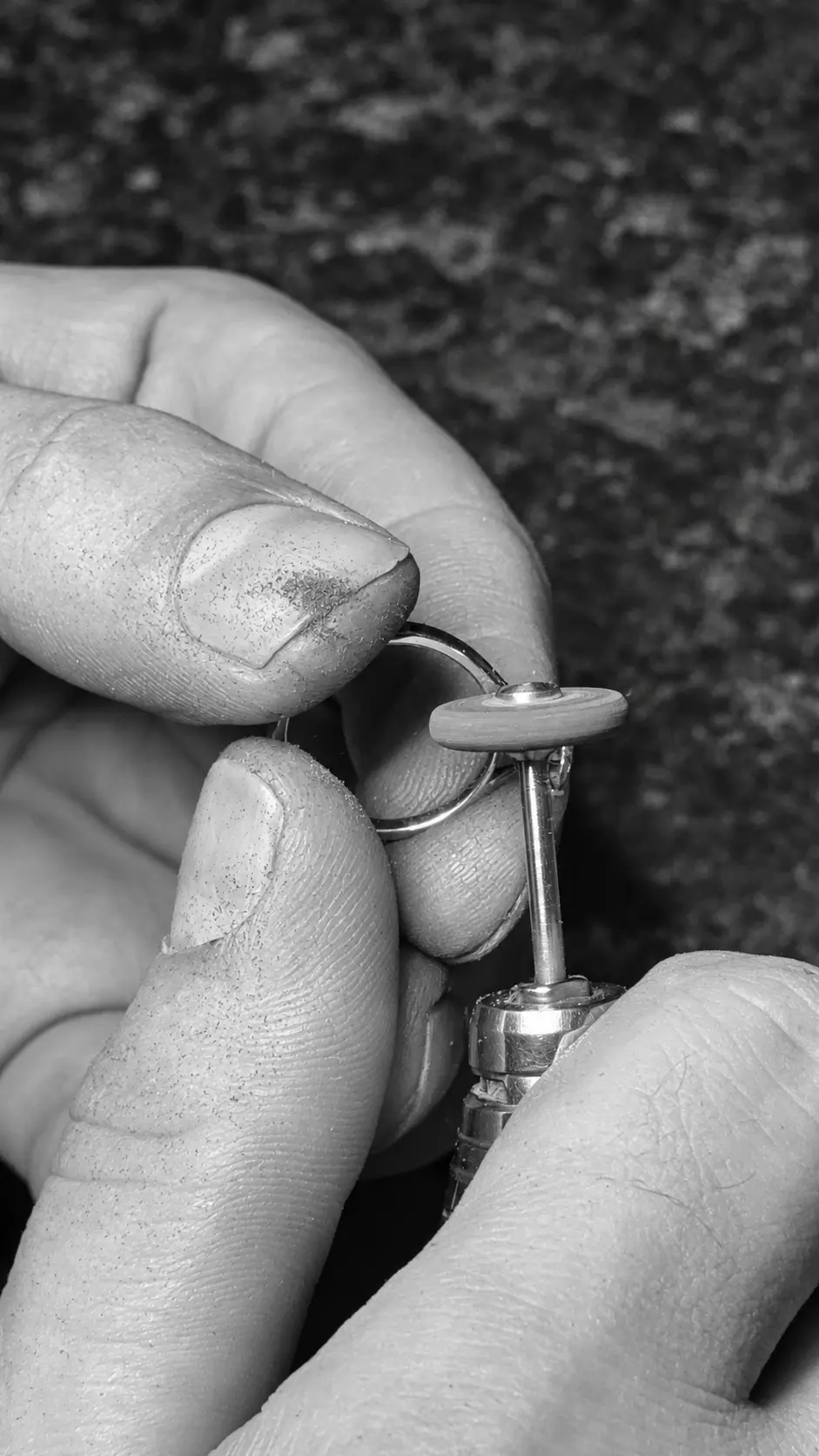
Informed briefs lead to better workshop decisions.
Explore design development, manufacturing, setting, finishing and production planning with A&M Jewellery Workshop.
Latest guidance
Explore the latest workshop guides.
Jewellery Repair Authorisation: Who Approves Extra Work?
A repair can involve three different conversations: the customer’s request, the retailer’s instruction and the workshop’s assessment. Problems arise when those conversations no longer describe the same work. An informal message to make it right may be interpreted more broadly than the customer intended.
Low-Set Engagement Rings and Wedding Band Clearance
A low-set engagement ring does not automatically leave room for every wedding band. The relevant question is how the setting and underside relate to the neighbouring ring. Two designs can both be described as low while creating very different gaps, contact points and wearing arrangements.
Can Jewellery Polishing Remove Deep Scratches?
Polishing can improve a jewellery surface, but complete removal of a deep scratch should not be promised from a photograph. The workshop needs to assess the mark in relation to the surrounding shape and the metal available. A finish that looks brighter may still contain the deeper damage the customer originally wanted addressed.
Invisible Setting Repairs: Why Specialist Assessment Comes First
An invisible-set piece can conceal the very structure that needs assessment when a stone becomes loose or goes missing. The absence of obvious claws does not make the repair simpler. It means the workshop must understand how the stones and their hidden support were designed to work together.
Broken Chain Repair: Why the Link Construction Matters
A broken chain can arrive at a jewellery counter as two loose ends, but those ends do not describe the whole repair. The link pattern, remaining condition and position of the break determine what the workshop needs to assess. Reconnecting one point may be a different proposition from replacing a damaged section or an end fitting.
Resizing a Patterned Wedding Ring Without Losing the Design
A patterned wedding ring can be straightforward to describe and difficult to alter discreetly. A repeated motif, faceted surface or continuous decorative line depends on how its elements meet around the band. Changing the circumference may introduce a new section that needs to work visually with everything already there.
Writing a Jewellery Repair Estimate: Scope, Assumptions and Exclusions
A useful jewellery repair estimate explains what the proposed work will achieve. A line reading repair ring leaves too much open: the customer may expect a loose stone to be secured, the workshop may have assessed a damaged claw, and the retailer may also be imagining a complete refinish.
Fitted Wedding Bands: Designing Around an Existing Engagement Ring
A fitted wedding band begins with the ring it must sit beside. Its curve or contour should respond to the actual engagement ring, including the setting, shoulders and underside. A photograph of a similar style can communicate an idea, but it cannot establish the precise relationship between the two finished pieces.
Platinum Patina: Keep the Worn Character or Refinish the Surface?
Not every owner wants a worn platinum ring to look newly polished. Some prefer a softer, lived-in surface, while others want a brighter finish restored. The useful workshop brief starts with that preference and then asks what the ring’s condition can reasonably support.
Channel Setting Repairs: Assess the Row, Not Just the Missing Stone
A missing or moving stone in a channel-set ring should prompt a review of the row around it. The empty position is easy to see, but the workshop also needs to assess the supporting metal and the stones that remain. Ordering a replacement by approximate size before that inspection can put the decisions in the wrong order.
Workshop consultation
Discuss a piece with the workshop.
Provide the item type, current condition and intended result for an informed initial conversation.