
Polishing & Refinishing
Can Jewellery Polishing Remove Deep Scratches?
Polishing can improve a jewellery surface, but complete removal of a deep scratch should not be promised from a photograph. The workshop needs to assess the mark in relation to the surrounding shape and the metal available. A finish that looks brighter may still contain the deeper damage the customer originally wanted addressed.
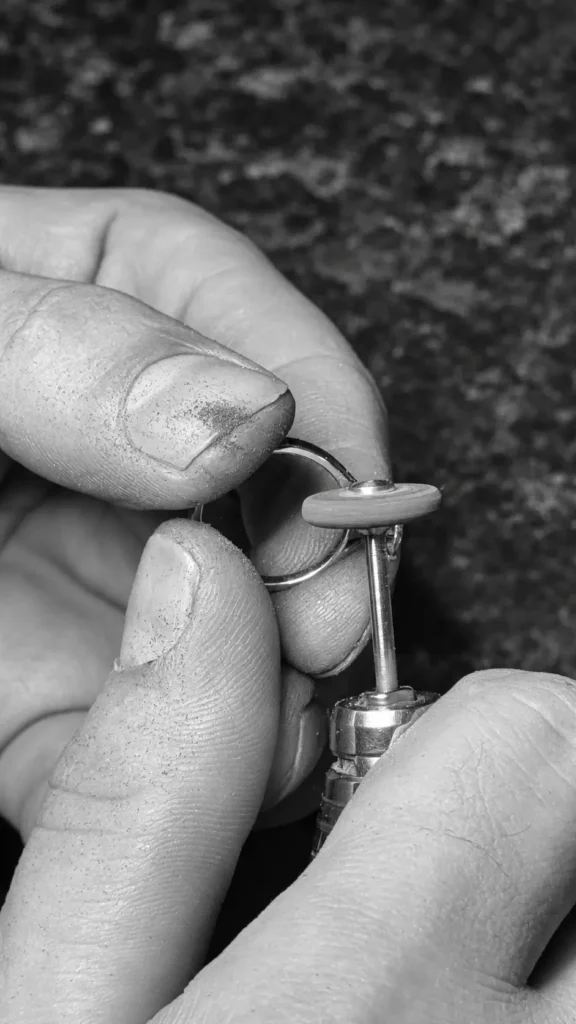
Polishing can improve a jewellery surface, but complete removal of a deep scratch should not be promised from a photograph. The workshop needs to assess the mark in relation to the surrounding shape and the metal available. A finish that looks brighter may still contain the deeper damage the customer originally wanted addressed.
The useful distinction is between improving appearance and restoring a specific profile. For a retailer, that means asking what result is realistic before presenting polishing as a universal remedy for every dent, groove or impact mark.
Discuss can polishing remove deep scratches jewellery
Show the scratch from several angles and identify the surrounding profile or engraving that must remain.
Identify what the mark actually is
Photograph the area under more than one lighting angle and include a wider view of the piece. A reflection can exaggerate or hide a surface feature. If the mark catches the customer’s attention because it changes the outline, make that clear in the enquiry.
Do not describe every visible line as a superficial scratch before assessment. The workshop may identify a deeper groove, a join, a casting-related feature or another condition requiring a different discussion. The initial record should describe what is seen and the improvement the customer wants.
Consider the surface around the damage
Ask which edges, curves and decorative details surround the mark. Corrective surface work needs to be considered against those features, especially where the section is already worn. Removing the visual fault is not the only acceptance condition if the shape of the ring changes in the process.
A&M’s polishing assessment considers surface correction alongside remaining metal and detail. The fine-detail guide provides supporting context. Together, they help explain why a workshop may recommend a restrained improvement rather than complete removal at any cost.
Agree the realistic result
Ask the workshop to distinguish what can be removed, what may be reduced and what is likely to remain. Where the result cannot be established from an initial view, record that uncertainty. A staged assessment may be more appropriate than a fixed promise about an unseen depth.
For example, an owner might prefer to retain a faint mark if eliminating it would alter a sharp edge they value. That is an illustrative choice, not a rule for every repair. The customer should be able to decide with the workshop’s actual findings in view.
Before you approve the work
Agree whether the goal is full removal, a reduced mark or a different repair route before polishing begins.
Discuss alternatives where polishing is unsuitable
A deeper feature may require a separate repair proposal or may be best left with an accepted limitation. Ask the workshop to explain the available routes rather than assume that more aggressive polishing is the next step. The rework or remake guide offers a framework for comparing different interventions.
If the piece has plating or a contrast finish, include its restoration in the discussion. Correcting the surface and applying a finish are separate stages. A coating should not be described as filling a structural defect or restoring lost metal.
Inspect under ordinary viewing conditions
At handover, compare the result with the agreed objective and original photographs. Use lighting that allows the surface to be seen clearly without relying on one flattering angle. Confirm any accepted remaining mark and the work completed around it.
Deep-scratch enquiries are best handled through a realistic description of what polishing can achieve on the actual piece. A careful limit explained before work begins is more useful than an absolute promise followed by an unexpected change to the design.
Plan the next step with A&M
Mark the scratches of concern and agree the acceptable surface change before authorising material-removing work.
Frequently asked questions
Can every scratch be completely removed?
No universal assurance is appropriate. Depth, location, surrounding geometry and remaining metal determine what surface correction is suitable.
Will rhodium plating hide a deep scratch?
It should not be presented as a repair for underlying damage. The surface and any structural concern need assessment before the finish is applied.
Is a remaining faint mark always a failed polish?
Not if that limitation was assessed and agreed. The result should be judged against the authorised scope and the details the owner chose to preserve.