
Polishing & Refinishing
Polishing Vintage Jewellery Without Erasing Its Character
An older piece does not need to look newly made to be well cared for. Its surface may carry engraving, maker’s details and wear that the owner values. Before commissioning polishing, a retailer should establish which changes are wanted and which features should remain part of the piece’s character.
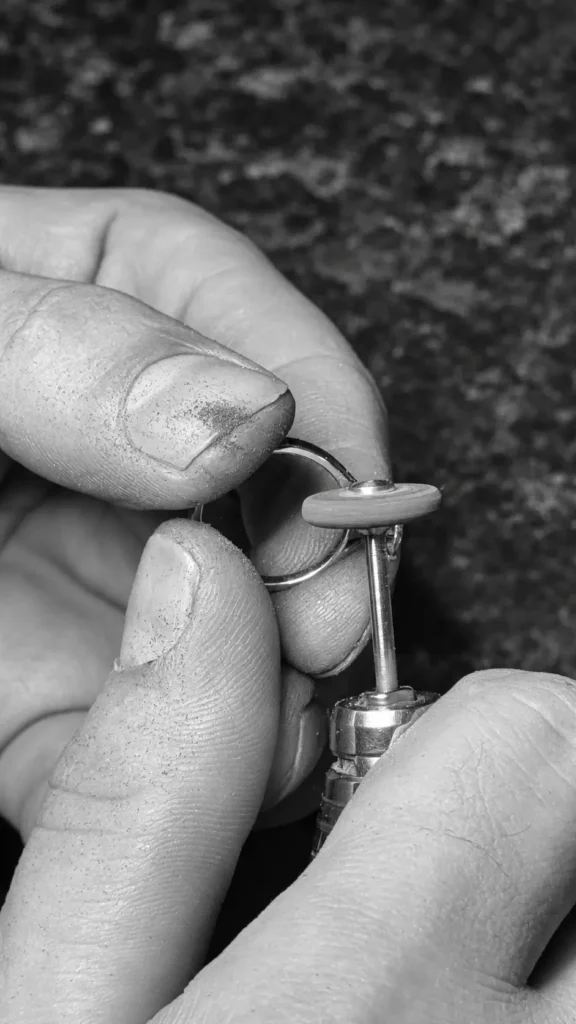
An older piece does not need to look newly made to be well cared for. Its surface may carry engraving, maker’s details and wear that the owner values. Before commissioning polishing, a retailer should establish which changes are wanted and which features should remain part of the piece’s character.
Vintage is also a description that can be used loosely. Do not infer age, authorship or value from style alone. Where those questions affect whether an intervention is appropriate, obtain relevant independent specialist advice before the workshop is authorised to alter the surface.
Discuss polishing vintage jewellery
Identify the original details and worn character the owner wishes to preserve before requesting a polish.
Record the details before deciding what to remove
Photograph inscriptions, marks, edges, decorative relief and areas of deliberate contrast. Include the overall item as well as close-ups. A complete record helps distinguish an existing worn feature from a change made during the proposed work.
Ask the owner what matters most. They may wish to retain a soft finish while improving a local mark, or to preserve an inscription even if that limits the surrounding polish. These priorities should be written as concrete constraints rather than a general request to keep the character.
Separate conservation questions from routine finishing
Possible historic significance can justify a different assessment route from an ordinary cosmetic repair. A workshop quotation is not a valuation or a guarantee about preserving collectability. Where the owner needs those opinions, identify the appropriate specialist before the scope is settled.
The Canadian Conservation Institute notes that repeated polishing can remove silver and soften detail. That conservation guidance illustrates why intervention should be considered carefully. It is not a complete treatment prescription for every vintage jewellery item or every metal.
Inspect the structure as well as the surface
Ask for worn settings, thin sections, joints and previous repairs to be considered before cosmetic work. A brighter item may still require attention to its construction. The setting assessment guide helps explain why surface appearance is not a substitute for examining support around a stone.
A&M’s polishing assessment considers remaining detail and surface condition together. Provide the complete preservation brief so the workshop can explain any conflict between the desired cosmetic improvement and the material that remains.
Before you approve the work
Agree the extent of intervention after condition assessment, especially where age or historic significance may matter.
Agree a proportionate finish
Define whether the proposal is cleaning, restrained local correction or a wider refinish. Mark the areas to be left alone and identify any detail that should not be sharpened, recut or brightened without further approval. A customer’s wish for improvement should not become permission to reinterpret the original design.
If an official mark may be affected, raise the question before work. The existing article on hallmarking after alteration provides supporting context. Do not treat a hallmark as ordinary decorative lettering that can simply be reproduced during finishing.
Compare the result with the preservation brief
At collection, review the retained character and protected details, not just overall shine. Keep the assessment, approved scope and original photographs together. Explain any accepted remaining wear so the owner understands it as part of the chosen result.
Good finishing of vintage jewellery begins with restraint in the brief: a clear account of what should improve and what should remain. The right intervention is the one that follows the item’s condition and the owner’s informed priorities.
Plan the next step with A&M
Mark the details and worn character the customer wants retained before discussing the extent of polishing.
Frequently asked questions
Does vintage jewellery always need a high polish?
No. The intended appearance and preservation priorities should be agreed first. Retaining some worn character may be the owner’s preferred result.
Can polishing affect fine detail?
It can, depending on the material and intervention. Identify shallow engraving, edges and marks before the workshop proposes a finishing scope.
Will a sympathetic polish protect the item’s value?
No value outcome should be promised. Seek appropriate independent advice where historic significance or market value affects the decision.