
Polishing & Refinishing
Restoring a Satin or Brushed Jewellery Finish After Wear
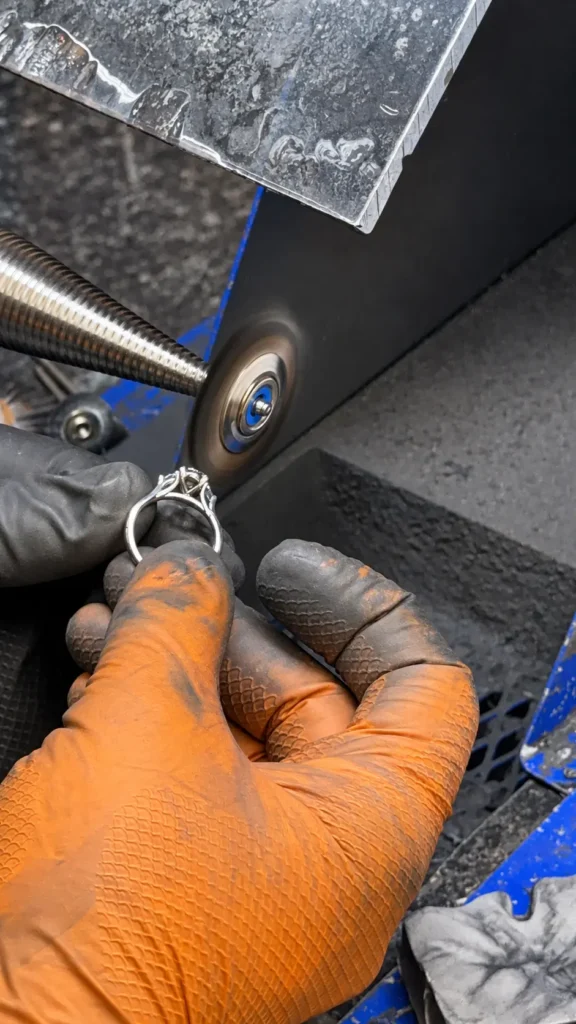
A worn satin or brushed finish needs a clearer instruction than make it matt again. The direction of the texture, its apparent coarseness and the way it meets polished areas all contribute to the design. A repair that restores a non-reflective surface but changes those relationships may not match the owner’s expectation.
A worn satin or brushed finish needs a clearer instruction than make it matt again. The direction of the texture, its apparent coarseness and the way it meets polished areas all contribute to the design. A repair that restores a non-reflective surface but changes those relationships may not match the owner’s expectation.
For a retailer, the first task is to establish the intended reference. That might be the original product image, an unworn part of the item or an approved sample. Each has limitations, and the workshop should know which one the customer has chosen.
Discuss restoring satin brushed jewellery finish
Provide the original finish reference where available and mark the direction and boundaries of the texture.
Identify the original finish as accurately as possible
Photograph the complete item and the textured areas from several angles. Record whether the visible lines run around a band, across it or in another deliberate direction. If the original finish is unknown, describe the current appearance without assigning a precise process name.
Ask the customer which features they want restored. They may prefer a subtle surface, a stronger directional effect or preservation of the existing worn character. A finish description should communicate that preference while leaving the technical method to the workshop’s assessment.
Mark the boundaries and protected details
Identify polished borders, engraving, raised motifs and stone-set areas beside the texture. The contrasting-finish guide explains why boundaries belong in the specification, not just the names of the finishes. A clear photograph can show where one surface should stop and another begin.
If a border is already worn or uneven, record that condition before promising restoration. The workshop may need to distinguish cosmetic refinishing from reconstructing an edge. Those operations should not be treated as the same scope simply because they occur beside each other.
Decide between local blending and wider refinishing
A local repair can create a matching question where it meets the older surface. Ask whether the proposed blend is likely to be acceptable or whether a larger area should be refinished for consistency. The customer should understand the extent of intervention before approval.
A&M’s polishing service includes assessment of high polish, directional satin and specified contrasts. The appropriate route depends on the actual item. Do not assume that every texture can be reproduced identically from a photograph taken under unknown lighting.
Before you approve the work
Agree whether the work is a local blend or a wider refinish before the textured surface is altered.
Include companion pieces where matching matters
For a pair or set, record whether both items should share the restored appearance. The batch-finish consistency guide discusses the value of a shared reference. In a restoration job, the same principle helps explain why one newly refinished piece may differ from a partner that retains wear.
Any work to the companion piece needs its own approval. Matching should not become permission to refinish jewellery the customer only supplied as a reference. Keep the intended treatment of each item clear under the job record.
Inspect the finish in more than one view
At collection, review texture direction, boundaries and the agreed degree of uniformity. Compare with the approved reference rather than rely on the broad label satin. Confirm any accepted variation where retained wear or construction limited the result.
Restoring a textured finish is a design-matching task as well as a surface operation. A precise reference and clearly marked boundaries help the workshop produce an appearance that reflects the owner’s intention.
Plan the next step with A&M
Provide a clear texture reference and mark the intended finish boundaries before restoration of the surface begins.
Frequently asked questions
Are satin and brushed always the same finish?
The terms can be used differently in sales conversations. Define the desired appearance with a reference and direction rather than relying on the label alone.
Can a small repaired patch always be blended invisibly?
That should not be promised before assessment. The existing wear and texture may make a wider refinish worth discussing.
Should polished borders be marked in the brief?
Yes. Identify all boundaries and details that should retain their appearance so the texture is not applied more broadly than intended.