
Ring Sizing & Fit
An Out-of-Round Ring: Reshaping, Resizing or Further Repair?
A ring that has become oval or distorted can feel different even when no deliberate sizing work has taken place. The first question is therefore whether the customer needs a different size or whether the original shape has changed. Treating those as the same problem can lead to an instruction that misses the underlying condition.
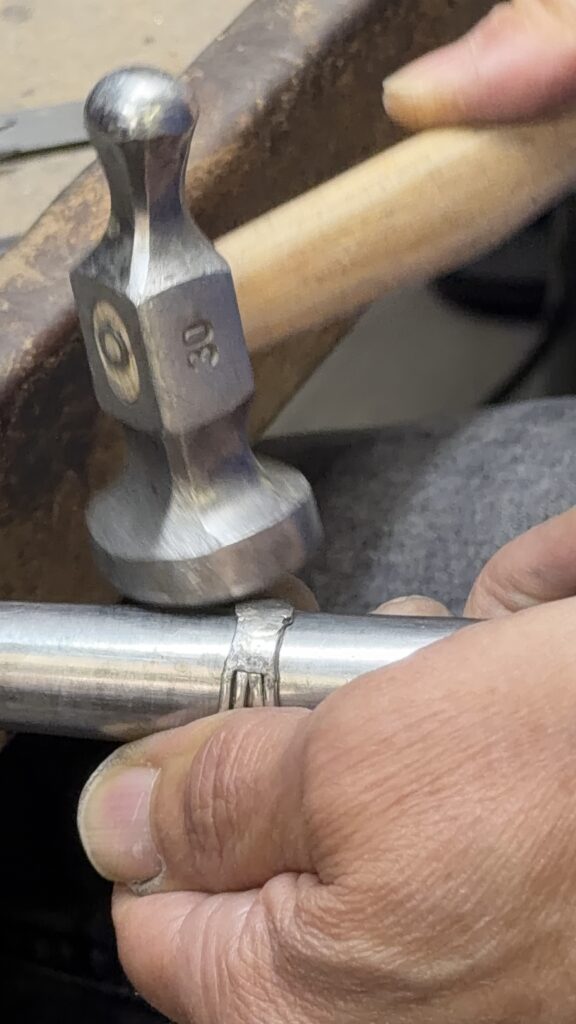
A ring that has become oval or distorted can feel different even when no deliberate sizing work has taken place. The first question is therefore whether the customer needs a different size or whether the original shape has changed. Treating those as the same problem can lead to an instruction that misses the underlying condition.
For a retailer, an out-of-round ring is an assessment job. The workshop needs to understand the band’s shape, the condition of the metal and any effect on the upper part of the ring. A quick visual judgement that it only needs making round is not enough to define the work.
Discuss out of round ring repair
Show the ring from above and from both sides, and describe how the distortion was noticed.
Record the distortion before handling the ring further
Photograph the ring from above, underneath and from the side. If one shoulder is displaced or the setting appears tilted, show that clearly. Record the customer’s account of when the change was first noticed, without converting their account into a confirmed diagnosis.
Avoid repeatedly pushing the ring onto a measuring tool to demonstrate the problem. The starting shape and condition are useful evidence for the workshop. If stones appear loose or the band is visibly damaged, advise the customer to keep the ring unworn until it has been assessed.
Separate shape from size
State the measured information with its limitations. A distorted ring may not sit on a sizing tool in the same way as a regular round band, so a single reading can be misleading if it is treated as a complete description. Ask the workshop to establish the relevant measurements during assessment.
If the customer also wants a different fit, include that as a separate request. The existing ring-sizing brief helps capture the intended finished size. It should sit alongside the repair instruction rather than replace the description of the distortion.
Inspect the shoulders and settings
The visible bend may be in the underside while the upper part has also been affected. Ask for the shoulders, joints and settings to be considered where relevant. A stone-set ring should not be assessed only as a metal circle with a decorative top.
GIA’s sizing guidance for a platinum ring with shank diamonds treats the set section as part of the workmanship assessment. The precise repair route for a damaged ring remains a separate decision, but the wider lesson is useful: geometry and stone security need to be considered together.
Before you approve the work
Confirm whether the instruction concerns shape, fit or both before approving a repair.
Agree what reshaping can reasonably achieve
Ask whether the existing section is suitable for correction or whether wear, cracking or earlier repairs change the proposal. The scope may need to include more than reshaping. A&M’s repairs and alterations page sets out the enquiry route for reviewing the actual piece.
Discuss the expected finished outline and any existing irregularity that will remain. Some designs are intentionally shaped, and an altered or handmade ring may not match an assumed ideal circle in every view. Use the agreed design and fit as the reference, not an unexplained demand for geometric perfection.
Review the completed ring against the agreed purpose
At handover, check the shape, fit and any associated setting work against the authorised scope. Confirm whether refinishing was included and whether the customer’s original concern has been addressed. Keep the before photographs with the job record so changes can be explained accurately.
An effective repair begins with the right question. Establishing whether the problem is distortion, sizing or a combination gives the workshop a clearer instruction and helps the customer understand why inspection comes before a promise about the result.
Plan the next step with A&M
Describe the change in shape and any known incident so the workshop can consider the ring’s condition before proposing reshaping.
Frequently asked questions
Does an oval ring mean the original size was wrong?
Not necessarily. Shape and size are different observations. The workshop should assess the distortion and the customer’s fit requirement separately.
Can every bent ring be made round again?
No universal assurance is appropriate. Remaining metal, cracks, previous work and the setting construction can affect whether reshaping is suitable.
Should the customer keep wearing it while waiting?
If the ring is visibly damaged, uncomfortable or has a suspected loose stone, keeping it unworn until assessment avoids adding uncertainty to the condition.