
Ring Sizing & Fit
Resizing a Patterned Wedding Ring Without Losing the Design
A patterned wedding ring can be straightforward to describe and difficult to alter discreetly. A repeated motif, faceted surface or continuous decorative line depends on how its elements meet around the band. Changing the circumference may introduce a new section that needs to work visually with everything already there.
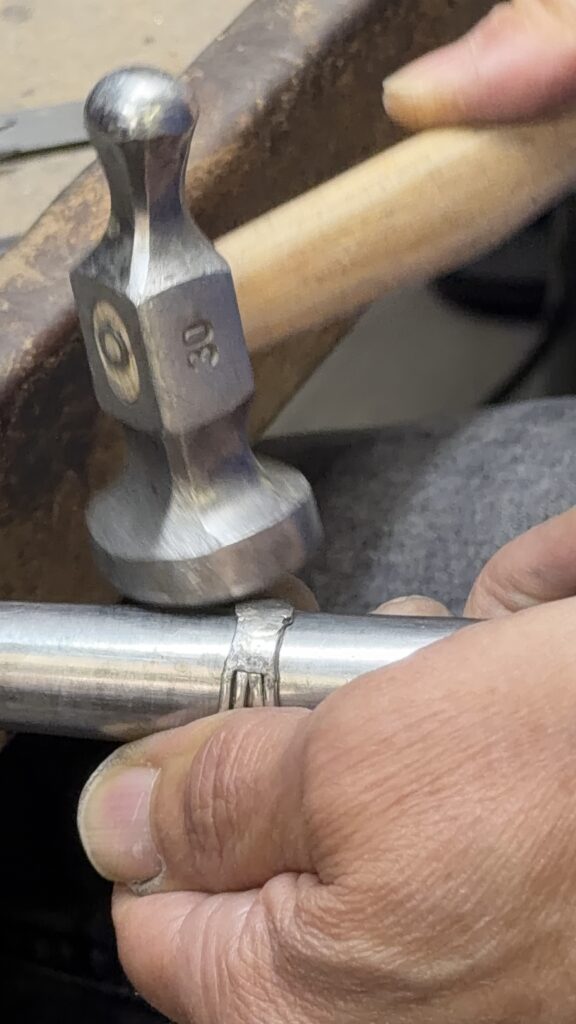
A patterned wedding ring can be straightforward to describe and difficult to alter discreetly. A repeated motif, faceted surface or continuous decorative line depends on how its elements meet around the band. Changing the circumference may introduce a new section that needs to work visually with everything already there.
The useful starting point is a conversation about what must remain recognisable. A customer may care most about the original pattern, an inscription or the width of the band. Record those priorities before reducing the instruction to a finished ring size.
Discuss resizing a patterned wedding ring
Show the complete repeating pattern and identify any details the customer wants preserved.
Photograph the pattern around the whole band
One attractive photograph of the front is not enough to explain a repeating design. Provide a sequence showing the underside, both sides and the top, with an indication of how the images connect. Include any area where the pattern already changes or a previous joint is visible.
Describe the finish as well as the motif. A cut line within a brushed surface presents a different matching question from a raised border beside a polished face. Existing wear may also make one section appear shallower than another. The workshop needs to distinguish that history from a defect introduced by the proposed work.
Separate size change from pattern restoration
Agree whether the job is to resize the ring while retaining its current character or to restore the decorative pattern more extensively. These are different scopes. A customer who values the worn original appearance may not want every line recut to look new.
If the pattern cannot continue seamlessly through the proposed alteration, ask for the practical options. Depending on the construction, the discussion may include a discreet plain section, local reworking or a different solution. The availability of those options needs physical assessment through the ring-sizing enquiry route.
Make the joint position an explicit decision
The position of an alteration can matter to the appearance even when it sits beneath the finger. Ask where the workshop proposes to work and how that area relates to the repeat, any inscription and the existing marks. Avoid giving separate instructions that compete for the same small section of the band.
For a ring with a design that has a clear front, record its orientation. A central motif that finishes off-centre after alteration may disappoint the customer even if the size is correct. The desired relationship between motif, finger and underside should be part of the brief.
Before you approve the work
Ask how the altered section will join the existing pattern before approving the work.
Approve the finishing boundary
The altered area must be assessed against the surrounding surface, not just polished in isolation. Discuss whether local finishing will create a visible difference and whether broader refinishing is appropriate. A brighter repair patch can make an otherwise careful alteration appear unfinished.
Existing hallmarks and shallow details deserve particular attention. The Goldsmiths’ Company Assay Office explains that laser marks tolerate only limited subsequent polishing. That is a reason to identify the marks and agree the finishing route, not to assume that every marked area can be polished back to match.
Check the completed ring as a design
At collection, compare the pattern continuity, orientation and finish with the agreed instruction before concentrating solely on the size. Look at the ring from the angles used in the original photographs. Record any compromise that was discussed and accepted before work began.
Patterned wedding ring resizing works best when the retailer explains both parts of the commission: the fit adjustment and the treatment of the design. Keeping those decisions together gives the customer a more accurate expectation of the finished piece.
Plan the next step with A&M
Provide the pattern reference and the details to preserve so the sizing and finishing proposal can be considered together.
Frequently asked questions
Will the pattern always remain continuous?
No universal promise is appropriate. Continuity depends on the pattern, the proposed size change, available metal and the feasibility of matching or rebuilding the altered section.
Should an old inscription be removed before resizing?
Only if that is part of the approved instruction. First establish whether the inscription conflicts with the proposed alteration and whether the customer wants it preserved.
Can the whole pattern be refreshed at the same time?
It may be worth discussing, but restoration of the pattern is additional work. Agree the intended appearance and scope separately from the change in size.