
Stone Setting & Product Construction
Wedding Ring Production: Specifying Width, Profile and Finish
Wedding ring production relies on a small set of visible and physical details being specified accurately. Rings described with the same width and metal can still differ in profile, edge treatment and internal shape. Those differences should be deliberate parts of the design rather than assumptions left to the workshop.
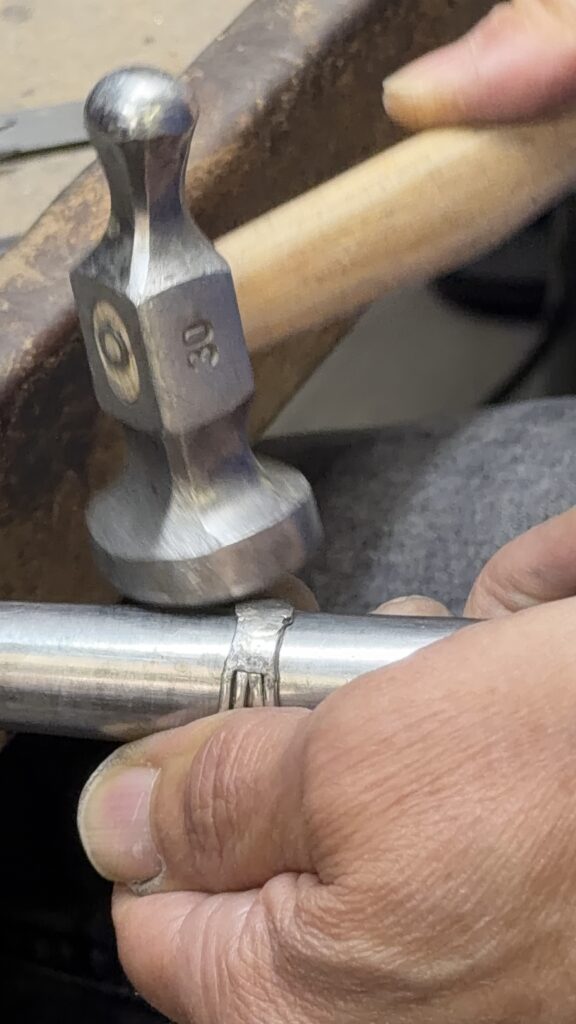
Wedding ring production relies on a small set of visible and physical details being specified accurately. Rings described with the same width and metal can still differ in profile, edge treatment and internal shape. Those differences should be deliberate parts of the design rather than assumptions left to the workshop.
Use a reference sample where the feel or profile matters. Pair it with written dimensions and a clear size requirement so the manufacturer can assess the actual product you intend to offer.
Discuss wedding ring production specification
Provide the wedding-band size, width, profile and finish reference together.
Define width and profile separately
State the finished width and show the cross-sectional profile. A width measurement does not explain whether the outer surface is flat, rounded or shaped in another way. Identify the intended edges and any other features that affect the visible outline.
If the inner profile is important, record it explicitly. A photograph of the ring from above may not show that detail. Use a section drawing or physical sample to make the requirement understandable.
Confirm size and the checking method
Use one agreed sizing system and identify how the finished ring will be checked. Do not rely on an informal conversion from another system without confirmation. The production record should state the intended size for each variant.
For a range of sizes, review which dimensions remain fixed and which may change. A larger size does not automatically require every feature to scale. The design and workshop should agree the intended relationship.
Specify the material and surface
Record the metal, fineness and available alloy information. Then describe the finish and its location. A satin exterior with polished edges is a different requirement from one texture covering every surface.
A&M’s jewellery polishing service can be discussed against the actual sample and surface boundaries. Agree how the finish will be assessed so a broad term such as brushed does not become the only acceptance criterion.
Before the next production step
Confirm the profile and finish sample before releasing the size range.
Plan engraving and marking
Identify any engraving, its location and the exact approved wording or artwork. Consider its relationship with required marks and the ring’s construction. The sequence should be agreed before final surface work is treated as complete.
Confirm who arranges hallmarking and checks the finished record. Where these operations are outside the manufacturing scope, name the next responsible party so the rings are not handed over as more complete than they are.
Compare the finished range consistently
Inspect dimensions and appearance against the approved references. Where the collection is intended to match, compare variants under the same viewing conditions. Keep intentional differences in width, metal or finish clearly identified.
Record any accepted change to the production standard for future orders. A sample adjusted during development should have its accompanying specification updated so a reorder repeats the accepted ring rather than an earlier version.
Make simple designs precisely specified
Wedding bands often leave little decorative detail to distract from proportion and finish. Clear width, profile, size and surface references give the workshop a sound basis for producing a consistent range.
Looking for wedding rings for yourself?
For a personal purchase or a gift, visit Kinzy London to explore the options or discuss what you have in mind. A&M’s workshop services are for jewellery businesses.
Frequently asked questions
Does width define the whole wedding ring profile?
No. Width is one dimension. The outer shape, inner profile, depth and edge treatment may also need to be specified to describe the intended ring.
Can I use one sample for different widths?
A sample can show some shared features, but it may not establish the proportions of every width. Agree what it represents and which variants need additional review.
Should engraving be specified before production?
Yes, raise it early enough to plan position and sequence. Supply exact approved text or artwork and confirm how it relates to other marks and the finished surface.