
Repeat Production & Handover
Moving from a Jewellery Prototype to Repeat Production
Moving from a jewellery prototype to repeat production requires more than instructing the workshop to make more of the sample. Development pieces can contain one-off adjustments, substitute materials or decisions that were never transferred into the final specification. Those details need to be resolved before a wider run begins.
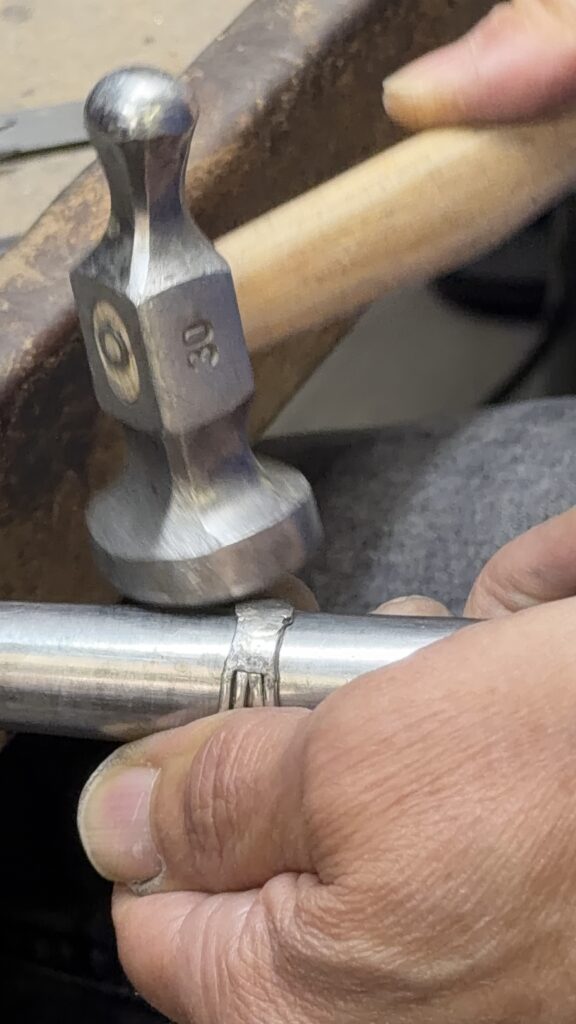
Moving from a jewellery prototype to repeat production requires more than instructing the workshop to make more of the sample. Development pieces can contain one-off adjustments, substitute materials or decisions that were never transferred into the final specification. Those details need to be resolved before a wider run begins.
The aim is to turn an accepted physical result into a product that can be identified, made and checked consistently. That requires a review of both the design record and the route used to produce it.
Discuss jewellery prototype to production
Bring the accepted prototype and explain which features remain to be proven in production.
Establish what was actually approved
Identify the accepted prototype and the decisions it supports. Was approval limited to appearance, or did the sample use the final material and construction? List any features that remain provisional.
If several samples exist, make the current one unmistakable. A visually similar earlier version should not remain in circulation as an alternative reference. The production team needs one clear account of the accepted result.
Capture development adjustments
Review changes made at the bench during prototyping. A component may have been adapted or a relationship altered to achieve the accepted result. If that work is not reflected in the files or component specification, the next piece may repeat the original problem.
Decide which adjustments should become part of the design and which require a different production approach. Record the answer rather than relying on the person who made the first sample to remember every detail.
Review repeatable inputs
Confirm the materials, stones and components that will supply the run. A prototype made from an individually selected part does not prove that the whole incoming batch will meet the same requirement.
A&M’s production guidance makes component consistency part of the assessment. Provide the intended supply information and identify where the production parts differ from those used during development.
Before the next production step
Capture bench adjustments before the prototype becomes the repeat reference.
Establish the first production standard
Agree whether a representative first piece is needed using the actual route and materials. Its purpose is to confirm the result intended for the run, including features the prototype did not demonstrate.
State what the approval releases: the quantity, variants and any conditions. Retain inspection for later pieces. A first production sample establishes the reference but does not prove that every subsequent item will conform.
Prepare the production record for reuse
Keep the approved model, component list, stone requirements and finish reference together. Add the relevant inspection and handover requirements so a later order can use the record without repeating the whole development conversation.
If the production review leads to another design change, update all affected references. The accepted sample and released file should not describe different products by the time the wider run starts.
Transfer the knowledge, not just the object
A prototype becomes a useful production foundation when its decisions are captured in a clear specification and route. Resolve the remaining uncertainties before multiplying the quantity, then assess the run against the representative standard.
Plan the work with A&M
A&M can assess your trade enquiry in the context of the actual piece and requested workshop stages. Bring the references discussed in this guide so the next decision can be made on clear information.
Frequently asked questions
Does a successful prototype prove a design is ready for a large run?
Not by itself. Review the materials, adjustments and production route, and establish what the prototype actually proved before releasing repeated work.
Should bench adjustments be added to the CAD model?
Assess whether they change the intended design or production requirement. Any change needed for repeatability should be captured in the appropriate current reference rather than left as unwritten knowledge.
Can production use different materials from the prototype?
It can be considered, but the differences need assessment. Record which approvals remain valid and which features require confirmation using the actual production materials.