
CAD & Prototyping
Wall Thickness in Jewellery CAD: What to Discuss Before Production
Wall thickness in jewellery CAD affects more than whether a model can be produced. It is connected to how a piece is constructed, how it is worked after production and what remains around a setting or joint. A single minimum thickness copied from another design is therefore an unreliable substitute for a job-specific discussion.
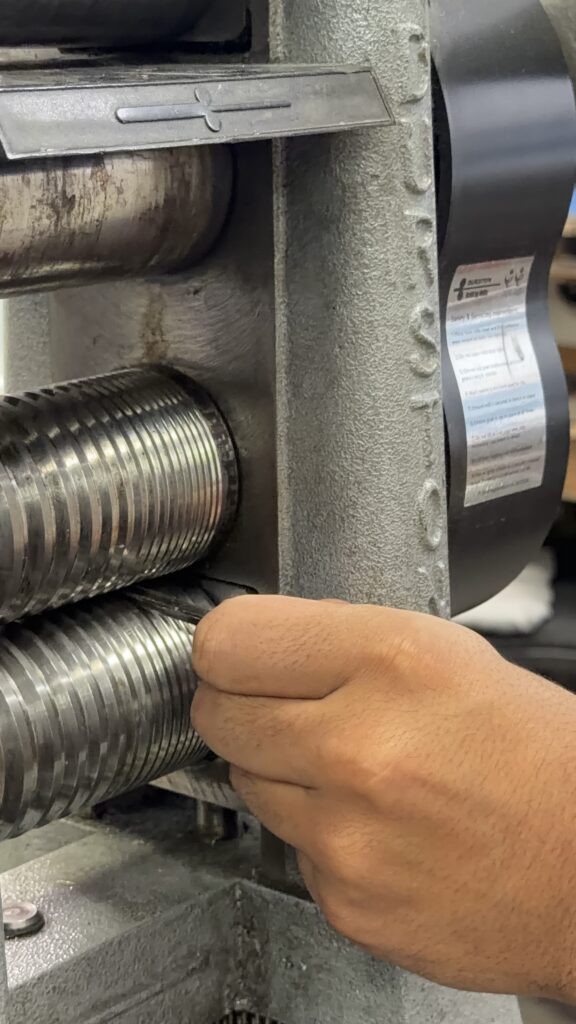
Wall thickness in jewellery CAD affects more than whether a model can be produced. It is connected to how a piece is constructed, how it is worked after production and what remains around a setting or joint. A single minimum thickness copied from another design is therefore an unreliable substitute for a job-specific discussion.
The useful question is what thickness a particular feature needs at the relevant stage. That means distinguishing the model dimension from the final accepted dimension and considering the operations between them.
Discuss jewellery CAD wall thickness
Highlight the sections whose thickness controls the construction of your piece.
Identify the feature being measured
A broad shank, a narrow wall beside a stone and a hollow pendant shell perform different roles. Mark the area being discussed and show the measurement direction. A dimension taken across one section may not describe the thinnest part of the feature.
Use section views where they clarify hidden geometry. Perspective images can be helpful for orientation, but they should not be the only evidence for a dimension that controls construction. Keep the measured location tied to the approved model revision.
Discuss the actual material and route
Ask the manufacturer to assess the feature for the specified alloy and production method. A recommendation made for one material or process should not be treated as a universal rule for all jewellery.
The A&M CAD service identifies critical thicknesses and the intended process as relevant design information. Provide those details before asking whether a model is ready, and request a clear explanation where a change is recommended.
Consider what happens after the model
Preparation, joining, setting and finishing can affect the finished feature. Ask which areas need working allowance and who is responsible for applying it. If several suppliers are involved, avoid having each independently add an allowance for the same operation.
The finishing requirement also matters. A crisp ridge, textured recess and broad polished surface may need different treatment. Discuss which edges and details must be preserved so later work does not unintentionally redefine the design.
Before the next production step
Agree the finished measurement and any working allowance with the workshop.
Examine the areas around stones and joints
A wall can appear substantial in the model yet leave limited material where a seat or joining feature will be prepared. Review the intended stone dimensions and the construction with the relevant specialist.
Do not use a generic stone model to close the discussion if the actual stone remains unmeasured. Identify the assumptions and set an approval point before irreversible work. This is a production planning recommendation, not a prescribed setting dimension.
Verify the finished result
Where a feature is critical, agree how it will be checked after the relevant operation. A pre-production dimension does not establish the final condition. Record the measurement location, acceptable range and any reference sample used.
If the first piece differs from the design intention, review the cause before changing the whole batch. The correction may involve geometry, an allowance or the working sequence. Keep the revised instruction explicit so the same issue is not repeated.
Agree thickness as part of construction
Use feature-specific measurements and a defined production route to discuss thickness. The result should be an agreed dimension and verification method for the actual piece, rather than an unexplained minimum applied everywhere.
Plan the work with A&M
A&M can assess your trade enquiry in the context of the actual piece and requested workshop stages. Bring the references discussed in this guide so the next decision can be made on clear information.
Frequently asked questions
What is the minimum wall thickness for jewellery?
There is no single figure suitable for every material, feature and process. Ask the manufacturer to assess the actual geometry and finished requirement rather than using a generic number.
Should the CAD model include polishing allowance?
Agree this with the receiving workshop. State which dimensions describe the finished piece and which include an allowance, so the same adjustment is not applied twice.
Can thickness be checked from a render?
A render does not reliably communicate hidden sections or exact dimensions. Use dimensioned model views or other appropriate technical information for the feature being assessed.