
CAD & Prototyping
First Sample Approval: What to Check Before a Jewellery Production Run
First sample approval establishes the result that a jewellery production run is expected to repeat. It is a commercial and technical decision, not simply confirmation that the sample looks attractive. The approval should identify the sample, the features assessed and the quantity or variants it authorises.
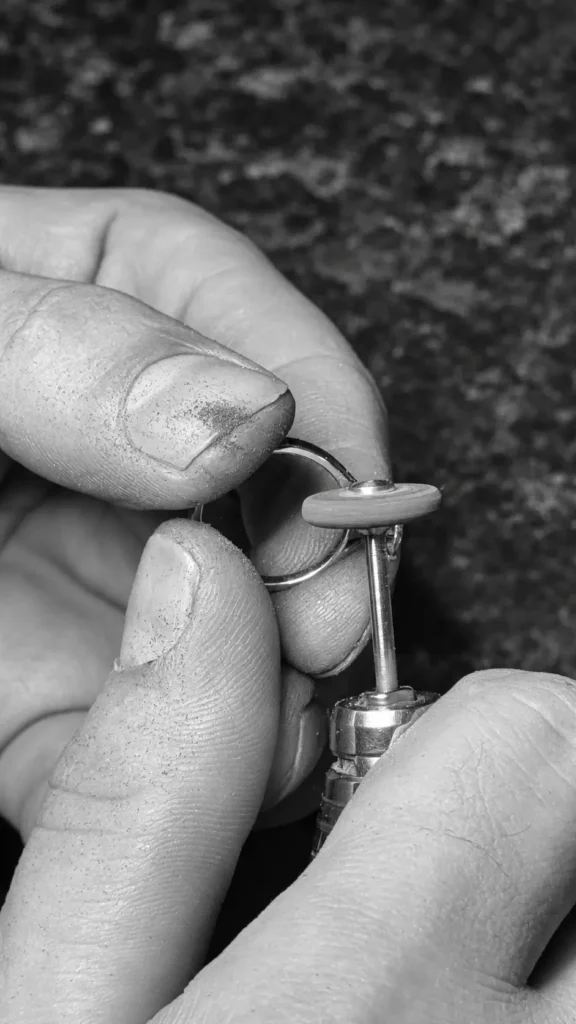
First sample approval establishes the result that a jewellery production run is expected to repeat. It is a commercial and technical decision, not simply confirmation that the sample looks attractive. The approval should identify the sample, the features assessed and the quantity or variants it authorises.
Review the sample against a current specification. If the sample differs from that document, decide whether the piece needs changing or the specification needs an explicit revision. Leaving the difference unexplained creates two competing standards.
Discuss jewellery first sample approval
Define the sample and the production quantity its approval would release.
Confirm the sample represents the intended run
Check the metal, components, stones and production stages used. Identify any substitutions or operations completed differently from the proposed batch. A sample may still be useful, but its limits should be visible.
Ask whether the sample represents every variant. A ring in one size or an earring with one stone shape may not establish the result for a materially different version. Agree any additional samples or checks before releasing those items.
Check measurable requirements
Compare the agreed dimensions and fit features using the method established with the workshop. Record the actual result where a measurement matters. A tick beside a general statement of quality is less useful than evidence tied to a specific requirement.
If an acceptable range has not been agreed, resolve it rather than inventing one during inspection. The manufacturer needs a clear standard that can be applied consistently to subsequent pieces.
Inspect construction, setting and finish
Review alignment, operation and the surfaces identified in the brief. Include less visible areas that still matter to the finished item. A clean piece is easier to assess than one with residue or temporary material obscuring the surface.
For setting workmanship, use appropriate specialist assessment. GIA’s setting benchmarks provide reference material for evaluating defined features. The sample approval should not imply an independent certification that has not been obtained.
Before the next production step
Record the accepted features and any conditions before the batch is released.
Record conditions and required changes
Use clear outcomes: accepted, accepted for a specified purpose, or returned for an identified change. A conditional approval should say which work can proceed and what must be resolved before the rest is released.
Name the person approving the sample and connect the decision to the correct version. If a requested change will be incorporated into production, agree whether another sample or documented check is required to confirm it.
Preserve the production reference
Keep the approved sample or an agreed equivalent reference available during the run. Store its record with the released files and specification. Avoid altering or using the sample in a way that removes the features it is meant to demonstrate.
A&M describes first-off review where construction or finish needs to be established before repeat work. Ask how the reference will be used for the specific batch and how exceptions will be reported.
Release a defined quantity against a defined standard
An effective sign-off says exactly what has been accepted and what production it permits. Keep subsequent inspection in place: an approved first piece establishes the target, while the batch still needs checking against it.
Plan the work with A&M
A&M can assess your trade enquiry in the context of the actual piece and requested workshop stages. Bring the references discussed in this guide so the next decision can be made on clear information.
Frequently asked questions
Does approving a sample accept the entire future batch?
It establishes the agreed reference and any authorised release. Later pieces still need the checks agreed for the run; sample approval is not evidence that unmade or uninspected goods conform.
Can I approve with changes outstanding?
Only with a clear record of the condition and what may proceed. Decide whether the revised feature needs another sample, photograph or measurement before the wider run is released.
Should the workshop keep the sample?
Agree where it will be held and how it remains available for comparison. If the client needs it elsewhere, establish an alternative reference that preserves the important approved features.