
CAD & Prototyping
Adapting a Ring Design for Different Sizes: Production Considerations
Adapting a ring design for different sizes involves more than changing the opening. The size range may affect the relationship between the shank, setting, stone layout and visible proportions. A design that works in the development size should be reviewed before it becomes a production range.
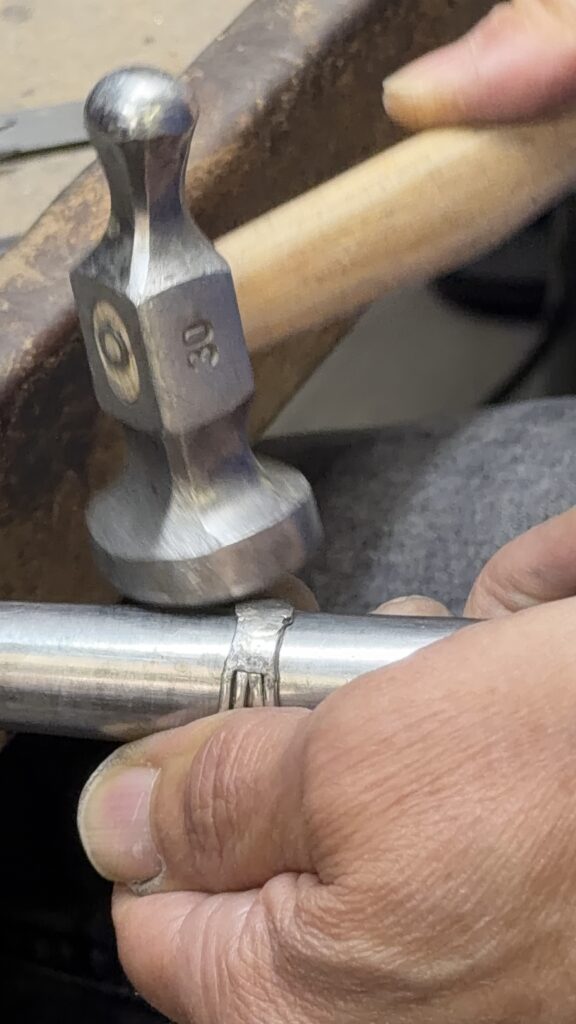
Adapting a ring design for different sizes involves more than changing the opening. The size range may affect the relationship between the shank, setting, stone layout and visible proportions. A design that works in the development size should be reviewed before it becomes a production range.
Start by deciding what should remain constant. The centre-stone arrangement, shank width or overall visual character may be fixed, while other geometry needs to change. Those choices should be deliberate and documented.
Discuss ring design size variations
Set out the required ring sizes and the design features that should remain constant.
Separate size from proportion
A larger opening does not necessarily mean every feature should grow proportionally. Decide whether the setting, shoulder shape and decorative details should remain the same or change with size. A uniform scaling operation may alter features that were intended to stay fixed.
Use labelled views to compare variants. The purpose is to see whether the range still expresses the same design while meeting the required dimensions. Ask the workshop to identify construction questions that appear at either end of the proposed range.
Review the stone layout
Stone count, spacing and the point where a setting section ends may need consideration. Confirm whether the same stones and arrangement are intended across sizes or whether each variant has its own specification.
Do not assume an accent-stone layout can be stretched without affecting the setting plan. Discuss the actual geometry and supplied stone dimensions with the setter. This is especially relevant where the design carries detail around much of the shank.
Define the shank consistently
State the width, profile and other important finished dimensions for each variant. Where a feature is shared, identify it explicitly. Where it changes, record the intended relationship rather than leaving the manufacturer to infer it.
A&M’s CAD service can be discussed in terms of the required adaptation and deliverable. Explain that the task concerns a range for new production, not simply a later sizing alteration to a finished ring.
Before the next production step
Choose the variants that need further modelling or representative samples.
Choose representative checks
Discuss which variants need samples or additional review. The smallest, largest or most structurally different size may reveal questions that the original sample did not address. There is no universal rule that one sample proves an entire range.
Agree how ring size will be measured and recorded. Consistent terminology and checking methods are more useful than relying on an unverified conversion from another sizing system.
Keep the variants identifiable
Use distinct references for the released models or outputs. A production order should identify the size and quantity against each reference, with no need to infer the variant from a filename fragment or a photograph.
When one variant is revised, consider whether the change affects the others. A corrected setting relationship or shank detail may need to be carried through the range, but that should be reviewed and approved rather than assumed.
Approve the range as a set of deliberate variants
The goal is a coherent design across the required sizes, supported by clear specifications and suitable checks. Decide what changes, what remains fixed and what evidence is needed before releasing each variant.
Plan the work with A&M
A&M can assess your trade enquiry in the context of the actual piece and requested workshop stages. Bring the references discussed in this guide so the next decision can be made on clear information.
Frequently asked questions
Can I scale the whole CAD model to change ring size?
That may also change the setting and other features that should remain fixed. Ask for a controlled size adaptation that preserves the intended design and stone requirements.
Must stone count stay the same across sizes?
That is a design and production decision. Record the chosen layout for each variant and review any effect on spacing, appearance and setting construction.
Is this the same as resizing a finished ring?
No. Planning variants for new manufacture allows the design to be reviewed before production. Altering an existing finished ring involves its current material, settings and construction constraints.