
Finishing & Quality Control
Approving Jewellery Finish from Photographs: Controlling the Comparison
Jewellery finish approval photographs can support a remote decision, but reflective metal is difficult to compare from unrelated images.
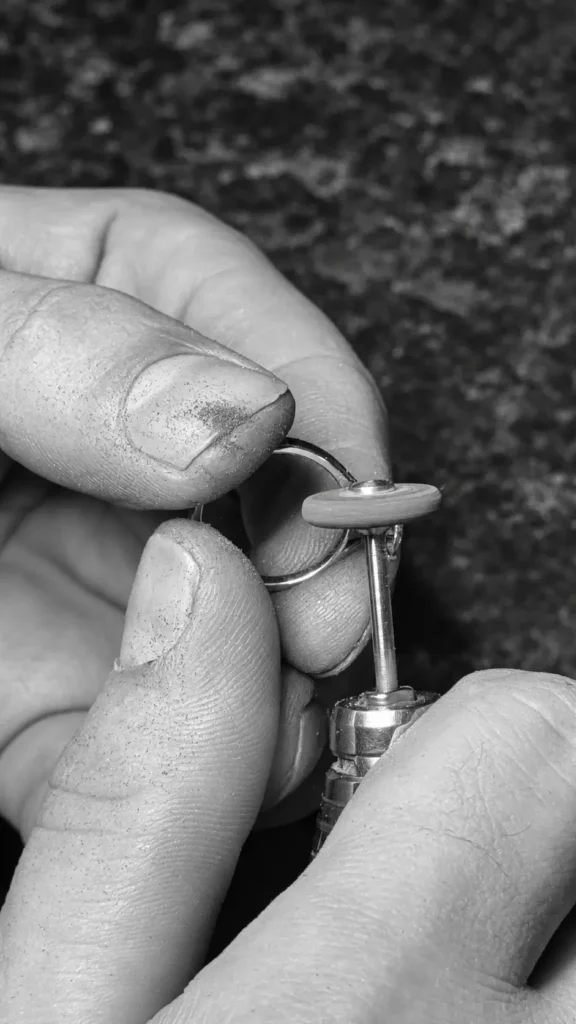
Jewellery finish approval photographs can support a remote decision, but reflective metal is difficult to compare from unrelated images. A bright patch may be a reflection rather than a polished area, while a shadow can make a surface look darker or more textured than it is.
Agree what the photographs are intended to establish. They may confirm the placement of a brushed field or the outline of a polished border. They cannot automatically replace physical inspection of every surface or setting.
Discuss a trade workshop job
Planning polishing and rhodium work? Apply for a trade account or call the workshop to discuss the brief.
Keep the comparison conditions consistent
Photograph the sample and reference with similar lighting, background, distance and orientation. Include the whole piece as well as detail views. Avoid comparing a studio image with an unlabelled phone close-up and treating every visual difference as a production defect.
Retain an unedited version. Filters, aggressive sharpening and colour changes may make an image more attractive while reducing its value as an approval record.
Show the surfaces that matter
Label views by product reference and direction. Include edges, recesses and the underside where the finish specification applies. A front image should not imply approval of surfaces that were never shown.
For a directional texture, show how the lines run relative to the design. For contrasting finishes, show the boundary clearly from more than one angle. The contrasting finishes guide explains why the junction is part of the specification.
Confirm the scope before work starts
Supply the relevant photographs, measurements and known material details. Ask the workshop to assess the proposed work.
State the limits of a remote decision
Record whether the approval covers appearance, placement or another defined feature. If dimensional fit, stone security or mechanism operation needs physical checking, keep those tasks in the inspection plan. A message saying looks good is too broad to resolve all of them.
Where the distinction cannot be seen reliably, request a physical sample or another agreed inspection method. More photographs are not always the answer to a question that depends on handling or measurement.
Preserve the actual approved images
Keep the selected files with the approval date and product revision. Do not replace them later with retouched marketing photographs. The production record should retain the evidence on which the decision was made.
If an accepted sample is altered, record that change before using it for a later batch. Otherwise the photograph and physical reference can gradually describe different standards.
Use images for defined decisions
Consistent photography makes discussion more precise when its purpose is clear. Combine it with the inspection needed for the piece, and make the approval specific enough for the next production stage to use.
Bring a clear brief to the workshop
For trade enquiries, apply for an account or call A&M to discuss the next step.
Frequently asked questions
Can a photograph establish a metal's exact colour?
Lighting, cameras and screens affect appearance. Use appropriate physical references where colour matching is critical and record the limits of image-based approval.
Should every image be professionally retouched?
Approval images should preserve relevant evidence. Correct identification and consistent capture matter more than producing a polished marketing image.
Related reading
- Specifying Contrasting Finishes on the Same Jewellery Piece
- How to Maintain a Consistent Polish Across a Jewellery Batch
- First Sample Approval: What to Check Before a Jewellery Production Run
For service details, see polishing and rhodium at A&M.