
Jewellery Design Details
Signet Ring Engraving Brief: Artwork, Orientation and Available Space
A signet ring engraving brief should make the intended result visible before any mark is applied. Initials, a monogram or a detailed emblem can be interpreted in different ways if the workshop receives only a small reference image and a request to make it fit.
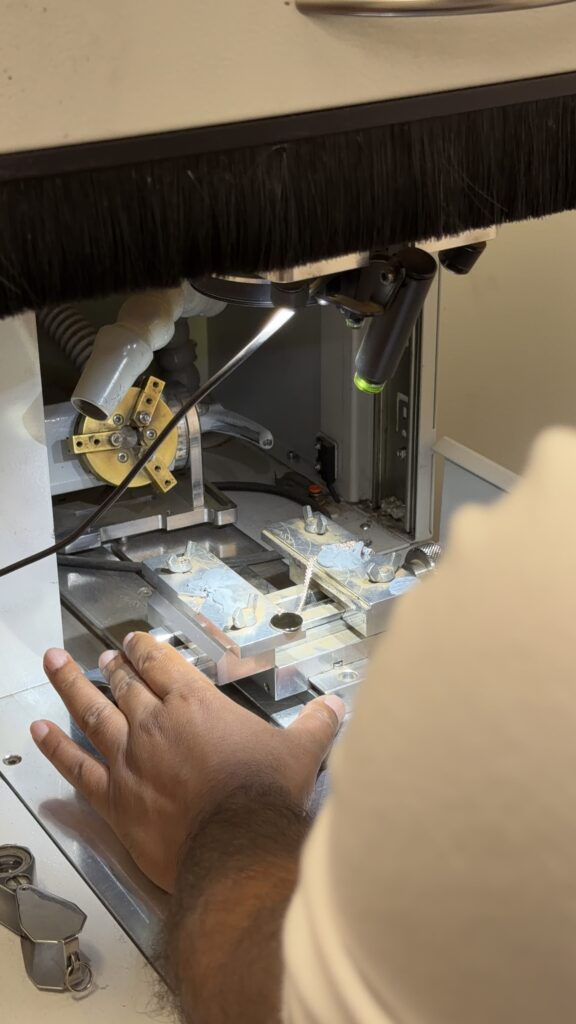
A signet ring engraving brief should make the intended result visible before any mark is applied. Initials, a monogram or a detailed emblem can be interpreted in different ways if the workshop receives only a small reference image and a request to make it fit.
The ring itself is part of the brief. Its face shape, existing finish and available metal affect what can reasonably be proposed. For an older ring, worn details or previous engraving may need their own assessment before a new layout is discussed.
Discuss signet ring engraving brief
Supply the exact artwork and show how the design should sit on the signet face when the ring is worn.
Supply the exact approved design
Provide the clearest available artwork and identify which elements are essential. If the image contains lettering, confirm the characters separately so a decorative font does not conceal an ambiguity. State whether a border, background or small internal detail belongs in the final design.
Do not ask the workshop to reconstruct important personal artwork from an unclear thumbnail without an approval stage. If the design needs simplification, review the revised version explicitly. A&M’s engraving service considers custom layouts from an approved proof and the actual piece.
Set the orientation on the ring
Mark the top of the artwork and show its intended direction relative to the band. A layout viewed flat on a screen can still be placed differently from the customer’s expectation when the ring is worn. Use an annotated photograph or a clearly labelled face drawing.
Also explain the purpose of the engraving. A decorative face and a design intended to produce a seal impression should not be treated as the same request without discussion. Ask the workshop to confirm the proposed result, orientation and process it can accept before describing the commission to the customer.
Assess the available face
Record the face outline and dimensions, together with any existing engraving or surface wear. A request for deeper detail should be assessed against the actual ring; there is no useful universal depth that applies to every signet construction.
If the face needs preparation, distinguish that work from the new engraving. Removing or reducing existing marks may affect the surface and the design that remains possible. The detail-preservation guide explains why preparation should have a defined limit rather than an open-ended request to make the piece look new.
Before you approve the work
Approve a face-specific layout after the workshop has assessed the available surface and requested detail.
Agree the sequence and the proof
Connect the artwork approval to the ring’s finishing instructions. The engraving sequence guide covers the relationship between marking, access and later surface work. A proof should identify both the design and the piece or face reference to which it applies.
Keep the final approved file distinct from earlier versions. If initials, proportions or orientation change, issue a coordinated revision rather than several messages that leave conflicting artwork in circulation. Confirm that the latest approval has been received before work proceeds.
Review the result against the agreed layout
At handover, compare the engraving with the approved content, position and orientation. Assess the surrounding finish separately from the artwork. Where a worn ring has retained historic details by agreement, that should remain part of the acceptance record.
A clear signet brief gives the customer a specific result to approve and the workshop an unambiguous reference. The essential decisions are the exact design, its intended use and its relationship to the actual face, not a generic instruction to engrave a crest or monogram.
Plan the next step with A&M
Send one approved artwork file with the signet-face reference and intended orientation for the engraving enquiry.
Frequently asked questions
Is a photograph of a similar signet enough for final approval?
It can communicate a style, but the exact artwork, orientation and layout on the actual face still need approval.
Should a requested engraving depth be treated as fixed before assessment?
No. The workshop needs to assess the face, remaining material and intended process before confirming a suitable proposal.
Does a custom engraving enquiry confirm that seal engraving is available?
No. Explain the intended result and ask the workshop to confirm whether the required process falls within its accepted scope.