
Stone Setting & Product Construction
Mixed-Cut Gemstone Layouts: Writing a Stone Map the Setter Can Use
A mixed cut gemstone stone map translates an irregular arrangement into a usable setting instruction.
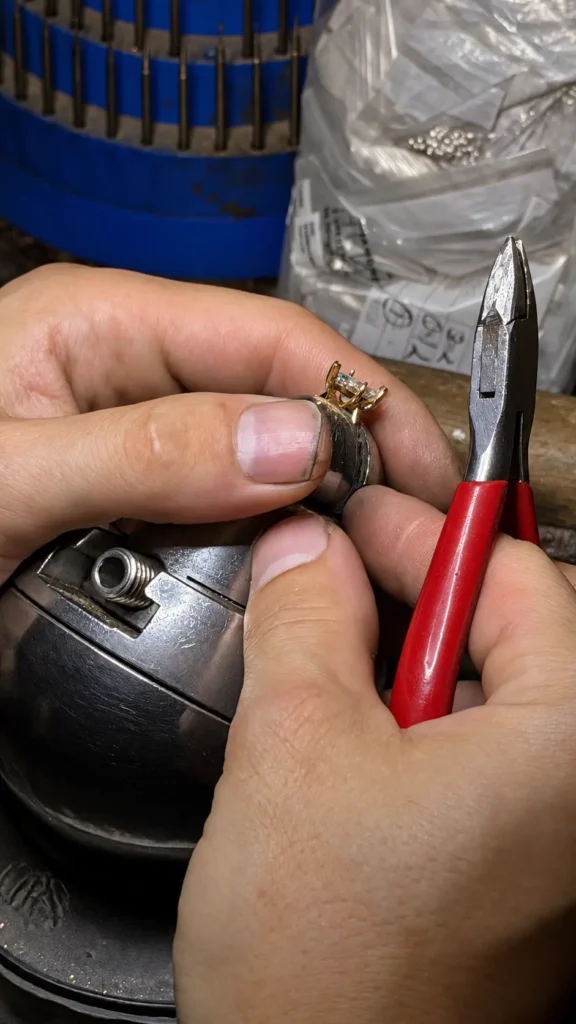
A mixed cut gemstone stone map translates an irregular arrangement into a usable setting instruction. Round, pear, oval and step-cut stones may look balanced in a sketch while remaining difficult to identify in the parcel. The map must connect the design to the actual stones.
This is especially useful for asymmetric rings, clusters and earrings. It lets the designer approve the relationship between stones while the setter assesses fit and support for each position.
Discuss a trade workshop job
Planning stone setting work? Apply for a trade account or call the workshop to discuss the brief.
Number positions without relying on colour
Use a clear identifier for every position and repeat it on the stone record. Colour can support the diagram but should not be the only identifier, particularly when several stones look similar or the image is printed without colour.
State the viewing direction and mark the top of the piece. Include a second view where stones sit at different heights or angles.
Record outline and orientation
List relevant dimensions and show the direction of pointed or asymmetric shapes. The widest part of a pear or the clipped corners of a step cut may affect the proposed setting. A generic shape icon is not a substitute for the actual stone.
The stone dimensions guide explains the distinction between weight and physical fit. Keep that information connected to the position rather than only to the parcel total.
Confirm the scope before work starts
Supply the relevant photographs, measurements and known material details. Ask the workshop to assess the proposed work.
Resolve interactions between neighbours
Review spacing, setting access and visible metal with the workshop. One change can affect adjacent stones, particularly in a close cluster. Do not approve a larger replacement for one position without considering the surrounding arrangement.
If the layout is intentionally uneven, identify the features that must remain. Otherwise a later attempt to make the piece more symmetrical may remove the design's defining character.
Document substitutes and unused stones
State which alternatives are approved and who can authorise a change. Record a substitution on the current map before setting, even where the replacement is close in size. Retain the identity of spare and rejected stones separately.
At handover, compare the completed arrangement with the released map. Reconcile the remaining parcel so a spare is not mistaken for a stone missing from the finished piece.
Make the map the common reference
Use the same identifiers in drawings, photographs and messages. A concise, stable stone map is more useful than a long conversation that never settles which stone belongs where.
Bring a clear brief to the workshop
For trade enquiries, apply for an account or call A&M to discuss the next step.
Frequently asked questions
Can one number describe several identical stones?
A grouped count can work for genuinely interchangeable positions if agreed. Individually selected or directional stones should remain identifiable where their allocation matters.
Should the setter decide the final layout?
The setter can advise on feasibility, but design choices should be approved by the authorised client. Record any agreed freedom to adjust the arrangement.
Related reading
- Why Stone Dimensions Matter More Than Carat Weight for Mount Design
- Planning Pavé Jewellery: Stone Matching, Layout and Setting Access
- Tracking Client-Supplied Stones Through Jewellery Production
For service details, see stone setting at A&M.