
Stone Setting & Product Construction
Graduated Gemstone Necklaces: Keeping the Stone Sequence Clear
A graduated gemstone necklace layout connects individual stones into a deliberate sequence.
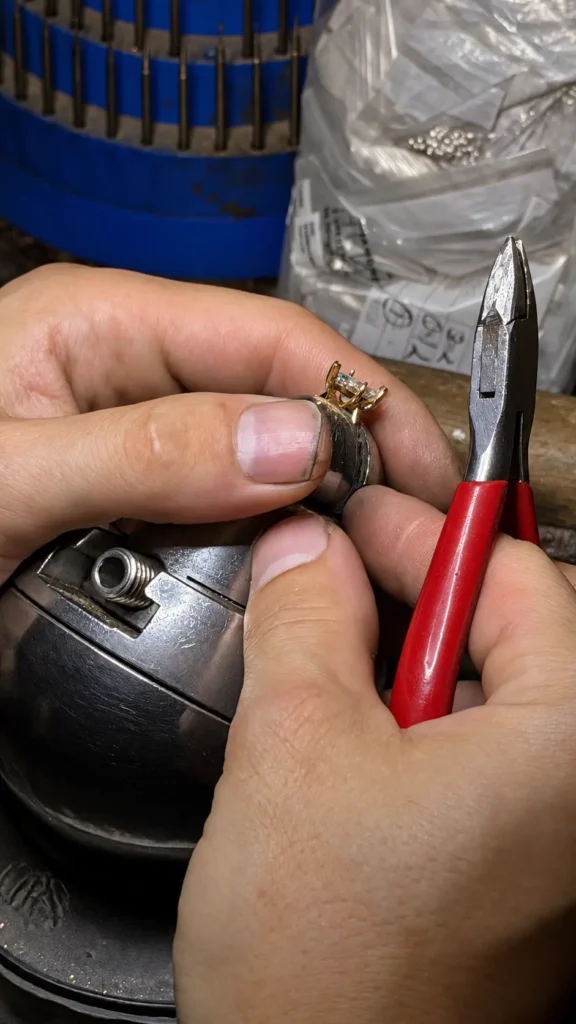
A graduated gemstone necklace layout connects individual stones into a deliberate sequence. The progression may involve size, colour or both. A parcel that meets an overall specification does not tell the setter which stone belongs in each position.
For a brand commissioning a necklace, the layout is an approval document. It should remain connected to the physical stones through setting and inspection, particularly when the two sides are intended to mirror one another.
Discuss a trade workshop job
Planning stone setting work? Apply for a trade account or call the workshop to discuss the brief.
Fix the centre and viewing direction
Identify the central stone or central pair and label the left and right runs from a stated viewpoint. Define whether numbering proceeds towards the clasp on each side. A photograph without this convention can be interpreted in reverse when the necklace is turned over.
Record the intended finished length separately. The stone sequence alone does not define the clasp, spacing or total wearable arrangement.
Allocate actual stones to positions
Measure and identify the stones before releasing the final map. Note shapes, dimensions and any permitted differences. Keep the physical parcel organisation consistent with the numbering so similar stones are not accidentally interchanged.
The client-supplied stone tracking guide supports this identity record. For the graduated design, add the position-specific relationship that makes each stone part of the approved sequence.
Confirm the scope before work starts
Supply the relevant photographs, measurements and known material details. Ask the workshop to assess the proposed work.
Review the progression as a whole
Compare both sides under suitable, consistent viewing conditions. Decide whether the graduation should be visibly regular or intentionally uneven. Do not let a general phrase such as matching colours replace approval of the actual transition.
If one position cannot be filled, review its neighbours before choosing a replacement. A stone that is acceptable in isolation may interrupt the rhythm of the whole necklace.
Keep changes visible during setting
Require a revised map when a substitution is approved. Identify any unset or held positions explicitly rather than treating an incomplete arrangement as fully released. The setter should have one current layout, not several photographs from different selection stages.
At completion, reconcile the finished positions, any unused stones and the approval record. Check the complete necklace as well as the individual settings.
Preserve the sequence for later service
Retaining the numbered layout helps a future replacement enquiry start from a defined position. It records the design intention without promising that an identical replacement stone will always be available.
Bring a clear brief to the workshop
For trade enquiries, apply for an account or call A&M to discuss the next step.
Frequently asked questions
Is a total stone count sufficient?
It confirms quantity but not allocation. A graduated design also needs the order, orientation and relationship of stones to be recorded.
Must both sides be identical?
That is a design decision. Define whether the requirement is a mirrored progression, a balanced visual effect or deliberate asymmetry, then approve the actual layout.
Related reading
- Calibrated Gemstones in Jewellery Production: Checking Consistency
- Tracking Client-Supplied Stones Through Jewellery Production
- Bracelet Manufacturing: Planning Links, Joints and Clasp Function
For service details, see stone setting at A&M.