
Polishing & Refinishing
Two-Tone Rhodium Finishing: Identifying Plated and Protected Areas
Two tone rhodium finishing needs a clear map of the intended surface colours.
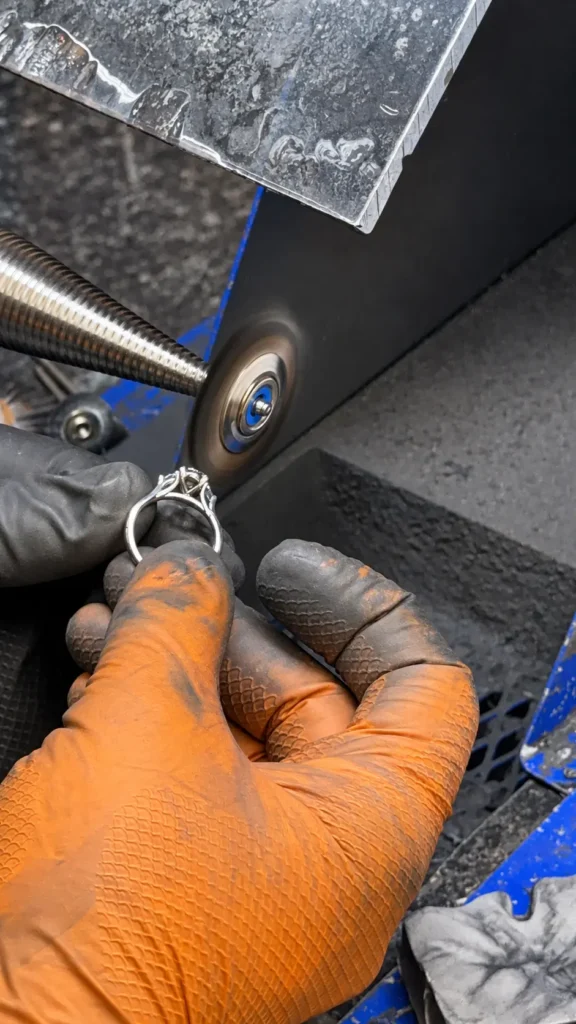
Two tone rhodium finishing needs a clear map of the intended surface colours. A white area in a reference photograph could represent a different metal, a plated surface or lighting. Those are different instructions, and the workshop should not be left to infer which one the client means.
Begin by identifying the construction and any known existing finish. Then describe the requested appearance surface by surface. The method and feasibility remain subject to assessment of the actual piece.
Discuss a trade workshop job
Planning polishing and rhodium work? Apply for a trade account or call the workshop to discuss the brief.
Separate material from surface colour
Record the metals or known alloy specifications of the components. Identify which areas are intended to retain their natural appearance and which should receive rhodium. If the composition or previous coating is uncertain, make that uncertainty visible in the brief.
The mixed-metal manufacturing guide addresses construction. This article concerns the finishing instruction, which can involve more than one treatment even when the underlying metal is the same.
Draw the boundary precisely
Use labelled photographs from several views. Mark the junction on the face, sides, recesses and underside where those surfaces matter. A coloured top view may leave the finisher without an instruction for the inside of a gallery or the edge of a raised motif.
Describe whether the transition follows an existing edge or a line across a continuous surface. Ask the workshop what boundary can be achieved and repeated on that geometry. Do not promise a precise result before that assessment.
Confirm the scope before work starts
Supply the relevant photographs, measurements and known material details. Ask the workshop to assess the proposed work.
Consider the starting condition
Record scratches, old plating, worn edges and any stone-security concerns. Rhodium does not correct an unsuitable underlying surface or rebuild missing metal. Preparation and structural work should be identified separately from the requested colour treatment.
If a previously repaired area finishes differently, ask for an assessment of its materials and condition. Repeatedly requesting another layer is not a substitute for understanding the cause of the difference.
Approve the complete appearance
Review an appropriate sample or the agreed reference under consistent lighting. Inspect the junctions and protected details as well as the bright white surface. Where several pieces must match, define which material and finish variant the approval covers.
Ask how future maintenance should be described to the customer. A local touch-up, full refinish and renewed plating are different scopes. Record the finished specification so a later repair does not erase an intentional contrast.
Make the map part of the job
Keep the approved surface map with the workshop instruction and use it again at collection. It turns a broad request for two colours into a result that can be checked.
Bring a clear brief to the workshop
For trade enquiries, apply for an account or call A&M to discuss the next step.
Frequently asked questions
Does two-tone always mean two metals?
No. It can describe different metals or different finishes. State the construction and intended surface treatment separately.
Can every narrow area be selectively plated?
The workshop must assess access, geometry and the proposed boundary. Ask for a confirmed method and achievable result rather than assuming every rendered effect can be reproduced.
Related reading
- Mixed Metal Jewellery: Planning Construction and Finishing
- Specifying Contrasting Finishes on the Same Jewellery Piece
- Will Rhodium Plating Cover Scratches? Assess the Surface First
For service details, see polishing and rhodium at A&M.