
Polishing & Refinishing
Will Rhodium Plating Cover Scratches? Assess the Surface First
Rhodium plating should not be presented as a way to rebuild a scratched or dented jewellery surface. It changes the surface finish; it does not restore missing metal or make a damaged setting sound. If the customer expects visible wear to disappear, that expectation needs a separate assessment before the coating is discussed.
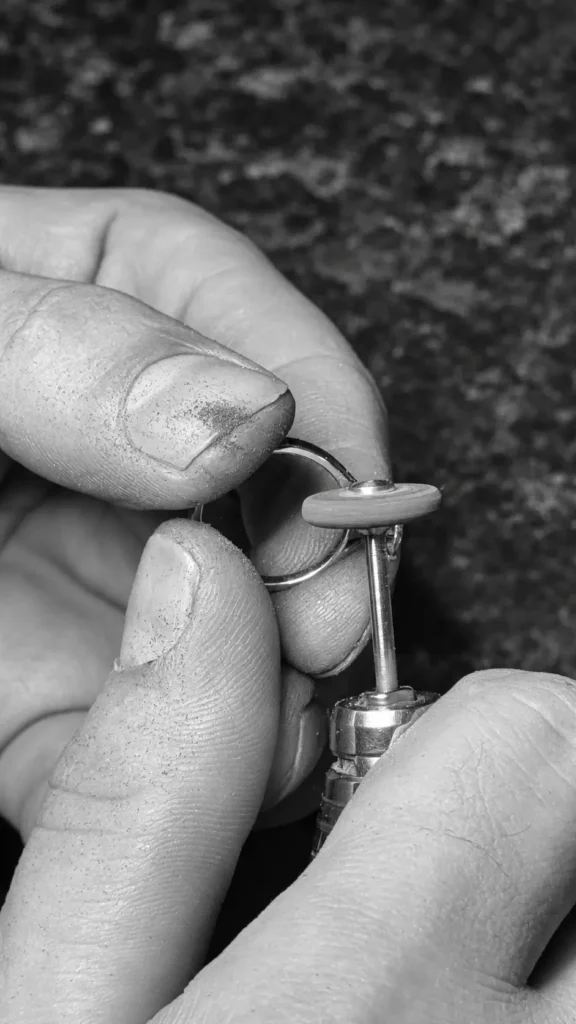
Rhodium plating should not be presented as a way to rebuild a scratched or dented jewellery surface. It changes the surface finish; it does not restore missing metal or make a damaged setting sound. If the customer expects visible wear to disappear, that expectation needs a separate assessment before the coating is discussed.
A&M’s polishing and rhodium guidance makes this distinction directly. For a retailer, the practical benefit is a clearer quotation: surface correction, structural repair and the final finish can be identified as different parts of the proposed work.
Discuss rhodium plating over scratches
Show the existing scratches and identify the finished appearance the owner expects from the job.
Identify the damage beneath the requested finish
Photograph the item under consistent lighting and show the areas the customer wants improved. Include the edges and nearby details, not only the centre of a scratched face. The workshop needs to assess the mark in relation to the metal and geometry around it.
Record any previous plating, polishing or repair history where known. Do not assume that an uneven appearance is caused by the coating alone. A colour difference, a deep line and a dent are different observations, even if the customer describes all three as needing replating.
Agree the surface correction scope
Ask what can reasonably be improved and what may remain. The surface preparation guide explains why final finishing depends on the starting condition. A coating should follow a suitable prepared surface rather than be used to avoid deciding how underlying wear will be treated.
If complete scratch removal would compromise a profile or fine detail, the customer may need to choose an accepted limitation. Explain that before work begins. A faint retained mark can be a considered outcome where preserving the surrounding design matters more than eliminating every sign of wear.
Keep structural repairs visible in the quotation
Worn claws, an insecure stone or a damaged joint should not disappear inside a general polish-and-plate instruction. Ask the workshop to identify any connected repair and obtain approval for it. The customer should understand which operation addresses each concern.
The detail-preservation guide is useful where engraving or sharp edges are close to the worked area. Mark protected features on a photograph so surface correction and repair decisions are made with the complete design in view.
Before you approve the work
Approve the underlying correction and any accepted remaining marks before rhodium is applied.
Specify which surfaces receive the finish
For a mixed-metal or contrasting piece, identify the areas intended for rhodium and those that should retain another appearance. Do not assume that the entire item should be made uniformly white. A clear finish map avoids a colour preference being interpreted more broadly than intended.
Discuss the relationship to any companion pieces if matching matters. A newly finished ring may not look identical to an unsubmitted partner with existing wear. The workshop needs an appropriate reference before an exact visual match is promised.
Explain the completed result accurately
At collection, confirm the corrective work completed, the finish applied and any accepted marks that remain. Compare the result with the approved objective and original photographs. Do not describe a coating as having repaired metal or stones that were outside the authorised scope.
The most useful answer to whether rhodium will cover scratches is a clear explanation of the sequence. Assess the wear, agree suitable correction and then apply the specified finish. That gives the customer an honest expectation of what the completed job can achieve.
Plan the next step with A&M
Ask for the underlying surface to be assessed before deciding what preparation should precede rhodium plating.
Frequently asked questions
Can rhodium fill a dent in a ring?
It should not be described as a repair for a dent. The underlying condition needs assessment and any corrective work must be agreed separately.
Must every mark be removed before plating?
Not necessarily. The workshop should assess suitability and the owner should understand any marks that will remain within the agreed finish scope.
Does a bright white result confirm the setting is secure?
No. Surface appearance and stone security are different checks. Any setting concern needs its own assessment.