
Repairs & Restoration
A Split Ring Shoulder: Why Closing the Crack May Not Be Enough
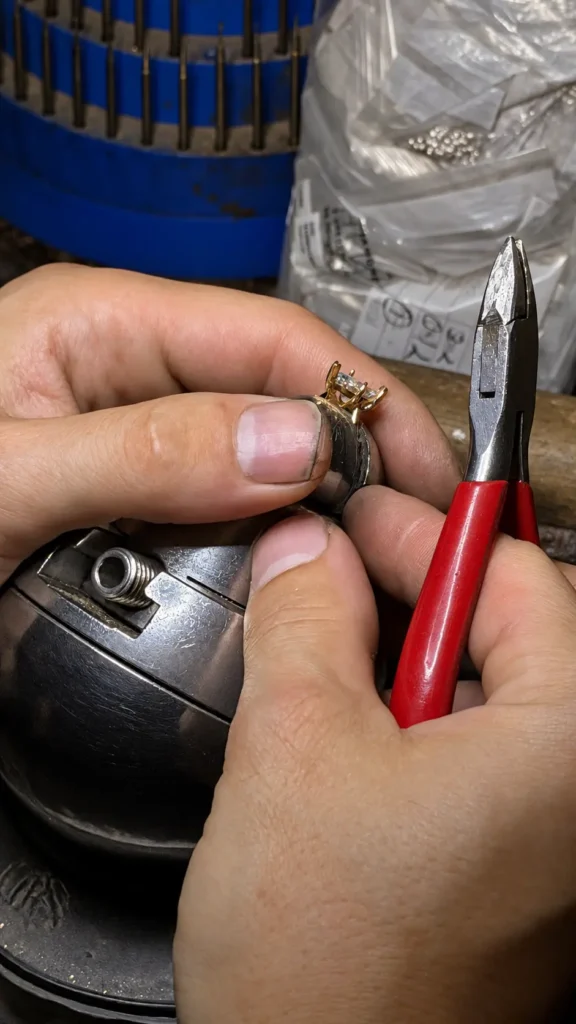
A split in a ring shoulder is a visible fault, but it is not a complete diagnosis. The workshop needs to establish what remains around the split and whether the ring’s shape or setting has also been affected. Simply instructing someone to close the crack may leave the most important part of the assessment undefined.
A split in a ring shoulder is a visible fault, but it is not a complete diagnosis. The workshop needs to establish what remains around the split and whether the ring’s shape or setting has also been affected. Simply instructing someone to close the crack may leave the most important part of the assessment undefined.
For the retailer, the practical priority is to preserve a clear record of the starting condition. Identify the affected shoulder, keep detached parts with the ring and record what the customer noticed. If the ring appears damaged or a stone may be insecure, keep it unworn while the repair is assessed.
Discuss split ring shoulder repair
Show the crack with the complete setting and both shoulders, and note any recent change in shape.
Show the split in its full setting context
Provide side views of both shoulders, a top view and an underside view. Mark the split on a photograph without obscuring the surrounding area. A close-up is useful for detail, while the wider views help the workshop understand alignment and the relationship to the head.
Record whether the opposite shoulder shows similar wear or another visible change. That does not establish a shared cause, but it is relevant information. The guide to head and shank alignment explains why the relationship between those parts matters to the finished ring.
Ask what the remaining metal can support
The workshop should assess the material beside the crack, any thinning and the condition of previous joints. A local repair needs an appropriate starting structure. Do not assume that a small opening means a small commission or that a particular joining method removes the need for that assessment.
A&M’s repairs and alterations page specifically separates the requested outcome from the diagnosis. Use that distinction in the customer conversation: the objective may be to restore the ring’s integrity and appearance, while the assessed route remains to be confirmed.
Include the nearby stones
Identify any stones in the shoulder and the condition of the setting above it. Note movement, catching or a change in how the centre stone appears to sit. The workshop may need to assess connected setting work rather than treat the split as isolated from the rest of the ring.
The claw and setting assessment guide is useful supporting reading. If additional work is recommended, make its purpose clear in the quotation. The customer should understand whether the proposal is a local joint repair, a reconstruction of part of the shoulder or a wider intervention.
Before you approve the work
Ask whether the surrounding section is suitable for a local repair before approving a joint-only instruction.
Define the restored shape
Ask what profile and alignment the workshop expects to achieve, and provide an original reference if one is available. A ring that has been distorted should not be judged only by whether the crack is no longer visible. The relationship between the shoulders and setting remains part of the finished result.
Where exact restoration is uncertain, explain the limitation before approval. Do not infer the original design from a single worn or damaged view. If a reconstruction would change the appearance, the customer needs a clear opportunity to consider that proposal separately.
Confirm the complete repair scope
At handover, compare the agreed structural work, setting checks and finish with the recorded instruction. Note any accepted difference from the original appearance and identify work that remains outside the scope. Keep the assessment and approval under the same reference as the before photographs.
A split shoulder calls for a proportionate examination of the surrounding ring. The useful question is not just how the opening will be joined, but whether the proposed repair addresses the condition that the workshop actually found.
Plan the next step with A&M
Provide the split shoulder and surrounding setting information before authorising a repair based only on closing the visible gap.
Frequently asked questions
Can a split shoulder always be welded closed?
No universal promise is suitable. Available sound metal, distortion, prior repairs and the setting construction can change the recommended route.
Does the other shoulder need checking too?
It is sensible to provide and assess the complete ring. An apparently local fault should not prevent relevant condition elsewhere from being considered.
Is polishing included in every structural repair?
Do not assume it. Confirm the intended finish and any connected setting or cosmetic work within the authorised quotation.