
Retail Workshop Practice
Replacement Jewellery Components Without Original CAD
A missing original CAD file does not define the whole replacement problem. The more useful questions are which component is required, what it must connect to and what reliable reference information remains. A replacement clasp element, mount section or decorative part needs a brief tied to the actual retained assembly.
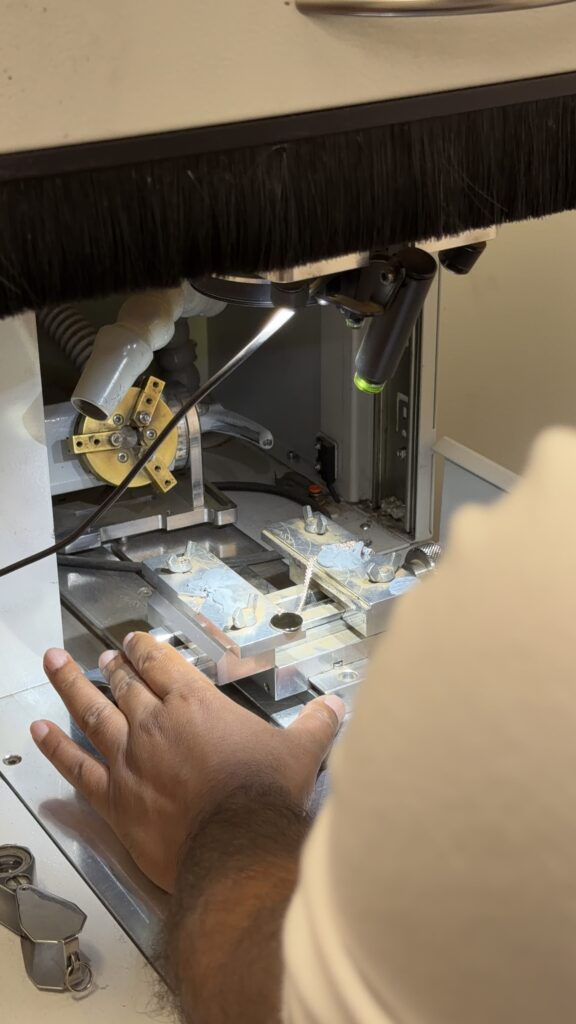
A missing original CAD file does not define the whole replacement problem. The more useful questions are which component is required, what it must connect to and what reliable reference information remains. A replacement clasp element, mount section or decorative part needs a brief tied to the actual retained assembly.
Start with the intended result and the available evidence. A complete matching component, an undamaged counterpart or an earlier drawing may each provide useful information, but none should be assumed to describe the current piece without checking.
Discuss replacement jewellery components without CAD
Identify the missing or damaged component and supply the retained parts it must fit.
Define the replacement boundary
Identify exactly which part is to be replaced and which parts are to remain. Mark the connections and any surfaces that determine fit, movement or appearance. Include the reason for replacement so the workshop can distinguish a missing part from a component whose original design may need reassessment.
Keep work to the retained assembly separate from manufacture of the new part. If adaptation is likely, ask for it to be assessed and quoted explicitly. A request for a replacement component should not become open-ended permission to alter the rest of the piece.
Gather the most useful reference
Supply the physical assembly where assessment arrangements allow, along with relevant photographs and available dimensions. Identify any known variation, previous repair or distortion. A damaged component can still be a reference, but its damaged shape should not automatically become the target geometry.
The supplied component variation guide explains why nominally similar parts need assessment. The same principle applies when an undamaged part from another item is offered as a model: confirm that it belongs to the intended design and revision.
Separate captured geometry from a production model
A&M’s CAD and 3D scanning page explains that scanning records accessible geometry and may require interpretation. Hidden connections, worn areas and difficult surfaces can leave information that must be resolved through other observations or design work.
The scanning and CAD guide sets out that distinction in more detail. For a replacement, agree which reference controls each important feature rather than assuming a scan alone establishes a complete, accurate manufacturing file.
Before you approve the work
Confirm the connecting dimensions and accepted design reference before releasing a replacement component for manufacture.
Check the interfaces before appearance approval
The replacement should be reviewed where it meets the retained parts, not only in isolation. Identify the dimensions and relationships needed for the next operation or assembled function. Ask the workshop how those conditions will be checked before final manufacture or fitting.
The manufacture-ready CAD guide is relevant to the completed design information. Record the file revision, material, intended process and any dimensions still awaiting confirmation. A visual approval should not conceal an unresolved connecting feature.
Approve the complete replacement route
Confirm the new component, fitting work, finishing relationship and treatment of the retained assembly. If a sample or trial fit is proposed, state what it needs to establish before the final piece is released. Keep any authorised changes connected to the current revision.
A component replacement without original CAD is best treated as a defined assessment and design task. Clear boundaries and reliable interface information give the workshop a practical route to evaluate, without promising that every missing part can be recreated from a photograph.
Plan the next step with A&M
Identify the retained assembly and connecting features so the replacement-component enquiry starts from the right reference.
Frequently asked questions
Is an old component always an accurate model for its replacement?
No. Wear, damage or previous alteration may need to be interpreted before the intended geometry can be established.
Does a scan automatically provide a manufacturing-ready file?
No. Captured geometry may need reconstruction, measurement and design decisions before a production model is ready.
Should retained parts be included in the assessment?
Where relevant, yes. Their connecting features and current condition are important to the proposed replacement and fitting route.