
Polishing & Refinishing
How Long Does Rhodium Plating Last? Set a Useful Maintenance Expectation
There is no useful single lifespan to promise for every rhodium-plated item. A ring worn frequently, an occasional pendant and an earring pair do not present the same maintenance discussion. The owner’s preference for a particular appearance also affects when they choose to seek refinishing.
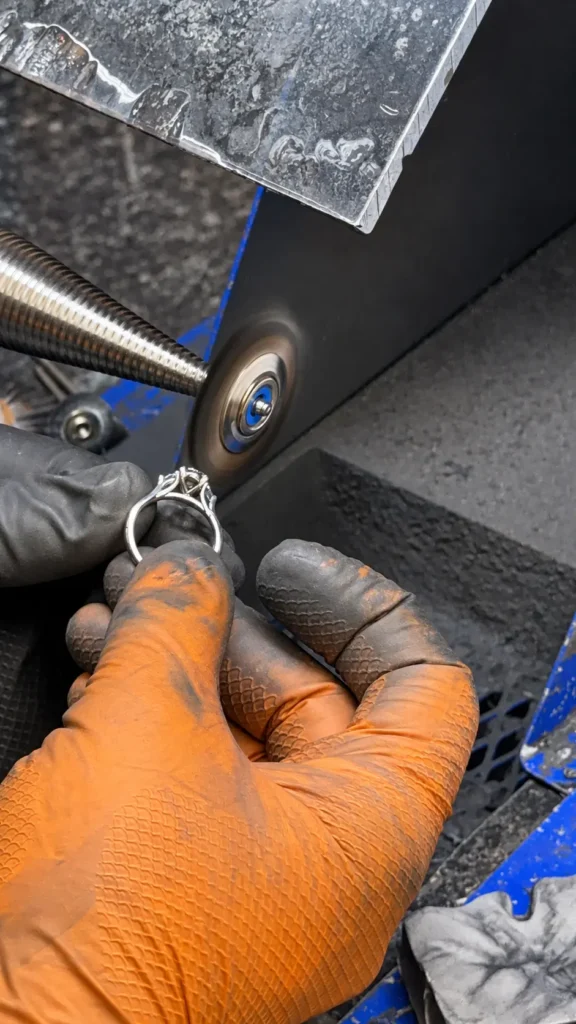
There is no useful single lifespan to promise for every rhodium-plated item. A ring worn frequently, an occasional pendant and an earring pair do not present the same maintenance discussion. The owner’s preference for a particular appearance also affects when they choose to seek refinishing.
For a retailer, the better question is how to recognise when the finish should be reviewed and what that review includes. A&M’s polishing and rhodium guidance describes rhodium as a wear layer. It should be explained as part of the surface finish, not as a permanent repair or an assurance that the underlying item needs no further attention.
Discuss how long does rhodium plating last
Describe the item’s current appearance and previous finishing history so the workshop can assess its condition.
Avoid turning an estimate into a guarantee
If an interval is discussed for an individual customer, make clear what it is based on and whether it is simply a review point. Do not present an unverified number of months as a universal performance specification. A maintenance reminder and a promise about coating life are different things.
Record any previous finishing date only where it is known. The customer’s recollection that the ring was plated recently may be useful, but it should not become a precise date in the workshop record. Accurate history makes a later comparison more meaningful.
Look at the piece’s actual wear pattern
Ask the owner what change they have noticed and which surfaces concern them. Photograph the item under consistent lighting so a later review is not based on different reflections or colour balance. Include any recent repairs or changes to the normal wearing arrangement.
The workshop should assess the finish within the complete item. A visible colour change may be the reason for the visit, while scratches, setting wear or a damaged fitting may need separate consideration. Do not let a routine replating request bypass those condition questions.
Separate appearance preferences from repair needs
One owner may request a bright white finish as soon as a change becomes visible, while another is comfortable with a different worn appearance. Record that preference without presenting it as a structural requirement. Cosmetic timing should be distinguished from a repair concern that requires attention.
The finished-jewellery inspection guide explains why appearance and function are separate checks. A new coating does not confirm that claws, joints or closures are sound. Any connected work should be identified and approved on its own merits.
Before you approve the work
Base the maintenance recommendation on the actual piece rather than an unsupported fixed replating interval.
Make maintenance advice item-specific
Give care guidance that reflects the metal, stones, attachments and finish actually present. Avoid a generic cleaning instruction that overlooks a delicate gem or another material. If treatment information is relevant, preserve it in the record so it can be used at the next service visit.
Do not recommend repeated polishing merely because a calendar reminder has arrived. The workshop should assess whether cleaning, refinishing, plating or a different response is appropriate. The detail-preservation guide explains why unnecessary surface intervention should not become an automatic routine.
Use a review date as a conversation point
An agreed reminder can help the owner bring the piece back for a condition review, but the work should still follow the findings at that time. Record what was completed and why, so future advice is based on the item’s history rather than a general marketing claim.
Rhodium maintenance is clearest when the retailer explains the finish, the observed condition and the owner’s priorities together. That gives the customer a useful expectation without inventing a lifespan that the actual piece may not follow.
Plan the next step with A&M
Discuss the current finish and maintenance request with A&M rather than relying on a fixed replating interval.
Frequently asked questions
Is replating every year always necessary?
No universal annual requirement should be assumed. The appropriate review and work depend on the actual item, condition and agreed care arrangements.
Does a maintenance reminder mean the finish has failed?
No. A reminder can simply prompt inspection. Any decision to clean, polish or replate should follow the condition review.
Can a fixed rhodium lifespan be guaranteed for every wearer?
That would require a substantiated specification and defined conditions. This general guide does not provide such a guarantee or a universal estimate.