
Stone Setting & Gemstone Care
Replacing a Missing Pavé Stone: Match the Seat and Check the Surroundings
A tiny missing stone can draw the eye immediately, especially in a close pavé pattern. Replacing it involves more than selecting something that fills the visible gap. The workshop needs to assess the seat, the supporting metal and the condition of neighbouring positions before deciding what work is required.
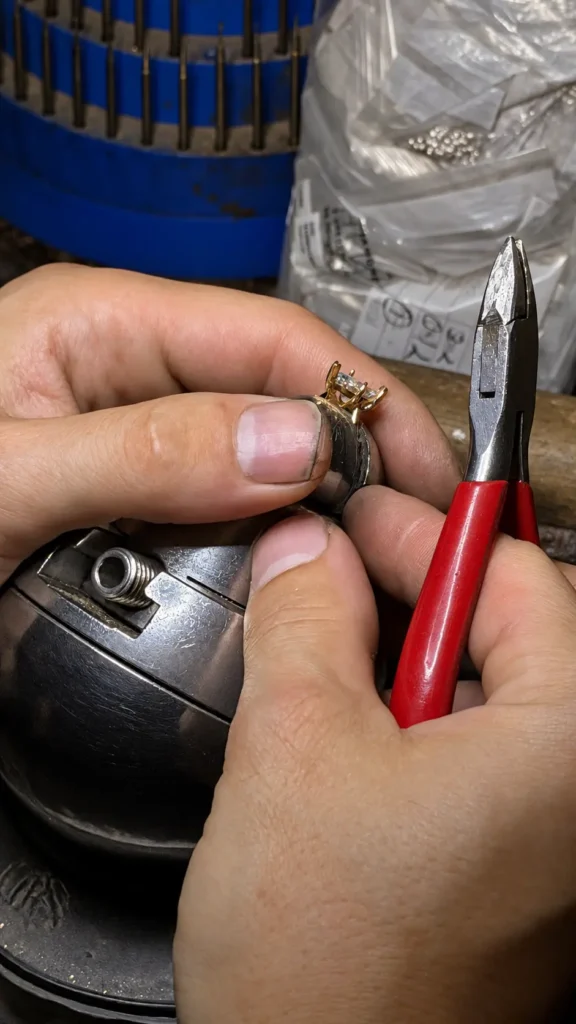
A tiny missing stone can draw the eye immediately, especially in a close pavé pattern. Replacing it involves more than selecting something that fills the visible gap. The workshop needs to assess the seat, the supporting metal and the condition of neighbouring positions before deciding what work is required.
For a retailer, the first step is a precise record of the affected area. A statement that one small diamond is missing may be a useful customer observation, but it does not confirm the stone type, dimensions or repair scope. Those details should be established through assessment.
Discuss missing pave stone replacement
Mark the missing position and include photographs of the complete pavé area and the whole item.
Map the position and retain any loose stone
Use a clear photograph to identify the missing position. If several areas are similar, number the relevant section and show its orientation on the complete ring, pendant or earring. Include the underside where accessible, because a top view may conceal useful construction detail.
If the customer has found the stone, keep it with the item and record it separately. Do not assume it is undamaged or that it can simply be returned to the original seat. The workshop should assess the supplied stone and setting together.
Inspect the supporting metal
Ask whether the local seat is suitable for resetting or whether metal work is needed first. A replacement instruction should not leave this question unresolved. Existing wear, an impact or previous work may mean that the visible vacancy is only part of the condition found.
A&M’s stone-setting service assesses the stone and mount as one system. Use that principle when explaining the quotation: purchasing the stone and making the setting suitable are separate elements of a complete proposal, even where they are completed under one job reference.
Agree the replacement specification
Record the measured size, shape, stone identity and visual matching requirement. The calibrated gemstone guide explains why a nominal size still needs to be related to the actual stones and setting. Do not choose by approximate carat weight alone.
For an older piece, matching should be discussed against the surrounding appearance. The customer may prioritise a discreet repair within the existing pattern. Ask how a proposed substitute will be approved and avoid promising an exact match before a suitable stone has been assessed.
Before you approve the work
Confirm the seat condition and replacement specification before authorising the setting work.
Keep the neighbouring pattern in view
The repaired position should sit appropriately within the layout. Consider the agreed appearance of the surrounding metal and any finish that must be retained. If more than one position requires work, identify each rather than allowing an initial one-stone estimate to become an undefined refurbishment.
The pavé production guide discusses the visual relationship between repeated stones. A repair applies that concern to an existing piece, where the retained pattern and its condition form the reference. The aim should be stated clearly before the new stone is set.
Return a specific completion record
Confirm which position was repaired, what stone was supplied and whether supporting metal work formed part of the job. Keep the original condition photograph and the approved replacement specification together. Any broader condition advice should be communicated as such, without implying that every untouched setting has been rebuilt.
A missing pavé stone is best handled as a small but complete repair commission. The right sequence is to assess the support, agree the replacement and inspect the repaired area within the surrounding design.
Plan the next step with A&M
Record the missing stone’s position and ask for the seat and adjacent setting metal to be assessed before a replacement is selected.
Frequently asked questions
Can a replacement be selected from the visible gap alone?
The gap is only a starting observation. The workshop needs the relevant measurements and seat condition before confirming a suitable replacement.
Does one missing stone mean all the pavé needs rebuilding?
Not automatically. The affected area and neighbouring positions should be assessed, with any wider work justified and approved separately.
Can the customer’s recovered stone be reused?
It can be submitted for assessment. Reuse depends on its condition and suitability for the assessed seat, not simply whether it was found.