
Repeat Production & Handover
Tracking Client-Supplied Stones Through Jewellery Production
Tracking client-supplied stones through jewellery production means preserving the relationship between the stones received, the pieces being made and the final handover. The record needs to distinguish allocated, set, unused and held stones, rather than rely on one overall parcel count.
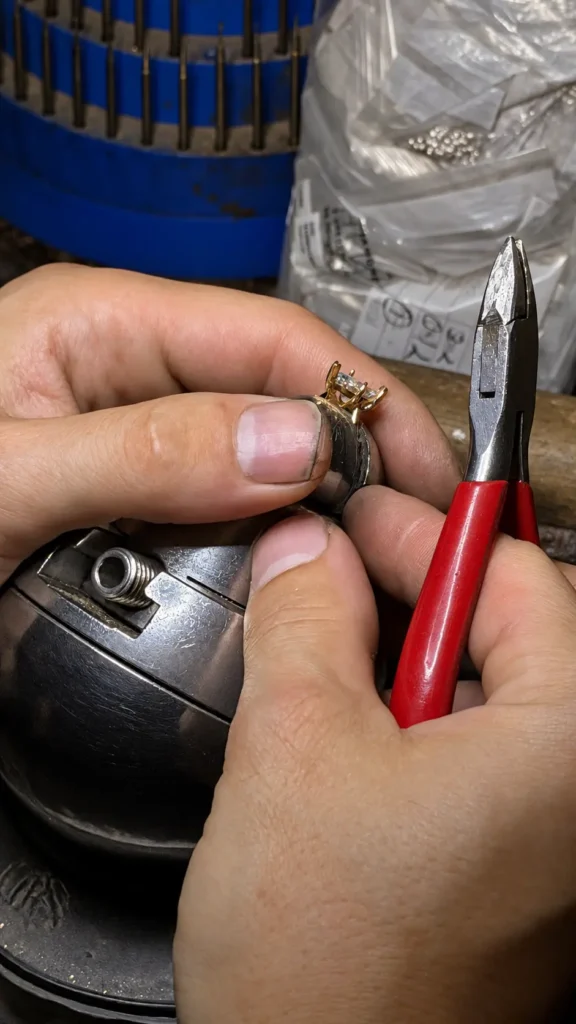
Tracking client-supplied stones through jewellery production means preserving the relationship between the stones received, the pieces being made and the final handover. The record needs to distinguish allocated, set, unused and held stones, rather than rely on one overall parcel count.
Agree the intake and reconciliation process before sending the stones. The appropriate identification detail depends on the materials, quantity and value involved, but the responsibility for maintaining the record should be clear.
Discuss client supplied stone tracking
Agree how supplied stones will be identified, allocated and reconciled.
Establish the intake record
Record the quantity, descriptions and available dimensions or report references. Note known condition issues and treatments supplied by the client. Where individual stones are identified, keep their labels connected to the physical packets or other agreed storage.
Confirm the received quantity with the workshop. A delivery reference shows that a parcel moved; it does not by itself record the contents accepted for a particular production job.
Allocate stones to items and positions
Connect the stones with the relevant product and setting layout. Matched pairs or position-specific stones should remain grouped accordingly. If the arrangement is flexible, state the permitted allocation method instead of leaving that flexibility implicit.
GIA’s diamond report guide explains the role of report numbers and measurements. Such information can support the record, but it should not be treated as a substitute for the workshop’s appropriate identification and condition checks.
Record movement between operations
Keep the job reference with the stones as the piece moves through preparation, setting and inspection. If another workshop receives them, agree how quantity and condition are acknowledged at the handover.
A&M’s production support includes controlled stone references. Discuss the proposed allocation and any special reconciliation needs so the record matches the actual route.
Before the next production step
Record authority for substitution before a spare stone is allocated.
Control substitutions and exceptions
Identify who can approve a replacement, reallocation or use of a spare stone. A visually similar stone should not silently replace an individually referenced one. Record the reason and the affected item when an authorised change is made.
If a stone is unsuitable or its condition needs review, keep it distinguishable from the accepted allocation. The job record should explain whether it is awaiting a decision, being returned or replaced by an approved alternative.
Reconcile at the final handover
Compare the intake record with stones set in completed pieces, unused stones returned and any items still held. Explain differences with the relevant approved records. A total that balances without identifying the disposition of the stones is less useful than a clear reconciliation.
Confirm how supporting reports and original packets are returned or retained. Keep the documentation tied to the finished item where the client’s later retail or service process requires that connection.
Keep identity through the whole route
The best tracking record can explain where each identified stone or agreed group went and what remains outstanding. Establish that structure at intake so final reconciliation is a confirmation of the record, not a reconstruction from memory.
Plan the work with A&M
A&M can assess your trade enquiry in the context of the actual piece and requested workshop stages. Bring the references discussed in this guide so the next decision can be made on clear information.
Frequently asked questions
Is a parcel count enough for client-supplied stones?
It may be only one part of the record. Individual identity, matched groups, condition and allocation may also matter, depending on the stones and the agreed job requirements.
Can spare stones be used without contacting the client?
Only within the authority agreed for the job. Define which substitutions are permitted and how their use will be recorded before setting begins.
Does this require a particular software system?
No specific system is claimed or required here. The important point is a clear, maintained record that the responsible people can use throughout the actual production route.