
Stone Setting & Product Construction
Manufacturing Matching Earrings: Symmetry, Weight and Stone Pairing
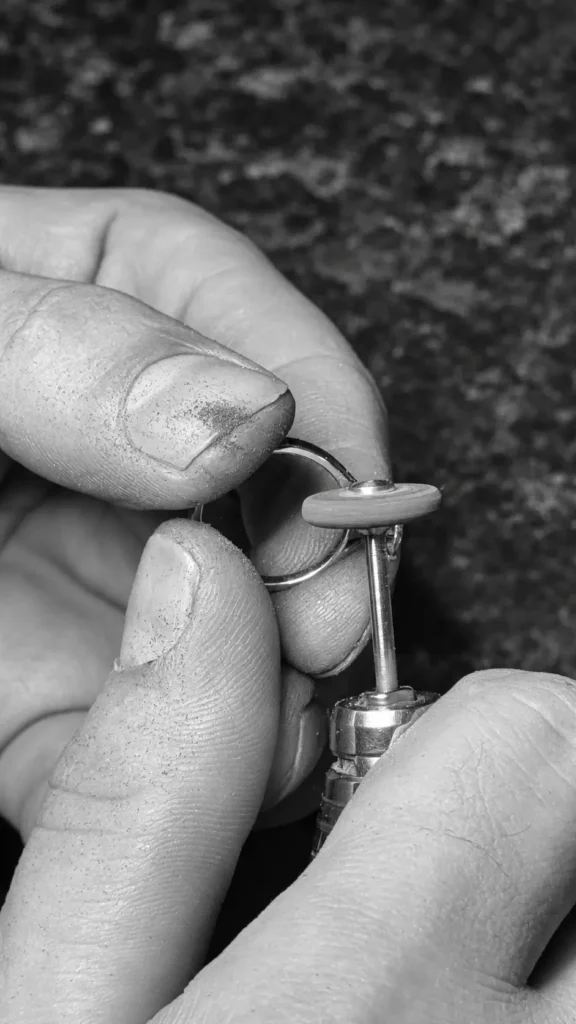
Manufacturing matching earrings means producing a pair whose relationship is part of the design. Two individually acceptable pieces may still look different when placed together. Symmetry, proportions, stone pairing and the position of attachments should therefore be considered at pair level as well as on each earring.
Manufacturing matching earrings means producing a pair whose relationship is part of the design. Two individually acceptable pieces may still look different when placed together. Symmetry, proportions, stone pairing and the position of attachments should therefore be considered at pair level as well as on each earring.
Start by defining what matching means. Some designs use mirrored left and right pieces; others use two identical forms. Intentional asymmetry needs its own clear reference.
Discuss matching earrings manufacturing
Describe the matching and orientation requirements for the complete earring pair.
Identify left and right where relevant
Record orientation for curved motifs, directional stone shapes or other features that distinguish the two sides. Label the model and component references so the intended pair is preserved during production.
Do not rely on a single photograph that can be mirrored or rotated accidentally. Use views that show how the earrings should sit together and identify which side is which when that matters to the design.
Pair stones before allocation is lost
Define the dimensional and visual matching requirements. Stones that meet an individual specification may still differ noticeably when viewed side by side. Keep matched groups tied to the intended pair and setting positions.
GIA’s measurement guide distinguishes physical dimensions from weight. Retain both forms of information where relevant, while using actual comparison to assess the pairing the design requires.
Consider weight and balance appropriately
Agree what should be consistent between the two pieces and how it will be assessed. The same nominal component description does not automatically establish identical finished weight or balance.
If the design has movement or a directional motif, discuss its relationship to the post or attachment. A physical sample can help assess the intended arrangement, but conclusions should reflect the actual material and level of completion.
Before the next production step
Keep matched stones and component references together during production.
Specify posts, backs and joining positions
Identify the required components and their positions. Small differences at an attachment can affect how the earrings present as a pair. The production record should describe the intended relationship rather than leave it to visual estimation.
Confirm the supply and scope for backs or other findings. They should be included in the component count where they form part of the order, and their compatibility should be assessed for the actual piece.
Inspect and package as pairs
Review the completed earrings together for the agreed proportions, stone arrangement and finish. Then complete the relevant checks on each piece. Pair-level comparison complements individual inspection; it does not replace it.
Discuss the A&M production scope and keep pair references intact through return. If one earring needs further work, identify the status of the whole pair so an incomplete set is not counted as ready.
Preserve the pair throughout the job
Matching is easier to maintain when orientation, stones and components stay linked from development to handover. Define the relationship early and use the final inspection to confirm the pair that the customer will actually receive.
Looking for a pair of earrings for yourself?
For a personal purchase or a gift, visit Kinzy London to explore the options or discuss what you have in mind. A&M’s workshop services are for jewellery businesses.
Frequently asked questions
Should earring production quantities be stated as pieces or pairs?
State both where ambiguity is possible. The order and bill of materials should make clear how many complete pairs, individual bodies and backs are required.
Does equal total carat weight guarantee a matched pair?
No. Weight alone does not establish matching dimensions or appearance. Define the visual and dimensional requirements and compare the actual stones intended for the pair.
What if one earring fails inspection?
Keep the pair identifiable and record which piece is held and why. Agree the correction or replacement route before treating the set as complete.