
Stone Setting & Product Construction
Bezel Setting Design: What to Resolve Before Manufacture
Bezel setting design connects the stone's physical shape with a visible metal surround. The amount and profile of that surround contribute to the appearance, while the construction must be suitable for the actual stone and setting work. A neat outline in a render is only the beginning of the production discussion.
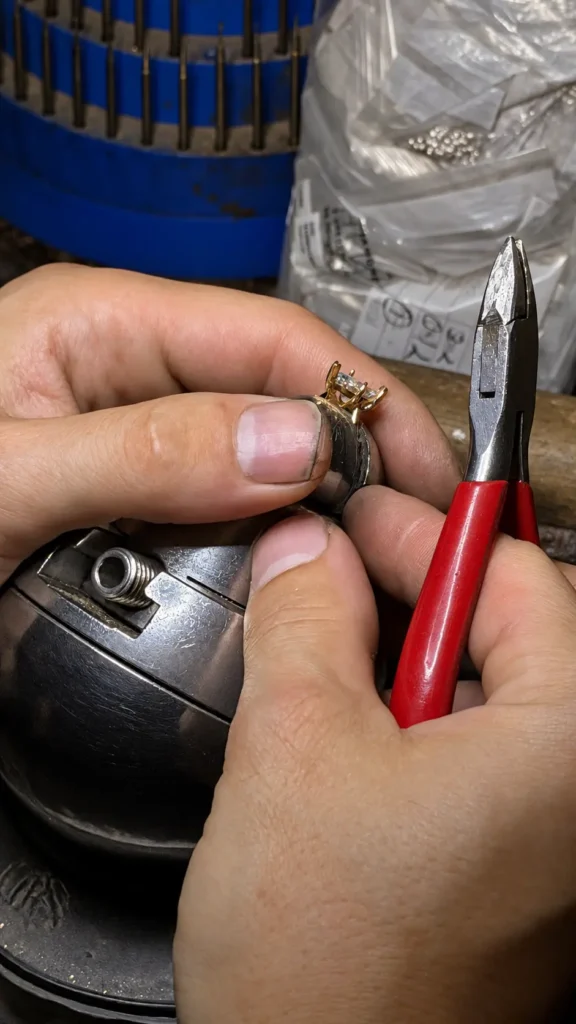
Bezel setting design connects the stone’s physical shape with a visible metal surround. The amount and profile of that surround contribute to the appearance, while the construction must be suitable for the actual stone and setting work. A neat outline in a render is only the beginning of the production discussion.
Before manufacture, agree which features are visual preferences and which require specialist assessment. This helps the designer and setter resolve the piece together without treating a generic bezel model as a finished technical answer.
Discuss bezel setting design manufacture
Show the stone outline and the bezel profile you want the workshop to assess.
Work from the actual stone geometry
Provide the available dimensions, outline and depth information. For an irregular or distinctive stone, photographs and physical inspection can be especially useful. Identify the intended orientation and any feature the design should emphasise or conceal.
Do not replace the stone late in development without checking the effect. A similar weight or nominal size does not necessarily mean the same bezel geometry will remain appropriate.
Define the visible surround
Show the intended relationship between the stone and the metal when viewed from above and from the side. If a particular edge profile or amount of visible metal is important, identify it clearly and discuss how it can be achieved.
Avoid prescribing a universal wall dimension. The appropriate geometry depends on the material, stone and construction. The workshop should assess the actual feature and the material that must remain after preparation and setting.
Consider depth, backing and access
Decide how the bezel relates to the rest of the piece, including any back plate, gallery or attachment. The design should allow the required operations to be completed in a suitable order.
A&M’s CAD service can be discussed in terms of those construction questions and the required deliverable. Give the designer enough stone and material information to develop the intended relationship rather than only a style image.
Before the next production step
Resolve stone condition and bezel geometry before manufacture is authorised.
Disclose stone condition and treatment
Known damage, treatments or other relevant stone information should reach the setter before work is approved. GIA’s gemstone durability reference explains why different materials need consideration in workshop procedures.
The commissioning client should provide the information available and identify uncertainty. Do not infer a complete treatment history from appearance or assume that a generic cleaning or setting approach is suitable for every gemstone.
Agree the sample and finish standard
If the bezel’s profile is central to the design, consider what physical evidence is needed for approval. A mount alone may establish proportions without showing the final relationship after setting. Record the scope of each sample decision.
Define the finish on the surround, adjacent surfaces and any contrasting areas. Inspect the completed arrangement against the approved reference, including the visual boundary between the stone and metal.
Resolve the surround as part of the construction
A successful production brief connects stone geometry, visible profile and the workshop route. Settle those points before manufacture and retain the final approved reference for later pieces or variations.
Plan the work with A&M
A&M can assess your trade enquiry in the context of the actual piece and requested workshop stages. Bring the references discussed in this guide so the next decision can be made on clear information.
Frequently asked questions
Can the same bezel fit stones with the same carat weight?
Not necessarily. Weight does not establish the same outline and dimensions. Assess the actual stone against the intended bezel and setting requirement.
Is there one correct bezel wall thickness?
No universal figure is supplied here. The setter and manufacturer should assess the specified alloy, stone and construction and agree the required geometry.
Can I approve the bezel from a top view only?
A top view can explain the outline, but side and other relevant views are needed to understand depth and construction. Use physical assessment where the final profile is critical.