
Stone Setting & Product Construction
Calibrated Gemstones in Jewellery Production: Checking Consistency
Calibrated gemstones can support repeat jewellery production by giving a defined dimensional starting point. The term should still be tied to an agreed specification. It does not remove the need to assess the actual stones or confirm whether they suit the intended settings.
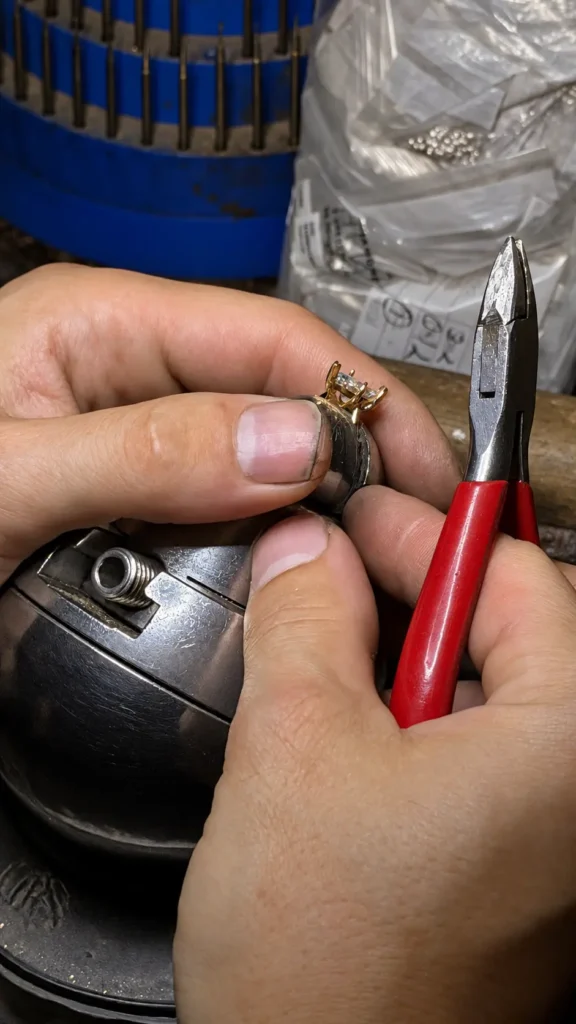
Calibrated gemstones can support repeat jewellery production by giving a defined dimensional starting point. The term should still be tied to an agreed specification. It does not remove the need to assess the actual stones or confirm whether they suit the intended settings.
Before ordering or allocating a batch, clarify which dimensions and matching features matter to the design. This is particularly useful when a run contains many repeated settings or paired products.
Discuss calibrated gemstones jewellery production
Define the stone dimensions and matching requirement for the planned settings.
Define the required calibration
Record the shape and dimensional requirement in a form the supplier and setter can interpret. Clarify the acceptable variation and the checking method where fit is critical. Avoid treating an informal size label as a complete production standard.
Keep dimensional requirements separate from weight descriptions. GIA’s report measurement guidance is a useful reminder that physical measurements and carat weight record different information.
Check the delivered group
Confirm quantity, identity and the available material information on receipt. Assess whether the stones meet the specified dimensions and the intended setting arrangement. The appropriate extent of checking should be agreed for the job rather than assumed from the word calibrated.
Record any variation that could affect the production route. If a subgroup needs individual assessment or different seats, keep it identifiable. Mixing it back into the main group can spread an unresolved issue through the batch.
Separate fit from visual matching
A stone can meet the dimensional requirement while differing in colour or appearance from its neighbours. Define the visual matching standard separately, especially for earrings or a continuous row where stones are compared directly.
Use consistent viewing conditions for the agreed comparison. If an approved arrangement exists, preserve the stone-to-position reference. A matched set can lose its intended relationship if stones are redistributed without a record.
Before the next production step
Separate unsuitable stones and confirm the permitted replacement process.
Give the setter a usable layout
Identify which stones belong to each item and position where the design requires it. Keep the total allocated quantity and any spare stones distinct. The setter should know whether substitution within the group is permitted or requires approval.
A&M’s setting service can be discussed alongside the supplied stone and mount information. Confirm the scope of incoming assessment before treating the batch as ready for repeated setting operations.
Agree what happens to unsuitable stones
Define the route for replacement, reallocation or another approved response. A stone outside the intended requirement should not be used simply to keep the count complete. The decision should preserve both the design and the production record.
At handover, reconcile set, unused, returned and held stones against the original allocation. This provides a clearer record than one final total and helps the client understand any outstanding requirement.
Make calibration a defined requirement
The benefit of calibrated supply comes from clear dimensions and consistent acceptance, not from the label alone. Agree the specification, inspect the actual group and keep matching and allocation information intact through production.
Plan the work with A&M
A&M can assess your trade enquiry in the context of the actual piece and requested workshop stages. Bring the references discussed in this guide so the next decision can be made on clear information.
Frequently asked questions
Does calibrated mean every stone is identical?
No such assumption should be made. Confirm the supplier’s dimensional specification and assess the stones against the requirements of the actual setting and design.
Should matching be checked separately from size?
Yes. Dimensional fit and visual matching are different requirements. A production brief should explain both where the design depends on them.
Can spare stones be substituted freely?
Only within the agreed allocation and specification. If stones are matched to positions or have individual references, confirm the permitted substitution process before setting.