
Stone Setting & Product Construction
Why Stone Dimensions Matter More Than Carat Weight for Mount Design
For mount design, stone dimensions answer a different question from carat weight. Weight describes mass; the mount must accommodate a physical outline, depth and setting relationship. Two stones with the same stated weight should not automatically be treated as interchangeable in the same setting.
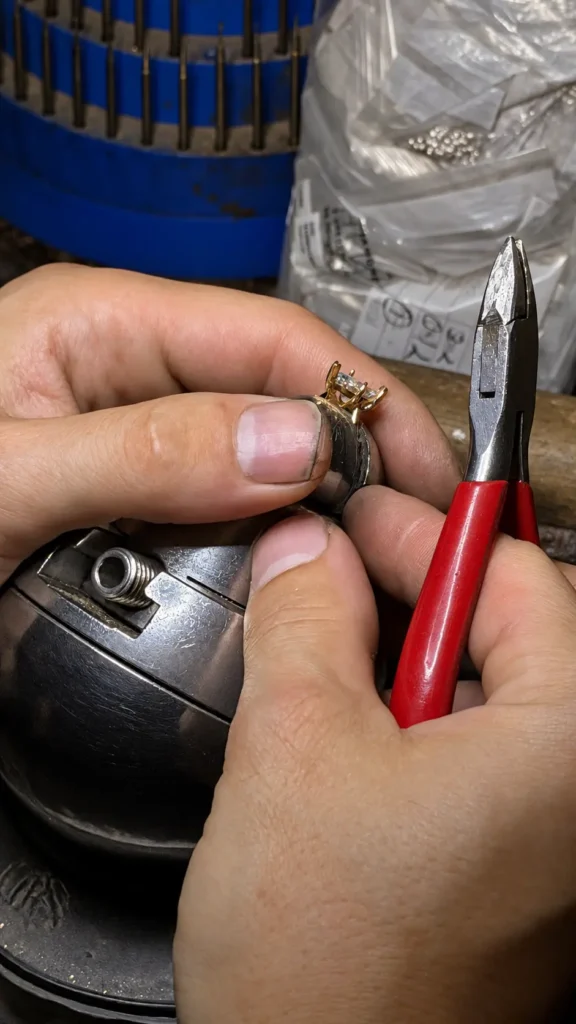
For mount design, stone dimensions answer a different question from carat weight. Weight describes mass; the mount must accommodate a physical outline, depth and setting relationship. Two stones with the same stated weight should not automatically be treated as interchangeable in the same setting.
The phrase dimensions matter more applies to fit, not to the stone’s overall value or quality. A production brief should retain both the commercial identification and the measurements needed for the design.
Discuss stone dimensions for mount design
Supply the centre-stone dimensions and the mount design being considered.
Start with the recorded measurements
GIA’s diamond report guide lists diameter and depth for round diamonds, and length, width and depth for fancy shapes. These measurements provide more useful starting geometry than a weight description alone.
Keep the report reference connected to the actual stone. If several stones are being considered, identify which one the current model uses. A design developed for one candidate may need review if the client chooses another.
Consider outline and proportions
Overall dimensions do not describe every feature of the outline. A fancy-shaped stone can have details that influence how it sits within the intended mount. Supply clear views and arrange physical assessment where required.
State the intended orientation. A pear-shaped or asymmetrical stone, for example, needs an identified position in the design. Do not leave that decision to an unlabelled photograph that could be interpreted in more than one direction.
Allow the depth to inform construction
The stone’s depth relates to the available space and the setting’s overall arrangement. A face-up image cannot establish that relationship by itself. The designer and setter should consider the physical stone alongside the proposed construction.
Avoid forcing the model to satisfy a preferred setting height without reviewing the stone. If appearance and available geometry conflict, resolve the design decision before the mount is produced rather than expecting the setter to absorb it later.
Before the next production step
Review a stone substitution before continuing with the existing mount geometry.
Distinguish design data from final setting assessment
Measurements support the model, but the actual stone still needs appropriate inspection before setting. Its condition and local features may affect the specialist’s approach. Record known damage or treatments rather than assuming the report covers every workshop consideration.
A&M’s stone setting service provides the route for discussing the piece and stones together. Supply the available information and identify anything that remains unconfirmed.
Control substitutions
If the intended stone changes, tell the workshop before further work proceeds. Compare the replacement with the design’s actual dimensional requirement, not just the original weight range. Identify whether the model, mount or setting plan needs revision.
For repeat production, specify what variation in supplied stones is acceptable and who assesses it. A broad weight band should not become an unintended permission to use any stone that falls within it.
Design around the stone that will be set
Use dimensions, orientation and physical assessment to establish fit. Keep weight and report information for identification, but do not ask them to perform the job of a measured setting specification.
Plan the work with A&M
A&M can assess your trade enquiry in the context of the actual piece and requested workshop stages. Bring the references discussed in this guide so the next decision can be made on clear information.
Frequently asked questions
Can two diamonds of the same weight need different mounts?
Yes. Weight alone does not establish the same dimensions or outline. Assess the actual stones against the proposed setting rather than assuming interchangeability.
Are report measurements enough to cut the final seat?
They are useful design information, but they do not replace the setter’s assessment of the physical stone and mount. Agree what must be checked before the final work.
What should I send when changing the centre stone?
Provide the new stone reference, measurements and available report or photographs, and clearly withdraw the previous stone from the active instruction. Ask whether the existing design needs review.