
Ring Sizing & Fit
Resizing a Ring with Stone-Set Shoulders: What Needs Checking?
When stones extend into the shoulders of a ring, a sizing instruction needs to account for more than the plain underside. The workshop must consider how the proposed change relates to the set areas and whether their existing condition is suitable for the work. The number of sizes requested is only one part of that assessment.
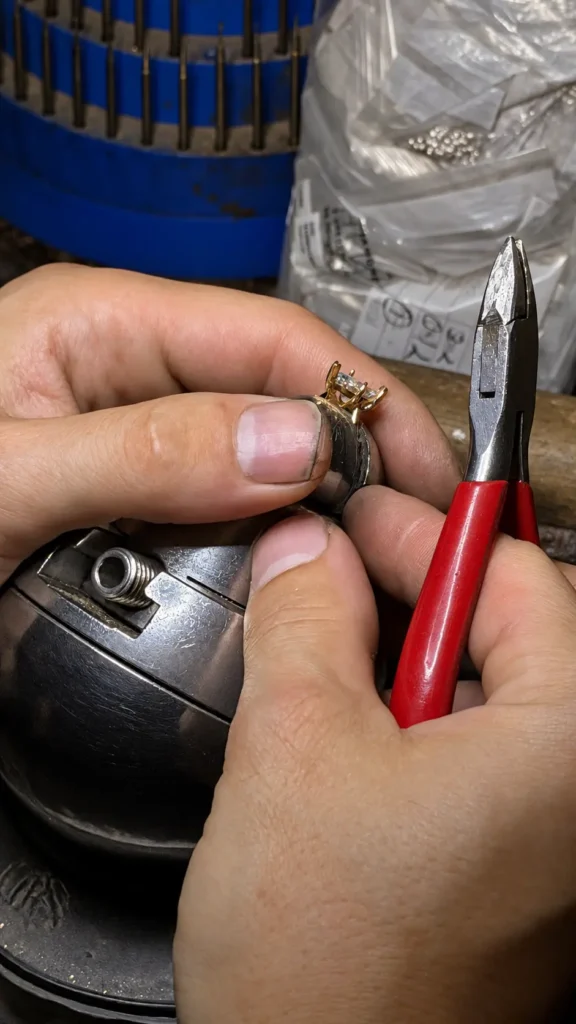
When stones extend into the shoulders of a ring, a sizing instruction needs to account for more than the plain underside. The workshop must consider how the proposed change relates to the set areas and whether their existing condition is suitable for the work. The number of sizes requested is only one part of that assessment.
A retailer can make this process easier by describing the ring accurately at the outset. Show where the stones stop, how they are held and whether the customer has noticed any movement or catching. Those details help distinguish a straightforward enquiry from a job that may require connected setting repairs.
Discuss resizing rings with shoulder stones
Supply the stone layout, current fit and requested finished size with clear side photographs.
Identify the setting style and extent
Record whether the shoulders contain channel-set stones, individual claws, pavé or another construction. If the setting style is uncertain, provide close photographs and let the workshop identify it. Do not use a broad label such as diamond shoulders as though every arrangement behaves identically.
Show the underside and the transition from plain metal into the set section. Include any earlier sizing joint, engraving or unusual internal profile. The workshop needs to understand the available working area and the features that the proposed alteration must preserve.
Establish the condition before alteration
Ask whether any stones were loose, missing or uneven before the resizing enquiry. Record visible wear and the customer’s observations without making a diagnosis from photographs. Existing setting work may need to be priced separately from changing the size.
GIA publishes an example of sizing a platinum ring with channel-set shank diamonds. That example is specific to its illustrated ring and alloy. It supports careful assessment of the set section, but it should not be used to promise an identical method or result for every shoulder-set design.
Confirm the requested size with a useful reference
Include the current measured size, the required finished size and the fitting method used in the shop. If the customer intends to wear the ring beside another band, record that context. A well-specified fit request reduces the risk of a second alteration being ordered because the original measurement was unclear.
The A&M ring-sizing service provides the assessment route, while the existing sizing guide covers the information needed in the brief. Keep the fit requirement and the description of the stone-set shoulders under the same job reference.
Before you approve the work
Ask whether setting work is included in the proposed resizing scope before confirming the customer’s order.
Agree the connected work explicitly
Ask whether the proposed quotation includes checking and, if required and feasible, correcting the settings after the size change. Do not assume that the word resize includes every repair revealed during inspection. Equally, do not present an initially estimated operation as a fixed package if the condition is still unknown.
Where the requested change is unsuitable, ask for the reason to be explained in relation to the construction. The customer may be able to consider another solution, but that discussion should follow the workshop assessment. Avoid publishing a universal resizing limit that ignores differences between rings.
Make the final setting check part of handover
The completed ring should be reviewed against the agreed size, profile and associated setting scope. Confirm that any additional work authorised during the job is recorded. Where the customer’s original concern included a loose stone or catching claw, make sure that concern has a documented outcome.
Shoulder-set rings are best handled through one coordinated instruction. Fit, construction and stone security should stay connected from intake to collection, so the customer receives a clear account of what was assessed and what was completed.
Plan the next step with A&M
Supply clear views of the stone-set shoulders and the requested size change for an item-specific assessment.
Frequently asked questions
Are pavé shoulders automatically unsuitable for resizing?
No blanket rule is reliable. The workshop needs to inspect the layout, remaining metal, existing settings and proposed change before deciding.
Does a laser remove the need to inspect the stones?
No. Choosing a joining method does not replace an assessment of stone condition, setting construction or the completed ring.
Should setting repairs appear separately on the estimate?
They should be clearly identified where they are additional to the agreed sizing operation. The customer needs to understand the complete authorised scope.