
Repairs & Restoration
Laser Welding or Soldering for Jewellery Repairs: How the Choice Is Made
Laser welding and soldering are different joining approaches, but the name of the process does not establish whether a jewellery repair will be successful. The useful question is why a method suits the particular joint, surrounding materials and condition of the piece. A retailer should be able to explain that reasoning without promising that one tool solves every repair problem.
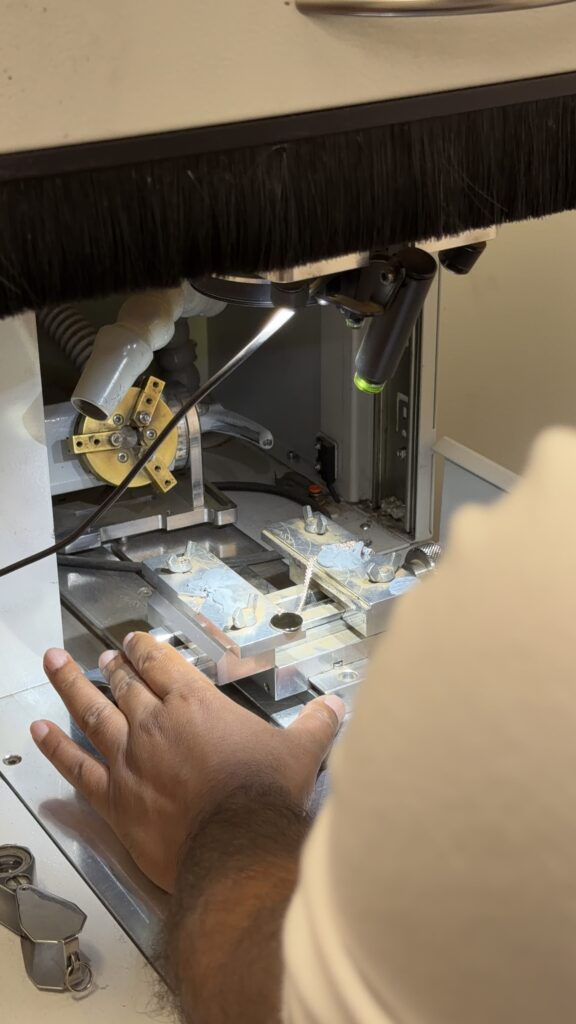
Laser welding and soldering are different joining approaches, but the name of the process does not establish whether a jewellery repair will be successful. The useful question is why a method suits the particular joint, surrounding materials and condition of the piece. A retailer should be able to explain that reasoning without promising that one tool solves every repair problem.
The comparison is especially relevant when a customer asks for laser repair after reading about it online. Their preference can be recorded, while the workshop retains responsibility for assessing whether the proposed work and available access make that route appropriate.
Discuss laser welding vs soldering jewellery repairs
Describe the damaged joint and surrounding materials so the workshop can assess the appropriate repair route.
Begin with the joint rather than the equipment
Show what has separated, where sound metal remains and how the parts should meet. A broken attachment, a split band and a worn claw present different questions. The proposed joint must be considered in the context of the complete item, including any earlier repairs nearby.
Ask whether the visible fault is the only work required. A&M’s repair assessment process considers surrounding construction and previous work alongside the damaged area. A narrow instruction to use a particular machine should not prevent a wider condition issue from being identified.
Compare the relevant questions
- Material: what metal or metals are present, and is their identification reliable?
- Access: can the joint be prepared and reached in the assembled piece?
- Nearby features: which stones, finishes or earlier joints need consideration?
- Result: what shape, appearance and function must the completed repair restore?
These questions are useful for either approach. They turn a general preference into a practical discussion with the workshop. The retailer does not need to prescribe equipment settings or a bench procedure to obtain a clear explanation of the proposed scope.
Keep stone protection in the assessment
A concentrated working area does not justify a blanket promise that gemstones can always remain in place. GIA’s laser-sizing guidance explicitly calls for gemstone protection during laser work. The actual stone, its condition and any known treatments still need consideration.
If removal or resetting is proposed, identify it as part of the quotation and approval. Do not describe it as an unexpected extra after promising a complete repair price. Where treatment information is missing, record the uncertainty and ask how it affects the workshop’s recommendation.
Before you approve the work
Ask why the proposed method suits this joint and what preparation or stone work it requires.
Ask what the completed joint will look like
Discuss the expected appearance after finishing, including any remaining difference in colour, profile or texture. An acceptable functional repair and an invisible cosmetic result are not automatically the same promise. The workshop should explain any limitation before the customer decides.
For a piece with an existing contrast finish, identify the surfaces that must remain distinct. If broader refinishing is required to blend the worked area, include that scope. The surface preparation guide explains why the starting condition matters before final polishing is considered.
Choose the route on evidence
The appropriate proposal connects the method to the metal, joint, access and intended result. Ask for that explanation in plain language and retain it with the repair approval. Avoid comparative claims such as always stronger or completely heat-free unless they can be substantiated for the exact work, which a general article cannot do.
A considered repair is defined by the condition it addresses and the result it can reasonably deliver. The process name is useful information, but it should support the assessment rather than replace it.
Plan the next step with A&M
Describe the actual repair and its access constraints so the joining method can follow the assessed construction.
Frequently asked questions
Is laser welding always better than soldering?
No universal ranking is useful. The workshop should choose a suitable approach for the actual material, joint, access, nearby stones and required result.
Can stones always stay in during laser work?
No. Stone protection and suitability still require assessment. Removal or resetting may need to form part of the approved scope.
Should a retailer specify the machine settings?
Usually the brief should specify the fault and intended result. Technical process settings belong to the workshop’s assessment and controlled bench work.