
Stone Setting & Gemstone Care
Ruby and Sapphire Repairs: Why the Treatment Record Matters
Ruby and sapphire are often described as durable jewellery stones, but that description should not end the repair assessment. Treatments and existing condition can change what needs to be considered around the stone. A retailer should disclose the information available rather than assume that every red or blue corundum can follow the same workshop route.
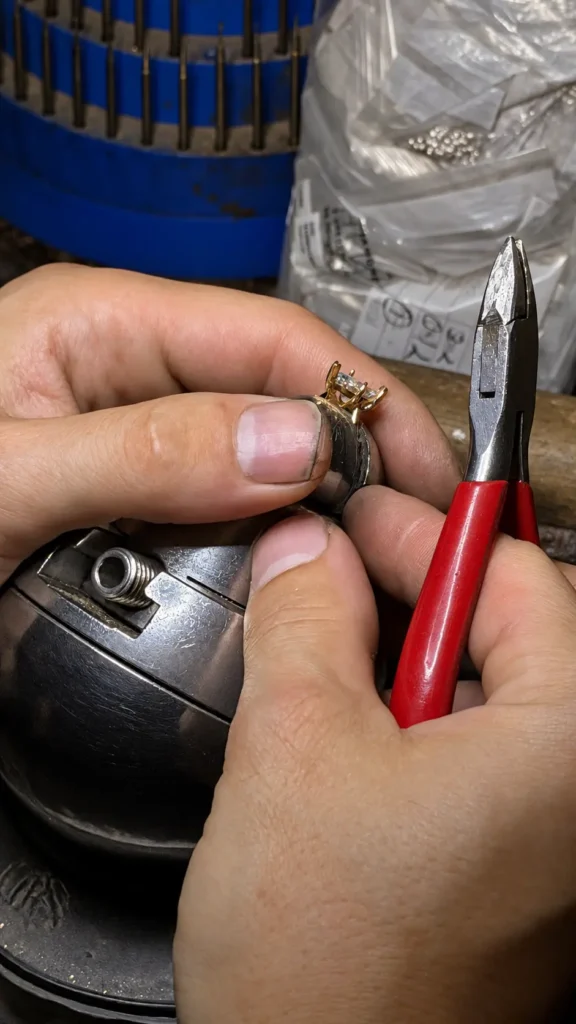
Ruby and sapphire are often described as durable jewellery stones, but that description should not end the repair assessment. Treatments and existing condition can change what needs to be considered around the stone. A retailer should disclose the information available rather than assume that every red or blue corundum can follow the same workshop route.
The distinction matters even when the requested work is on the metal. A sizing joint, claw repair or refinishing operation may involve decisions about the stone’s proximity and handling. Those decisions should be made with the treatment record in view.
Discuss ruby sapphire jewellery repair
Send any treatment disclosure or gemstone report with the repair description and full views of the setting.
Keep the identification and treatment information together
Supply any laboratory report, original sales disclosure and relevant previous workshop record. State whether the stone is described as ruby or sapphire and identify which information comes from documentation. Do not upgrade an uncertain customer description into a confirmed laboratory identification.
GIA’s ruby care guide distinguishes untreated or heat-treated material from stones with filling-related concerns. Its sapphire guide also identifies additional care requirements for filled or dyed material. These distinctions are more useful to the repair brief than a blanket claim that all corundum is unaffected by workshop processes.
Document the current setting and visible condition
Photograph the complete piece and the stone from accessible angles. Record any chip, surface-reaching feature or reported movement without attempting to identify its cause from an image. If part of the stone is obscured, mark that limitation rather than assuming the hidden area is sound.
Include the surrounding metal and previous repairs. The workshop needs to assess how the proposed work relates to the stone, not simply confirm the colour of the centre gem. A clear description of the fault is useful even where the treatment history remains incomplete.
Ask how uncertainty changes the proposal
Where a relevant treatment detail is unknown, ask whether further specialist assessment is required before work can be agreed. The answer should relate to the proposed operation and actual piece. Do not invent a treatment history to keep the job moving or promise a method based on an unverified assumption.
The A&M repair enquiry separates the desired outcome from the assessed route. Use that distinction to explain any staged proposal to the customer. Permission for an initial assessment should specify where further approval is needed if new information changes the scope.
Before you approve the work
Clarify unresolved treatment information before a repair method or cleaning stage is agreed.
Reconfirm the mount if stones are removed or replaced
If removal or replacement forms part of the job, record it explicitly. A substitute ruby or sapphire must be assessed for dimensions, shape and condition as well as visual appearance. The stone-dimension guide explains why similar weight does not establish a matching fit.
Where the original stone is retained, keep its position and identification record connected to the item. Any setting work needed after the metal repair should be part of the approved quotation, rather than an assumption attached to the word repair.
Return useful information with the jewellery
The completion record should state the work carried out and preserve any treatment or care information supplied during the enquiry. If the workshop recommends specific future handling, explain it in relation to the assessed piece. Do not imply that repair work has independently verified an unknown treatment history.
Ruby and sapphire repairs are better managed through precise disclosure than broad statements about durability. The retailer’s brief should make the known information easy to use and the remaining uncertainty easy to identify.
Plan the next step with A&M
Send the available ruby or sapphire records with the piece so the repair route can reflect the actual stone information.
Frequently asked questions
Are all treated rubies unsuitable for repair?
No blanket conclusion is appropriate. The actual treatment, condition, setting and proposed operation need assessment before a route is agreed.
Does a sapphire’s blue colour confirm its treatment history?
No. Appearance alone does not provide a reliable treatment record. Use documented information and appropriate specialist assessment where required.
Should the report travel with the job?
A clear copy linked to the item reference is useful. Follow the agreed submission process and retain the original documentation securely.