
Polishing & Refinishing
Silver Tarnish or Firestain? Describe the Discolouration Before Choosing a Treatment
Silver discolouration should be described before it is treated. The word tarnish is often used for any darkened area, but a workshop may need to consider a different surface condition or a change associated with earlier heating and finishing. A photograph alone is not enough to diagnose every mark reliably.
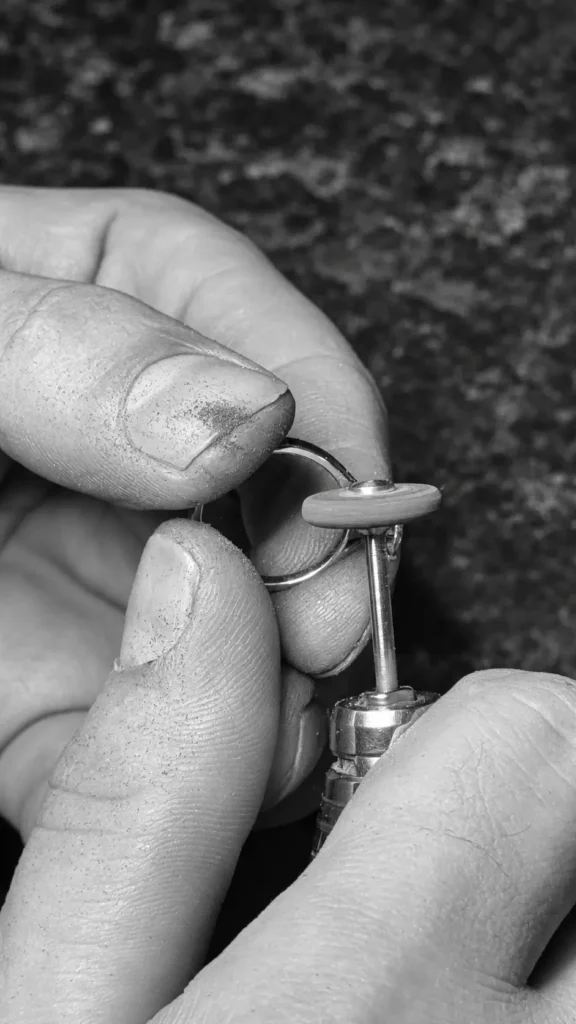
Silver discolouration should be described before it is treated. The word tarnish is often used for any darkened area, but a workshop may need to consider a different surface condition or a change associated with earlier heating and finishing. A photograph alone is not enough to diagnose every mark reliably.
For retailers, the useful first step is to record where the colour appears, when it was noticed and what work the item has previously received. That gives the workshop a stronger basis for deciding whether the enquiry concerns cleaning, surface correction or another assessment.
Discuss silver tarnish vs firestain
Include the silver item’s finishing and repair history, and show the discolouration in neutral lighting.
Understand the distinction without making a diagnosis
The Canadian Conservation Institute explains that ordinary silver tarnish is largely a surface product associated with sulphur-containing compounds. Kernowcraft’s firestain guidance describes a different discolouration associated with oxidation in copper-containing alloys such as sterling silver.
Those references explain why two dark areas may need different consideration. They do not allow a retailer to identify the cause conclusively from colour alone. Use them to frame the workshop question, while keeping the actual finding subject to examination.
Record the history that may matter
Ask whether the item has recently been repaired, heated, polished or plated, and whether any reliable work record is available. State the known metal description and identify areas where another material or finish is present. Do not assume the whole piece is solid silver because one component is marked.
Photograph the affected area and a wider view under neutral lighting. Avoid filters and heavy contrast adjustments. If the appearance changes with the viewing angle, include more than one image so the workshop can distinguish a reflection from a persistent surface feature.
Protect deliberate dark details
Some jewellery designs include intentionally darkened recesses or contrasting surfaces. Ask whether those features are part of the desired appearance before requesting an overall bright finish. A treatment intended to improve an unwanted mark should not automatically remove the design’s deliberate contrast.
The detail-preservation guide is useful where engraving, relief or fine borders are involved. Mark those areas on the brief and explain which parts the owner wants retained. A general request to remove all dark colour is too broad where different effects are present.
Before you approve the work
Confirm the assessed cause and suitable scope before authorising abrasive correction or a new coating.
Agree the appropriate intervention
Ask the workshop what the assessment indicates and which treatment is suitable for the complete item. Stones, attachments, plating and worn sections can affect that decision. Do not substitute household chemicals or an abrasive experiment for a considered proposal.
A&M’s jewellery finishing enquiry can establish the relevant scope for the piece. If more extensive correction is proposed, ask how it may affect the profile or fine detail. A coating should not be used to avoid explaining the underlying condition or the intended result.
Record the result and future care
At return, compare the treated area with the approved objective and retain any relevant assessment note. Give care information appropriate to the complete item rather than a generic silver-cleaning instruction that ignores its stones or finish. Avoid promising that silver will never discolour again.
The practical value of distinguishing tarnish from other silver surface concerns is a better treatment decision. Accurate history, clear images and respect for the intended finish help the workshop address the right problem.
Plan the next step with A&M
Record the discolouration and known history so the workshop can assess the surface before selecting a treatment.
Frequently asked questions
Can purple or dark colour alone confirm firestain?
No. Colour can support an enquiry, but the item’s history and physical surface need assessment before the cause is confirmed.
Should all dark areas on silver jewellery be removed?
Not automatically. Some are intentional parts of the design. Identify the owner’s desired finish and any protected contrast before authorising work.
Is a stronger polish always the next step if cleaning fails?
No. The cause, remaining metal, stones and surface details should be assessed before more extensive correction is proposed.