
Stone Setting & Gemstone Care
Remounting Emerald Jewellery: Put Treatment Information in the Brief
An emerald remount begins with information about the actual stone, not only a preferred new setting. Treatment history, visible condition and the way the emerald sits in its existing mount can affect the assessment. The retailer should gather those details before promising that the stone can be removed, cleaned and reset through a standard sequence.
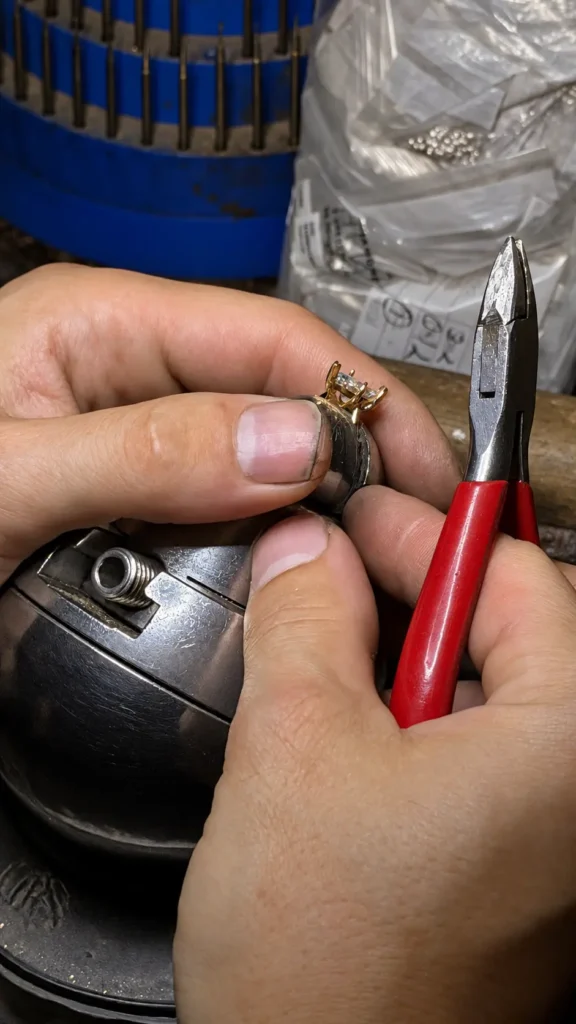
An emerald remount begins with information about the actual stone, not only a preferred new setting. Treatment history, visible condition and the way the emerald sits in its existing mount can affect the assessment. The retailer should gather those details before promising that the stone can be removed, cleaned and reset through a standard sequence.
Where information is missing, state that clearly. An emerald’s colour or apparent clarity in a photograph does not establish its treatment history. The workshop needs to know which details are documented, which have been reported by the customer and which remain unknown.
Discuss remounting emerald jewellery
Include any emerald report, treatment disclosure and known repair history with the remounting enquiry.
Supply treatment and condition records
Include any laboratory report, original treatment disclosure or relevant earlier job record. Note visible fractures or damaged areas without assigning a cause that has not been established. If the existing setting obscures part of the stone, record that limitation in the initial assessment.
GIA’s emerald care guide explains that filled fractures can make ultrasonic or steam cleaning unsuitable. This is a specific reason to disclose treatment information before workshop handling. It is not a basis for diagnosing a particular emerald from its appearance or assuming that every stone has received the same treatment.
Agree the removal stage
Ask the workshop to assess the existing setting and explain the proposed removal scope. The customer should understand any relevant condition concern and what will happen to the original mount. Approval of a new design should not silently become permission for unspecified dismantling work.
Keep the stone’s identity and original orientation connected to the job record. If new information becomes visible after removal, record it before proceeding. A staged process is useful only when the decision points are clear and additional work is not assumed to be already authorised.
Design from the emerald’s actual geometry
Record the stone’s outline, measurements and intended orientation. The stone-dimension guide explains why weight alone cannot define the fit of a mount. A new design should accommodate the assessed stone rather than require it to behave like a nominal standard size.
Discuss the customer’s preferred appearance alongside the setting requirements. Reference photographs can communicate the look of claws or a bezel, but the workshop must assess those ideas against the particular emerald. Avoid choosing the finest visible metal profile solely because it appears attractive in an unrelated image.
Before you approve the work
Resolve the stone’s condition and handling requirements before the new mount is approved.
Include finishing and future care in the proposal
Ask how the proposed construction affects later cleaning access and what care guidance should accompany the completed piece. The repair record should preserve any treatment information supplied, so it remains available when the jewellery returns for service.
A&M’s stone-setting enquiry provides a route for discussing the stone and mount together. Confirm acceptance and the relevant scope before arranging the work. Do not assume that a setting quotation also includes independent gemstone identification, treatment analysis or a valuation.
Close the commission with a complete record
At handover, compare the finished orientation and appearance with the approved design, and retain the stone condition notes with the job. Explain any remaining limitation or care instruction based on the actual assessment. Account for the original mount and other supplied components according to the agreed arrangements.
Emerald remounting benefits from early disclosure and a design informed by the stone itself. Clear treatment information and staged approvals help the retailer turn a personal design request into a considered workshop brief.
Plan the next step with A&M
Include known emerald treatment information with the remounting enquiry and identify any uncertainty that still needs assessment.
Frequently asked questions
Can an emerald’s treatment be identified from a photograph?
No reliable treatment conclusion should be made that way. Supply existing documentation and seek appropriate assessment where the information is important and unknown.
Should an emerald be steam cleaned before sending it?
Do not assume that is suitable. GIA identifies particular concerns for fracture-filled emeralds, and the actual stone’s condition and treatment need consideration.
Does remounting include a new gemstone report?
Only if separately arranged and stated in the scope. Setting work and independent laboratory services are different deliverables.