
Stone Setting & Gemstone Care
A Chipped Diamond Before Resetting: What Must Be Decided?
A known chip should be part of the first resetting conversation, not a detail the setter discovers after the new mount has been made. The condition can affect the proposed setting relationship and may require advice from an appropriate diamond specialist. It should not be treated solely as a cosmetic feature to hide beneath metal.
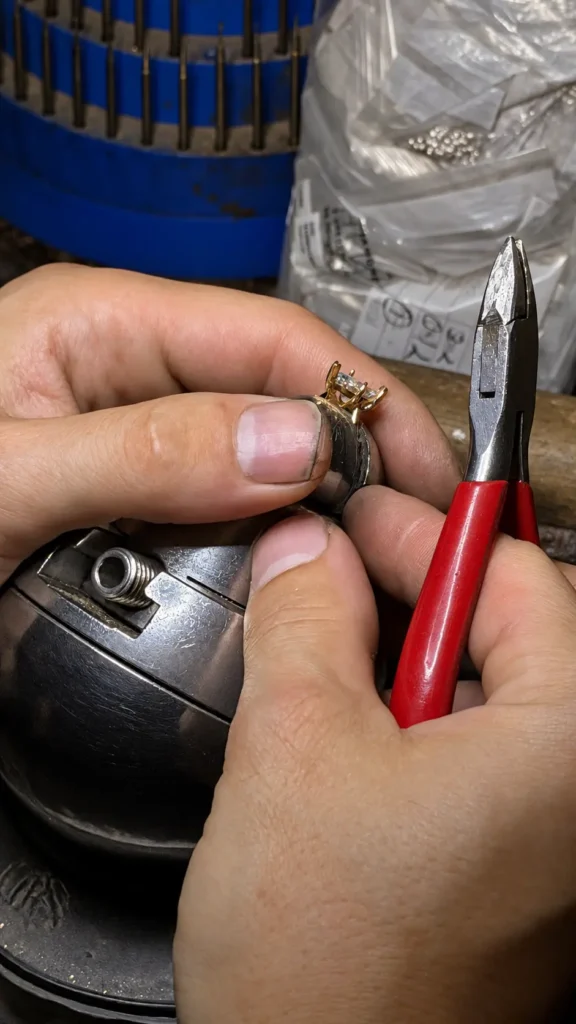
A known chip should be part of the first resetting conversation, not a detail the setter discovers after the new mount has been made. The condition can affect the proposed setting relationship and may require advice from an appropriate diamond specialist. It should not be treated solely as a cosmetic feature to hide beneath metal.
GIA’s diamond care guidance explains that resistance to scratching is different from resistance to chipping. That distinction helps a retailer correct the assumption that a diamond cannot be damaged while keeping the discussion focused on the actual stone and its proposed use.
Discuss chipped diamond resetting assessment
Disclose the known chip and provide any existing condition record before a new setting is designed.
Record the chip without altering the evidence
Keep a clear condition note and photographs that identify the affected area. Include the date and source of any earlier report where known, and distinguish a current observation from a historical description. If part of the stone is obscured by the existing setting, record that limitation.
Do not estimate the depth or stability of damage from an unclear image. Ask for the appropriate examination before making a technical claim. The purpose of the intake record is to preserve what is known and identify the questions that remain.
Separate setting advice from cutting advice
A setter can assess the relationship between the stone and a proposed mount within the scope of the enquiry. Questions about recutting, polishing a damaged area or the consequences for a grading report may require a different specialist. Do not imply that one consultation automatically covers every aspect of the decision.
If cutting work is proposed, the customer should understand that the result needs its own assessment and approval. Avoid predicting a final weight, grade or market value without the relevant specialist basis. Those outcomes cannot be guaranteed by a general repair article or a preliminary setting quotation.
Do not design around concealment alone
A claw or bezel may cover an area visually, but hiding a chip is not the same as establishing suitability for setting. Ask how the condition affects the proposed support and whether the stone should be used in that construction at all.
The bezel design guide and stone-dimension guide provide useful background to the mount discussion. The actual stone must remain the reference. If its outline changes through approved specialist work, revisit the mount specification rather than rely on the earlier dimensions.
Before you approve the work
Resolve the damaged stone’s proposed use before approving a mount intended to accommodate it.
Agree the order of decisions
Record which assessment comes first, who provides any specialist opinion and when the customer approves the next stage. A new design should not be released to manufacture while a material condition question remains unresolved. If an early concept is developed, identify it as subject to the stone decision.
A&M’s setting enquiry asks for stone and mount information together. Use that route to disclose the condition and confirm what can be assessed. Do not promise acceptance of a damaged stone before the workshop has reviewed the actual piece and scope.
Keep the condition record with the completed work
At handover, retain the agreed description of the stone and any specialist work alongside the setting record. Explain what was done and what was left unchanged. A reset should not be described as having repaired the diamond unless that accurately reflects separately completed and documented work.
The sound starting point is transparency. A chipped diamond needs a considered decision about condition and intended use before the retailer can offer a confident setting proposal.
Plan the next step with A&M
Establish the chipped stone’s condition and the specialist decisions needed before approving a new mount.
Frequently asked questions
Can a claw simply hide a diamond chip?
Visual concealment does not establish that the stone is suitable for the proposed setting. Its condition and support need assessment first.
Will recutting always remove a chip without a noticeable change?
That cannot be promised. Appropriate specialist advice is needed on feasibility and the possible effect on the stone’s dimensions, weight and appearance.
Does a new setting make an old grading report current?
Do not assume so. Questions about a report and any changed stone condition should be referred to the relevant laboratory or qualified specialist.