
Jewellery Design Details
Open-Back and Closed-Back Gemstone Settings: What Changes in the Brief?
The back of a gemstone setting can affect access for inspection, cleaning and future work, as well as the construction itself. Yet it is often absent from the reference image used to commission a piece. An open or closed appearance should therefore be part of the design brief rather than an assumption left until the item is finished.
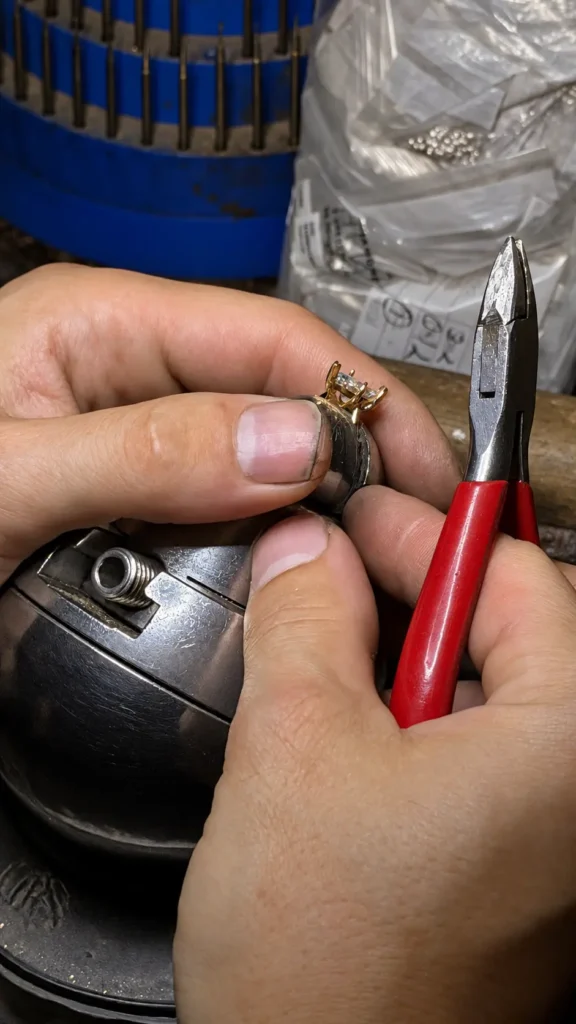
The back of a gemstone setting can affect access for inspection, cleaning and future work, as well as the construction itself. Yet it is often absent from the reference image used to commission a piece. An open or closed appearance should therefore be part of the design brief rather than an assumption left until the item is finished.
For existing jewellery, the first task is to establish what is actually present. A backing, lining or concealed component may have a purpose that is not obvious from above. Do not treat opening a closed setting as a routine improvement before the piece has been assessed.
Discuss open back vs closed back gemstone settings
Show the underside of the setting and explain which design, access or care question needs to be resolved.
Describe the actual construction
Provide underside and side photographs alongside the top view. Identify any known lining, backing material or earlier repair, and label uncertain information honestly. The workshop needs to understand the complete arrangement rather than a sales description such as fully enclosed.
If the item may have historic significance, obtain suitable specialist advice before authorising a change to its original construction. A design preference for a more open back does not establish that an older setting should be altered or that its appearance will improve afterwards.
Define the practical objective
Ask why the back is being discussed. The customer may want easier access, a different profile or a particular visual detail. A manufacturing team may need to resolve assembly or setting access. Those are different objectives and should not be bundled into a vague request to open it up.
The setting-choice guide explains how construction affects the wider production route. For a new design, show the required underside as part of the approved model. For an existing item, keep the proposed alteration separate from any unrelated repair.
Consider all materials present
Record stone identity and treatment information where known, plus any other materials within the setting. A cleaning or inspection route should not be selected solely from the visible top stone. Unknown backing or attachment details may need further assessment before the work can be defined.
GIA’s gem-treatment reference explains that treatments can introduce specific care considerations. The practical implication is to establish the relevant information before changing access or proposing a cleaning method. A more open construction does not make every process suitable for every stone.
Before you approve the work
Confirm the purpose of the backing before approving any opening or alteration to the existing setting.
Review support and access together
Ask how the proposed backing or opening relates to the stone’s support and the surrounding mount. A&M’s stone-setting service assesses the actual stone and mount together. The design should provide the required relationships rather than copy an underside from a ring with different geometry.
If a new model is being developed, include side and underside approval views. The CAD render and production-file guide explains why an attractive presentation image is not the whole technical deliverable. Relevant access and construction need to be recorded explicitly.
Approve the resulting care and appearance
The completed specification should state the intended back construction and any associated limitations. At handover, explain the care guidance appropriate to the actual materials and access. Do not promise that a particular back style automatically makes the stone brighter, easier to maintain in every respect or suitable for unrestricted cleaning.
The best comparison is made through the needs of the piece. An open back and a closed back are design choices with construction and care implications, not a universal ranking of good and bad settings.
Plan the next step with A&M
Explain the required setting back and available stone information before approving the underside construction.
Frequently asked questions
Does an open back always make a gemstone look better?
That should not be assumed. Appearance depends on the actual stone and complete design, and should be assessed rather than promised from the back style alone.
Can an old closed setting simply be opened for cleaning?
Not without assessment. Its backing and construction may have a purpose, and historic significance may require separate specialist advice.
Should the underside appear in a CAD approval?
Yes, where it affects the intended construction, access or appearance. A top view does not communicate those details adequately.