
Polishing & Refinishing
Platinum Patina: Keep the Worn Character or Refinish the Surface?
Not every owner wants a worn platinum ring to look newly polished. Some prefer a softer, lived-in surface, while others want a brighter finish restored. The useful workshop brief starts with that preference and then asks what the ring’s condition can reasonably support.
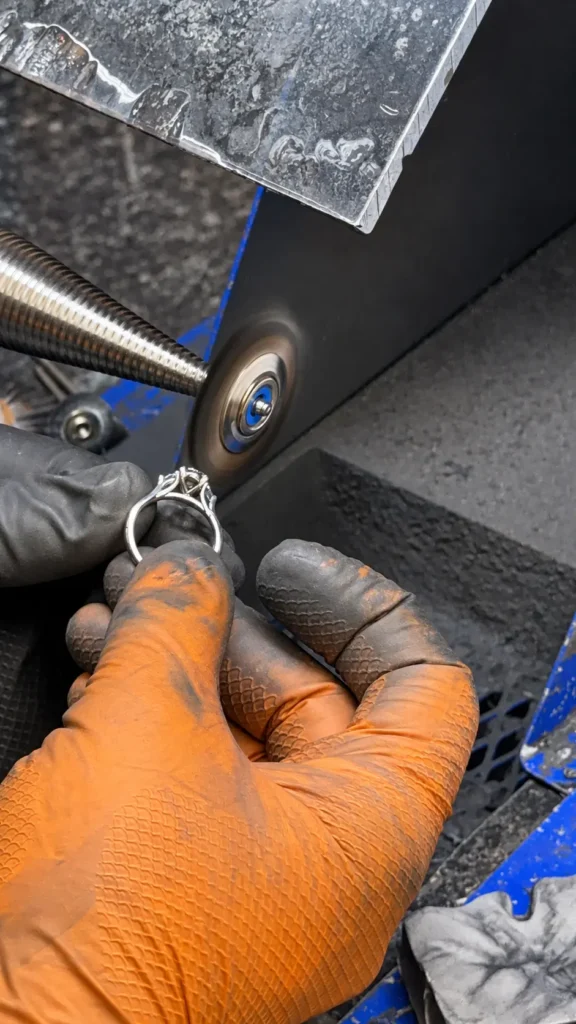
Not every owner wants a worn platinum ring to look newly polished. Some prefer a softer, lived-in surface, while others want a brighter finish restored. The useful workshop brief starts with that preference and then asks what the ring’s condition can reasonably support.
The word patina can mean different things in a jewellery conversation. A customer may use it for a general worn appearance, while also pointing to a particular scratch or dent they dislike. Separate those observations so a request to preserve character does not conceal an unresolved repair concern.
Discuss platinum patina or polish
Show the current surface and the appearance the owner wants, including any worn character they wish to retain.
Establish the appearance the owner actually wants
Use photographs or an agreed physical finish reference to explain the desired result. Ask whether the preference applies to the whole ring or only selected surfaces. A polished face beside a softer side profile needs a more specific instruction than make it look good again.
Record details that should remain recognisable, including edges, engraving and intentional texture. The guide to preserving fine detail explains why surface work should respect the features that define the design. A bright result is not automatically the right result for every owner.
Separate ordinary surface wear from condition concerns
Ask the workshop to identify deeper damage, thin sections or setting issues before choosing a cosmetic scope. A change in surface appearance should not distract from a loose stone or worn claw. These concerns may require different work and separate approval.
A&M’s polishing and rhodium page describes assessment of surface condition alongside the metal and detail that remain. For platinum, the relevant enquiry is the actual finish and corrective work required, rather than an assumption that every ring needs the same treatment.
Discuss the refinishing options in plain language
Ask what level of intervention the workshop proposes and why. GIA provides benchmarks for refinishing worn platinum, showing that worn jewellery is assessed against workmanship criteria rather than appearance alone. The proposal for the customer’s ring should remain specific to its condition.
If the owner wants a restrained improvement, say which marks or textures may remain. If a more complete refinish is requested, ask what limitations apply around wear, edges and settings. Avoid an unqualified promise to make the ring exactly as it was when new.
Before you approve the work
Agree the degree of refinishing before treating every visible wear mark as something to remove.
Consider the other rings worn with it
Where a platinum band forms part of a set, compare the proposed finish with the neighbouring pieces. The owner may want them to match more closely or may prefer to retain different appearances. That is a design preference to record, not a reason to apply extra work automatically.
If only one ring is submitted, explain the limits of comparing it with an absent partner. A photograph can help communicate the aim, but its lighting may not represent the actual finish. Where matching matters, discuss whether the relevant pieces should be assessed together.
Approve the finish before the bench work begins
Record the intended appearance, protected details and any separately authorised repairs. At collection, compare the result with that brief rather than judge it solely by how strongly it reflects light. Explain which existing features were retained and which surfaces were refinished.
The choice between keeping a worn platinum character and requesting a polish belongs to the owner, informed by the workshop’s assessment. A precise finish brief helps turn that preference into a result the customer can recognise and understand.
Plan the next step with A&M
State whether the customer values the worn platinum surface or wants an assessed refinishing proposal.
Frequently asked questions
Does every platinum ring need to be polished when it looks worn?
No. The owner’s preference and the ring’s condition should guide the scope. A softer worn appearance may be intentionally retained.
Can polishing resolve worn claws at the same time?
A cosmetic polish is not a substitute for claw repair. Any setting concern should be assessed and included separately where work is required.
Can a ring be guaranteed to look exactly as new?
That should not be promised without assessment. Existing wear, earlier work and retained details may limit the achievable result.