
Materials & Mount Preparation
Mixed Metal Jewellery: Planning Construction and Finishing
Mixed metal jewellery needs a clear record of where each material belongs and how the components will become one finished piece. A two-colour render can communicate the visual idea without resolving the joining method, preparation access or finishing boundary. Those decisions should be made before the components reach assembly.
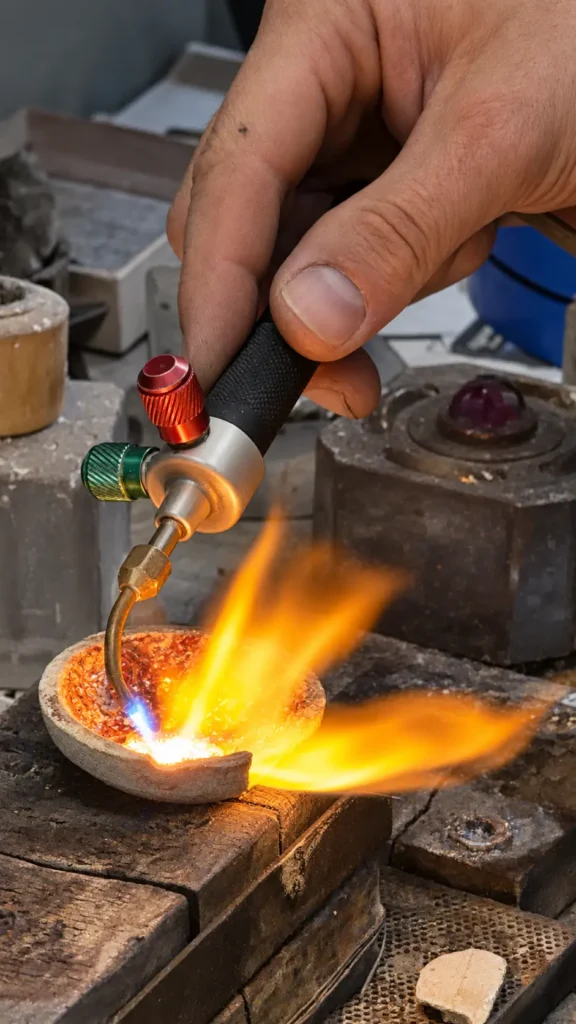
Mixed metal jewellery needs a clear record of where each material belongs and how the components will become one finished piece. A two-colour render can communicate the visual idea without resolving the joining method, preparation access or finishing boundary. Those decisions should be made before the components reach assembly.
Begin with a labelled drawing or component list. Identify the actual material of each part, rather than relying on the colour assigned to it in the image.
Discuss mixed metal jewellery manufacturing
Show which metal belongs to each component and where the visible boundary should sit.
Specify every component
Record the metal, fineness and available alloy information for each part. Include small components that may be easy to overlook, such as an attachment, setting head or separate back plate. A mixed assembly needs more detail than a single overall metal description.
Keep supplied parts linked to their references. If components from different orders look similar, their identification should remain clear through preparation. Visual colour alone is not a reliable material record.
Resolve the joining arrangement
Ask the workshop to assess the intended interfaces and production route. The joint must be considered as part of the construction, including how parts are positioned and which areas remain accessible for later work.
Agree which surfaces should be prepared before assembly and which must remain suitable for joining. A&M’s mount preparation service explains why the required next stage determines the preparation standard.
Make the colour boundary deliberate
Mark where the visible transition should occur and how it relates to the design. If one material is meant to remain hidden from a particular view, show that intention clearly. Do not expect the finisher to infer it from an unlabelled render.
Assess representative material samples under consistent lighting where colour matching matters. A highly reflective photograph can make the distinction look different from the actual piece, especially at a curved or narrow boundary.
Before the next production step
Agree joining access and finishing boundaries before assembly begins.
Specify finishing areas separately
State the finish required on each component and any areas that should be protected. If plating is included, define its location and the expected appearance of adjacent surfaces. Contrasting metals and contrasting textures are separate aspects of the brief.
Review the sample at the junction as well as across the broad surfaces. This is often where alignment, finish and visual intent meet. A general statement that the piece is polished may not establish the desired result at that boundary.
Plan the hallmarking discussion early
Mixed precious metal articles can raise specific marking and description questions. The official hallmarking business guidance directs businesses to rules covering more than one precious metal in an article. Confirm the applicable treatment with the assay office for the actual construction.
Record who will arrange that assessment and at what stage. Do not leave the decision until the finished item has no convenient location for the agreed marking or requires an unplanned return to the workshop.
Approve the assembly as a complete piece
Component approval alone does not establish the finished relationship between the metals. Review the assembled sample, record the accepted boundary and retain the material specification so future production repeats the intended result.
Plan the work with A&M
A&M can assess your trade enquiry in the context of the actual piece and requested workshop stages. Bring the references discussed in this guide so the next decision can be made on clear information.
Frequently asked questions
Can I describe a two-tone piece simply as gold and platinum?
The brief needs the fineness and available alloy information for each component, along with a labelled location. A broad description does not define the whole production requirement.
Should mixed metal parts be polished before joining?
The appropriate sequence depends on access and construction. Agree which surfaces are prepared at each stage with the workshop instead of applying the same sequence to every design.
Does mixed metal jewellery need special hallmarking consideration?
It can. Consult current official guidance and the assay office about the particular article, including its materials, construction and intended description.