
Materials & Mount Preparation
Platinum vs White Gold: What Changes During Jewellery Production?
Platinum and white gold can serve a similar visual design brief, but they are different materials and need distinct production specifications. Choosing between them should involve the actual alloys, the construction and the intended surface finish. A colour description alone cannot tell the workshop how the piece should be made.
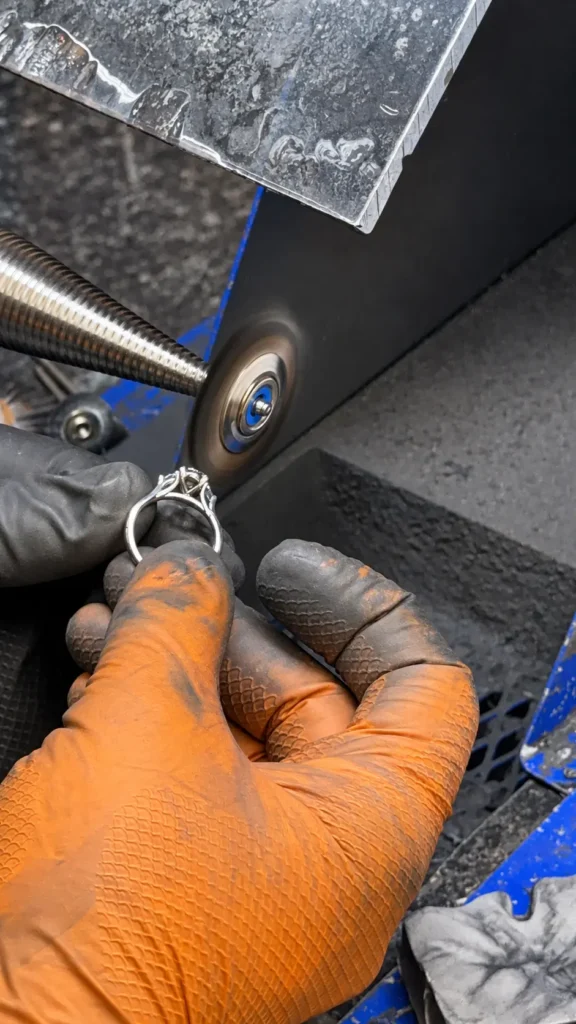
Platinum and white gold can serve a similar visual design brief, but they are different materials and need distinct production specifications. Choosing between them should involve the actual alloys, the construction and the intended surface finish. A colour description alone cannot tell the workshop how the piece should be made.
If a design will be offered in both materials, treat them as separate variants with connected design records. This makes it easier to share appropriate information without overlooking material-dependent decisions.
Discuss platinum vs white gold production
Identify the platinum and white gold variants and the intended finished appearance.
Identify the specific materials
Record fineness and any available alloy reference for the main piece and its components. Do not assume that all platinum alloys or all white gold alloys behave identically. The supplier’s technical information should support decisions about the actual material.
GIA’s platinum alloy guidance highlights the importance of identifying the alloy, including when matching material during alterations. That principle is also useful when maintaining clear component records for new production.
Review the proposed construction
Discuss how the piece will be formed or assembled and which parts need to work together. A design approved in one material should be reviewed before the other version is released, especially where the construction depends on a particular component or joining arrangement.
Ask the workshop what changes, if any, are needed. Avoid substituting material in the order record while leaving the production assumptions untouched. A clear revision is preferable to an informal instruction that the piece is now to be made in white metal.
Separate colour from surface treatment
For white gold, confirm whether the intended result includes rhodium plating. Supplier formulations can differ in colour and finishing requirements. For example, a Cooksongold white gold alloy specification identifies a rhodium requirement for that particular product; it should not be generalised to every white gold alloy.
Establish the desired appearance using appropriate physical references. For both materials, describe the finish on each relevant surface and identify any contrast or detail that must remain visible.
Before the next production step
Confirm the surface treatment and construction for each white-metal version.
Agree the finishing and checking route
The workshop should select methods appropriate to the actual material and piece. As the commissioning client, define the result and protected features rather than prescribing a generic polishing sequence taken from another job.
Review A&M’s jewellery polishing service and discuss the specific variants. Any differences in preparation, finish or inspection should be reflected in the agreed scope and approval record.
Keep quotations and samples comparable
Compare the same design dimensions, quantities and completed stages. Ask how the material requirement is assessed rather than assuming an identical finished weight or a fixed price relationship between the two versions.
Where separate samples are needed, label them clearly and retain the intended finish reference. If one material is substituted during development, record which conclusions remain valid and which need another check.
Specify each version completely
A useful comparison produces two clear material and production records. That allows the design to remain coherent while the workshop assesses each version on its actual construction and finishing requirements.
Plan the work with A&M
A&M can assess your trade enquiry in the context of the actual piece and requested workshop stages. Bring the references discussed in this guide so the next decision can be made on clear information.
Frequently asked questions
Can platinum and white gold share the same CAD file?
Some geometry may be shared, but the manufacturer should review suitability for each specified material and route. Do not assume that an unchanged file removes the need for that assessment.
Does every white gold item require rhodium?
Do not assume a universal requirement. Discuss the particular alloy, intended appearance and agreed finish, and record the decision separately from the underlying metal specification.
Is one material always cheaper to manufacture?
No fixed relationship is given here. Compare current quotations for the same design, scope and quantity, including the actual material requirement and finishing stages.