
Assessment
Remaining metal determines the appropriate repair.
Tightening, retipping and rebuilding solve different problems. Tightening may correct movement where the setting is otherwise sound. Retipping replaces a worn contact area. Rebuilding restores more of the claw when wear extends beyond the tip.
We look at every claw around the stone, not just the one that first appears worn. The seat, shoulders and neighbouring metal determine whether a local repair will be reliable.
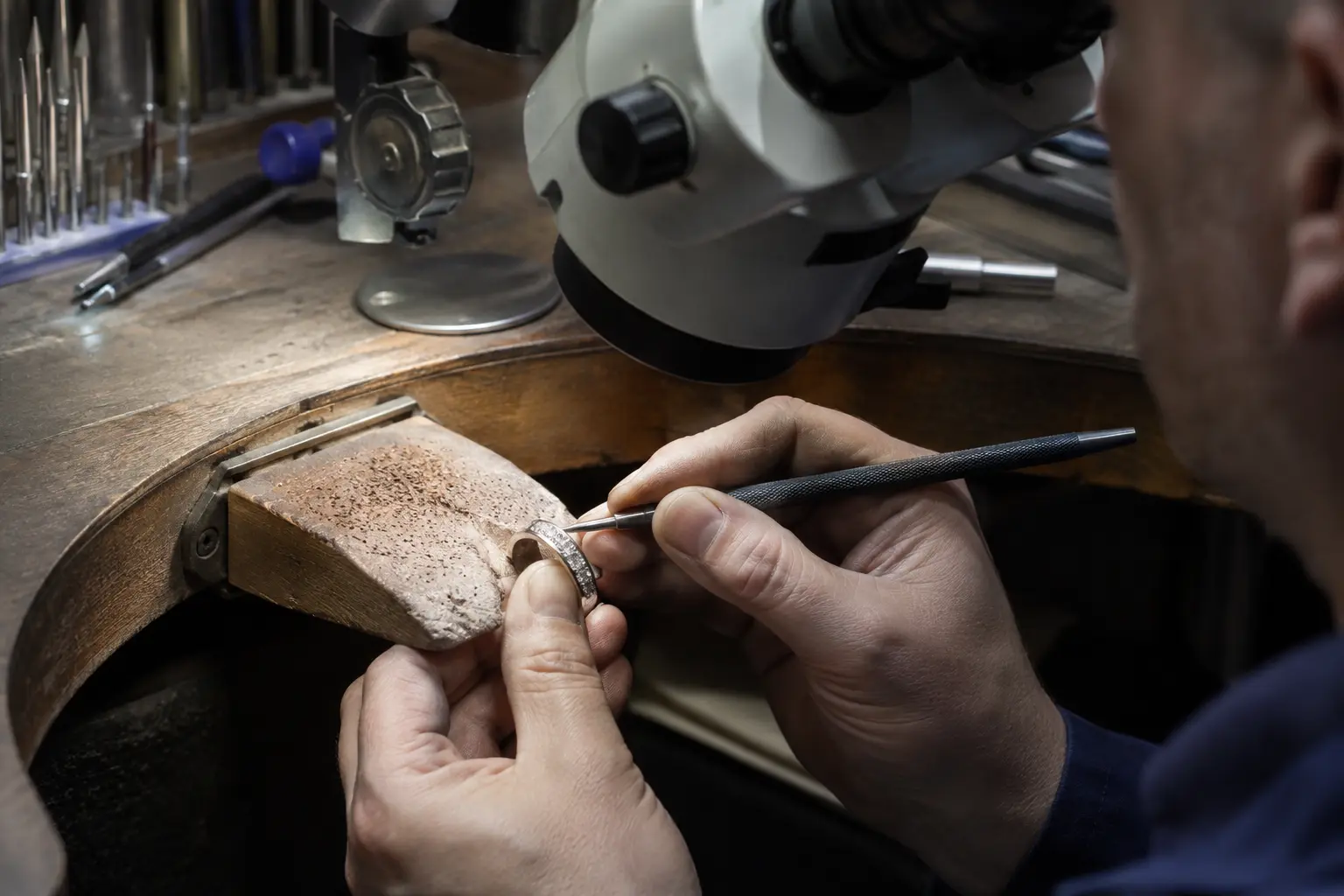
At the bench
From local tightening to complete claw rebuilding.
- 01
Check movement
Assess the stone, each claw, the seat and the surrounding mount during close inspection.
- 02
Choose the repair
Confirm whether tightening, retipping, rebuilding or a wider setting repair is appropriate.
- 03
Protect and repair
Plan around the stone and existing finish, completing only the approved scope.
- 04
Final security check
Inspect contact, symmetry and stone security before the item leaves the bench.
Job specification
Condition history supports a more accurate assessment.
- Which stone or claw is affected
- Any movement, snagging or recent impact
- Metal and setting style
- Previous retipping or setting work
A close photograph or short movement description is useful, but the complete setting must be inspected before the repair is agreed.
Trade pricing
Tightening, retipping and rebuilding are priced separately.
Stone tightening, retipping and claw rebuilding have separate starting points in the standard schedule. The final scope depends on the number of claws, access, existing metal and whether the stone can remain safely in place.
Prices exclude VAT. The number of claws, available metal and access determine the final scope. VAT is added at the applicable rate.