
Materials & Mount Preparation
Round, Half-Round and Rectangular Wire: Specifying Jewellery Components
A jewellery wire profile specification describes the section as well as its size.
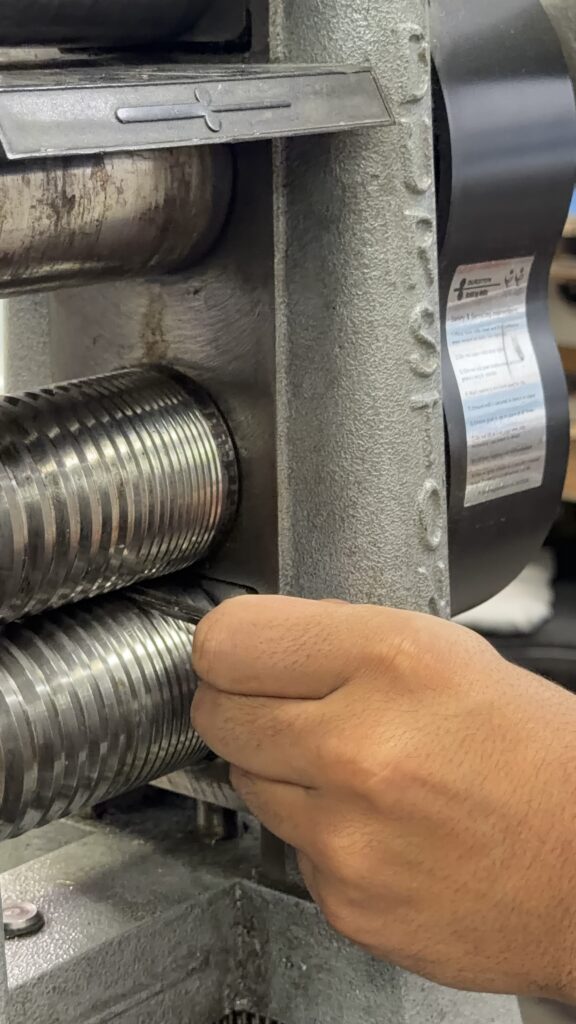
A jewellery wire profile specification describes the section as well as its size. Round, half-round and rectangular material can produce different contact surfaces and visible edges. Calling each of them wire of the same width leaves too much open to interpretation.
For a brand supplying components, connect the material description to the intended operation. The workshop needs to know whether it receives raw material, formed parts or a component already prepared for joining.
Discuss a trade workshop job
Planning manufacturing and production work? Apply for a trade account or call the workshop to discuss the brief.
Show the cross-section clearly
Use an end view with the relevant dimensions. Round material may be described by diameter, while a rectangular section needs width and thickness. A half-round profile also needs enough information to define its height and curve.
Identify which surface faces outwards in the assembly. The same component rotated through a right angle can produce a different appearance and joining relationship.
Record material and condition
State the alloy and any supplier specification that affects the work. Keep a supplier reference where available, but do not let a catalogue code replace the description needed to assess a substitute.
If the material has already been formed or worked, disclose that condition. The workshop should assess the actual input rather than assume it behaves like an unused length from the original supply.
Confirm the scope before work starts
Supply the relevant photographs, measurements and known material details. Ask the workshop to assess the proposed work.
Distinguish starting stock from finished size
Say whether the dimensions refer to the supplied material or the completed feature. Forming, joining and finishing are separate stages. A nominal starting section should not silently become a guaranteed finished measurement.
The component variation guide is useful when a later delivery differs from the accepted sample. Resolve the difference before it is incorporated into the run.
Define cut lengths and quantities
State the unit used in the order and any agreed preparation allowance. Do not invent an allowance on behalf of the workshop. For shaped components, show the finished form and identify whether lengths are measured before or after forming.
Keep offcuts and spare material treatment within the job agreement. A clear count of components is easier to reconcile than a package described only by approximate total weight.
Keep the section with the drawing
An end view, material record and finished-purpose note give the workshop a useful specification. Retain them with the bill of materials so later orders do not rely on visual memory.
Bring a clear brief to the workshop
For trade enquiries, apply for an account or call A&M to discuss the next step.
Frequently asked questions
Is width enough to identify half-round wire?
No. The cross-section also needs to be defined, including the relevant height or profile information.
Can another profile be substituted at the same weight?
Weight alone does not establish equivalent geometry or suitability. Have the alternative assessed against the construction and approved appearance.
Related reading
- Creating a Jewellery Bill of Materials for Repeat Production
- Choosing a Precious Metal for a Jewellery Collection
- Managing Variations in Supplied Jewellery Components
For service details, see manufacturing and production at A&M.