
Polishing & Refinishing
Jewellery Cleaning and Polishing: Two Different Instructions
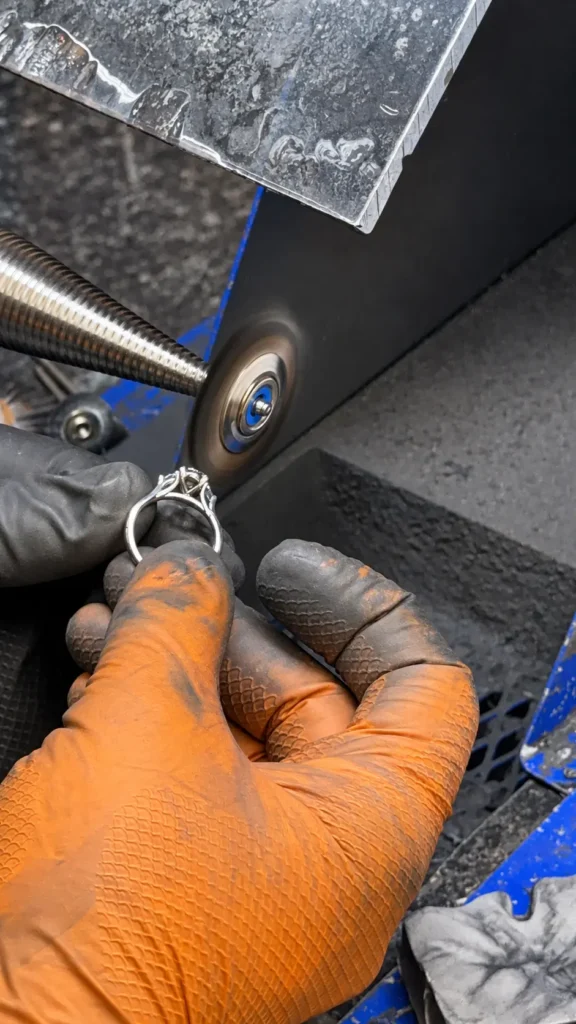
Clean and polish are often used together at a jewellery counter, but they should not be treated as interchangeable instructions. Cleaning concerns unwanted material on the item. Polishing concerns the appearance and condition of the surface itself. A customer may want one, both or a more limited treatment that preserves an existing texture.
Clean and polish are often used together at a jewellery counter, but they should not be treated as interchangeable instructions. Cleaning concerns unwanted material on the item. Polishing concerns the appearance and condition of the surface itself. A customer may want one, both or a more limited treatment that preserves an existing texture.
The distinction matters because a brighter appearance is not always the agreed objective. A worn patina, satin finish or deliberately darkened recess may be part of the design. The workshop brief should identify those features before the item is described simply as needing a refresh.
Discuss jewellery cleaning vs polishing
Explain whether the concern is surface residue, visible wear or a change to the intended finish.
Describe the concern before naming the service
Ask what the customer dislikes about the current appearance. Residue beneath a setting, a scratch on a polished face and an uneven brushed finish are different observations. Photographs and a plain description help the workshop decide what needs to be assessed.
If the owner is unsure, record the desired result rather than selecting an operation on their behalf. A&M’s jewellery finishing page distinguishes simple cleaning, bright polish, satin and contrast finishing. Use that vocabulary to make the instruction more precise without prescribing a bench method.
Identify the materials and construction
List known metals, stones, finishes and any delicate components. Include treatment information where available and identify areas obscured by the setting. An item made from several materials should not be assigned a cleaning method based only on its largest stone or most visible metal.
GIA’s jewellery care guidance notes that certain treated gems and organic materials are unsuitable for ultrasonic cleaning. That supports a material-specific assessment. It does not mean the retailer should substitute an unverified home recipe or assume one alternative is safe for every item.
State what must remain unchanged
Mark satin areas, decorative texture, engraving and intentional dark details on a photograph. Explain whether the owner wants existing wear retained or reduced. If the item is part of a pair or set, record whether visual matching is a priority.
The contrasting-finish guide explains why each surface needs a clear reference. A cleaning-only instruction should not silently authorise removal of a texture, while a polishing request should specify the intended appearance rather than leave the finish undefined.
Before you approve the work
Confirm whether the approved scope includes cleaning only or deliberate surface refinishing as well.
Keep repairs separate from cosmetic work
Loose stones, worn claws, damaged joints and thin sections need their own assessment. Cleaning may make a condition easier to see, but it does not itself establish that the structure is sound. Polishing should not be offered as a substitute for a repair that the piece requires.
If inspection reveals additional work, ask for an updated scope before it proceeds. The customer should understand which operations address appearance and which address function or setting condition. Keeping those purposes separate makes the quotation easier to approve and the finished result easier to explain.
Check the result against the original request
At collection, review the areas the customer identified and confirm what was completed. A clean item may still show honest wear if no refinishing was authorised. Conversely, a deliberately polished surface should be assessed against the chosen finish, not merely the absence of residue.
Clear language at intake prevents avoidable disappointment. Cleaning and polishing can work together, but the brief should say what each is intended to achieve and which details the owner wants to keep.
Plan the next step with A&M
Separate the request for cleaning from any proposed polishing so the workshop can quote the intended result.
Frequently asked questions
Will cleaning remove scratches?
Cleaning should not be presented as scratch correction. Visible surface wear needs its own assessment and an agreed refinishing or repair scope.
Does polishing include stone tightening?
Not automatically. Any setting concern should be identified, assessed and included explicitly where additional work is required.
Can one cleaning method be used for every gemstone?
No. Materials, treatments, attachments and condition need consideration before a suitable method is selected.