
Materials & Mount Preparation
Porosity in Jewellery Castings: Why It Matters Before Polishing
Porosity in a jewellery casting can become a production problem when voids affect the surface or a feature that must be worked. Polishing is not an automatic cure. Before more material is removed, the workshop needs to assess what is visible, where it is located and whether the component remains suitable for the intended result.
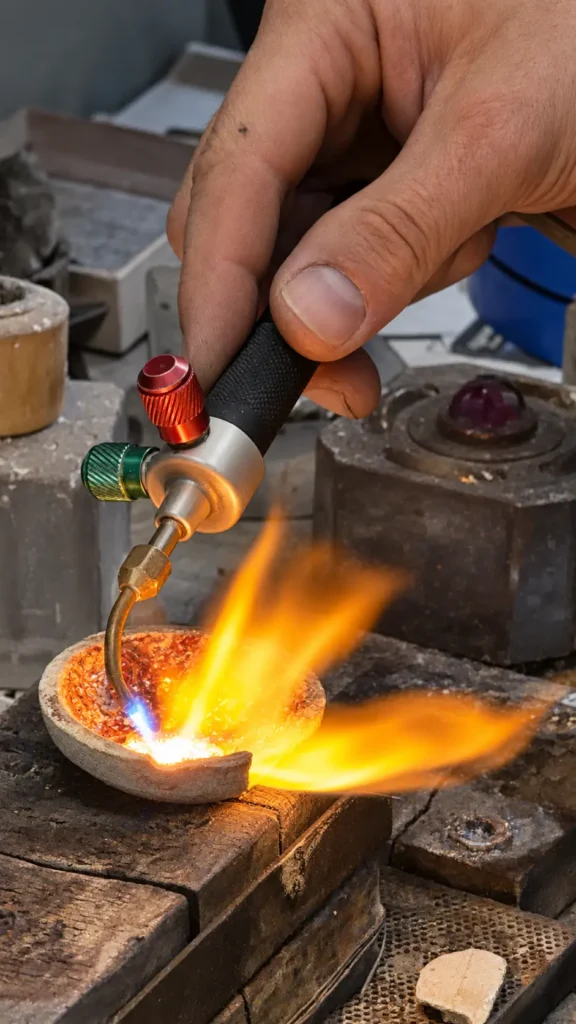
Porosity in a jewellery casting can become a production problem when voids affect the surface or a feature that must be worked. Polishing is not an automatic cure. Before more material is removed, the workshop needs to assess what is visible, where it is located and whether the component remains suitable for the intended result.
Keep observation separate from diagnosis. A photograph of a pit may document a concern, but it does not by itself establish the cause or full extent of the defect.
Discuss porosity jewellery castings
Record the visible casting concern and the stage at which it was discovered.
Understand why the cause needs investigation
Casting porosity can be associated with more than one process issue. Cooksongold’s technical casting guidance discusses feeding during solidification, gas-related problems and contamination among relevant considerations. Its process information should be read in the context of the actual alloy and equipment.
For a receiving workshop or retailer, the immediate task is to report the observed condition accurately. The caster needs the relevant production record to investigate a cause. Avoid assigning blame from the appearance alone.
Record location and extent
Identify the component and batch, then document where the concern appears. A defect on a broad visible surface raises a different question from one near a joint or setting feature. Include clear photographs and appropriate measurements where they help explain the issue.
Record when it became visible. A surface observed after preliminary preparation may reveal something that was not apparent on receipt. That distinction helps the supplier understand the sequence without implying that the preparation necessarily caused the defect.
Pause before further surface work
Discuss whether continued polishing is appropriate. Removing more material may change a dimension or soften detail without resolving the underlying issue. The decision should consider the remaining geometry and the accepted finished requirement.
Do not hide a corrective operation inside a routine finishing instruction. Ask the workshop to identify the proposed treatment and any implications for the piece. Obtain approval where the scope, appearance or delivery changes.
Before the next production step
Obtain an assessment before further polishing changes the affected feature.
Compare correction with replacement
The appropriate response depends on the defect, material and construction. A specialist may recommend a defined correction, further assessment or a replacement component. No single response is suitable for every instance of porosity.
Consider the stage reached in production as well. An unassembled component can present different options from a set and finished piece. Keep the technical decision connected to the actual work already completed.
Protect the rest of the batch
Separate affected components and identify whether similar parts need review. An isolated defect should not be assumed to prove that every casting is affected, but neither should an accepted sample remove the need to check a repeated concern.
A&M’s manufacturing process recognises that variations in supplied castings can change the workshop route. Record which components are accepted, held, corrected or replaced before updating the production quantity.
Resolve the component before approving the finish
The aim is a sound, accepted piece that meets the agreed design, not merely a surface that looks brighter. Establish the observed problem, obtain a suitable assessment and document the chosen action before finishing continues.
Plan the work with A&M
A&M can assess your trade enquiry in the context of the actual piece and requested workshop stages. Bring the references discussed in this guide so the next decision can be made on clear information.
Frequently asked questions
Can porosity always be seen before polishing?
No visual inspection should be represented as revealing every internal defect. The appropriate assessment depends on the piece, and some concerns may become apparent only during later work.
Does a small pit prove the whole casting is defective?
Not by itself. Its significance depends on location, extent and the component’s requirements. Ask for an assessment rather than generalising from one photograph.
Should the supplier receive the affected part back?
Agree the investigation route. The physical component, photographs and batch information may all be useful; confirm what is needed before carrying out work that could change the evidence.