
Materials & Mount Preparation
Jewellery Castings: What to Check Before Workshop Finishing
Jewellery castings should be checked before finishing work is treated as routine. The receiving workshop needs to know whether the components match the intended design and whether their condition allows the next stage to proceed. Discovering a mismatch after substantial preparation can create avoidable rework.
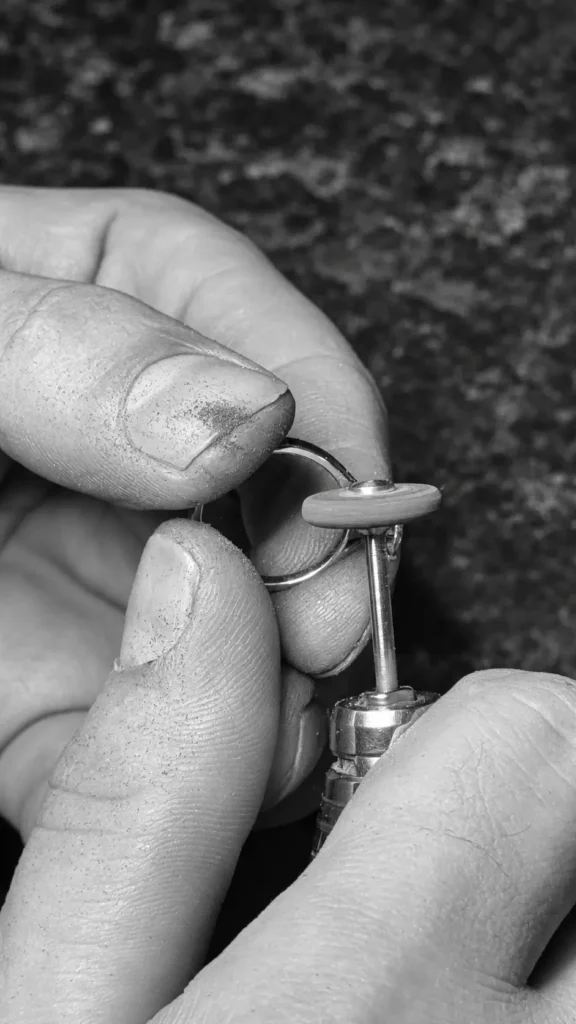
Jewellery castings should be checked before finishing work is treated as routine. The receiving workshop needs to know whether the components match the intended design and whether their condition allows the next stage to proceed. Discovering a mismatch after substantial preparation can create avoidable rework.
This is an acceptance check, not a guarantee that every internal defect can be detected by looking at the surface. Agree the appropriate assessment with the manufacturer for the material and construction involved.
Discuss jewellery casting inspection
Present the castings with their current drawing, material and quantity references.
Confirm identity and completeness
Match the castings to the order reference, material information and quantity. Check that each required component is present and that variants remain distinguishable. Similar ring mounts can differ in size or stone fit even when they appear identical at first glance.
Record the condition in which the parts arrive. Keep packaging references where they help trace the supply. If the quantity or identity is unclear, resolve that before components are separated among different workshop operations.
Compare important geometry
Check the features that control assembly, setting and the final dimensions. Use the agreed drawing or sample and identify whether allowances are already included. A comparison with an old render can miss a later revision to the production model.
Do not assume that finishing can correct a major dimensional difference. Ask whether the proposed correction is appropriate or whether the component should return to the supplier. The answer depends on the actual part and remaining material.
Inspect the visible condition
Look for incomplete features, distortion and surface defects that may affect the agreed result. Record the location and extent of a concern rather than using only a general description such as poor casting. Clear photographs can support the discussion with the supplier.
Porosity and other defects can have several production causes. Cooksongold’s casting technical information discusses factors such as feeding, temperature control and contamination. It is background guidance, not a diagnosis of a particular received component.
Before the next production step
Separate routine preparation from corrective work that needs approval.
Decide what preparation is authorised
Agree which routine cleaning and surface preparation are included and what requires separate approval. A corrective operation can affect dimensions, detail and the later production route, so it should not be hidden within an undefined finishing instruction.
A&M’s mount preparation information links the work to the next operation. State whether the castings are going to assembly, setting or final finishing and identify any surfaces that should remain untouched.
Separate accepted parts from exceptions
Keep components requiring review out of the accepted batch. Record their references, the reason for the hold and the decision needed. If only some parts are affected, identify the exact quantity so production can be planned accurately.
After correction or replacement, recheck the relevant features before releasing the parts. A supplier’s statement that an issue has been addressed is useful, but the receiving record should still show whether the replacement meets the agreed requirement.
Accept the starting point before investing in finishing
An incoming check establishes what the workshop has actually received and what it is authorised to do next. Use it to distinguish routine preparation from component problems that need a separate decision.
Plan the work with A&M
A&M can assess your trade enquiry in the context of the actual piece and requested workshop stages. Bring the references discussed in this guide so the next decision can be made on clear information.
Frequently asked questions
Can every casting defect be polished out?
No such assumption should be made. The defect and available material need assessment, and some components may require correction by another method or replacement.
Should all castings be measured in the same places?
Use the features relevant to the design and the agreed checking method. Different components may need different reference points, especially where assembly or stone fit is critical.
What information helps when reporting a casting issue?
Provide the component and batch reference, clear photographs, the affected feature and any relevant measurements. Keep the description factual and separate the observed problem from an unconfirmed cause.