
Polishing & Refinishing
Why Is a White Gold Ring Looking Yellow? Questions Before Replating
A white gold ring that appears warmer in colour may prompt an immediate request for rhodium plating. Before treating that as the complete answer, establish the known alloy, previous finish and pattern of change. Colour in a photograph can also be affected by lighting, so the physical piece should remain the reference.
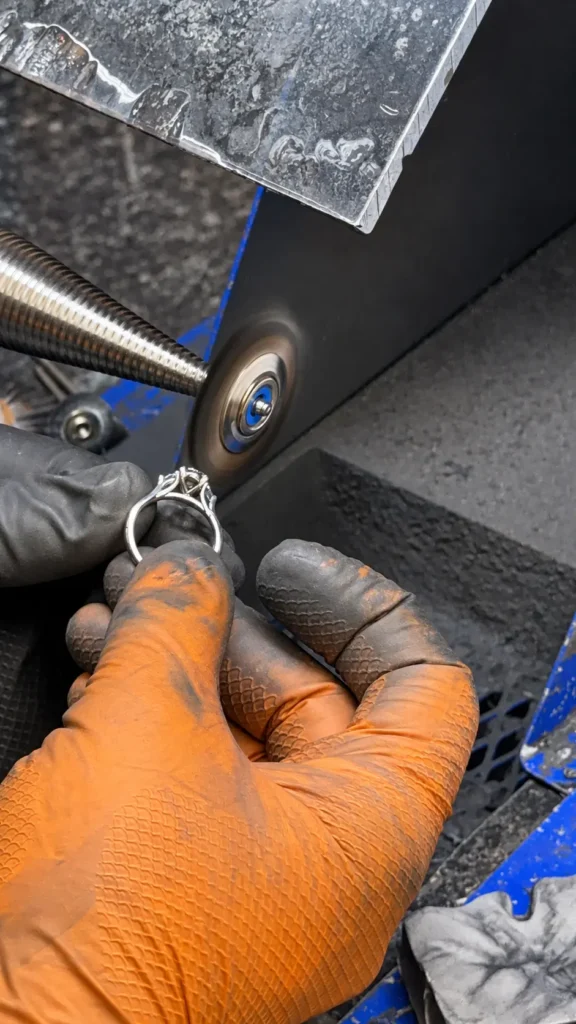
A white gold ring that appears warmer in colour may prompt an immediate request for rhodium plating. Before treating that as the complete answer, establish the known alloy, previous finish and pattern of change. Colour in a photograph can also be affected by lighting, so the physical piece should remain the reference.
The aim is to explain the finish accurately without suggesting that white gold has turned into a different metal. A&M describes rhodium as a bright white wear layer. That distinction is useful, but it does not diagnose every colour difference or establish the condition beneath the surface.
Discuss white gold ring turning yellow
Include the known metal specification and plating history, with photographs taken in neutral light.
Confirm the original specification where possible
Ask for the original product details and any previous plating record. White gold is not a single alloy with one identical unplated appearance. As one specific example, Cooksongold describes a palladium white gold casting alloy with a straw-white colour intended for rhodium finishing.
That product specification should not be generalised to every white gold ring. If the exact alloy is unknown, record the uncertainty and let the workshop assess what information is needed. Avoid identifying a metal solely from its current surface colour.
Record where the colour difference appears
Photograph the ring in neutral lighting from several angles. Show whether the change is concentrated on exposed areas, near a joint or across the whole surface. Include any recent repair or refinishing history that could be relevant to the assessment.
Do not use the pattern alone to assign a cause. Residue, lighting and different surface conditions may complicate the appearance. The retailer’s role is to provide a clear observation and the owner’s desired result, while the workshop establishes the appropriate scope.
Inspect the underlying condition
Ask for scratches, dents, worn claws and other relevant damage to be considered before a coating is applied. Rhodium should not be described as restoring lost metal or correcting an insecure setting. Any required structural or surface work should be identified separately.
The surface preparation guide explains why the starting surface matters to the finished result. If the owner expects a new-looking ring, clarify what level of correction is feasible and whether any accepted wear will remain after the agreed work.
Before you approve the work
Confirm whether the concern is the surface finish, underlying damage or both before approving replating.
Agree the intended finish
Confirm whether rhodium is requested and which areas are to receive the treatment. For a mixed-metal or contrasting design, mark the boundaries clearly. Do not assume that every visible surface should be made the same colour if part of the original design is intentionally different.
Discuss the appearance the owner wants in relation to any companion ring. Matching a newly finished piece to an older partner may require a separate decision. Where matching matters, consider whether both should be assessed together rather than relying on a photograph taken under different lighting.
Explain maintenance without promising a lifespan
At handover, record the finish completed and any care guidance suited to the piece. Do not guarantee that the same appearance will last a fixed number of months for every wearer. A future assessment should respond to the item’s actual condition and the owner’s preferences.
A colour-change enquiry is most useful when it connects the alloy, surface finish and underlying ring. Replating may be part of the proposal, but the customer should understand what it addresses and what it does not repair.
Plan the next step with A&M
Provide the known alloy and plating history and describe where the white gold appearance has changed.
Frequently asked questions
Does a warmer colour mean the ring is not white gold?
No such conclusion should be drawn from appearance alone. Check the known specification and have the actual item assessed where identification is uncertain.
Will rhodium plating repair dents or worn claws?
No. Those concerns need separate assessment and, where appropriate, approved corrective work before finishing.
Should every white gold ring be plated?
The required finish should follow the item’s specification and owner’s preference, subject to suitability. Do not apply one assumption to every alloy or design.